
AI and Advertising: Transform Your Creative in 2026

Modest Mitkus
May 30, 2026
The advertising world has shifted dramatically. What once required weeks of coordination, thousands in production budgets, and multiple rounds of creator negotiations can now happen in minutes. AI and advertising have become inseparable, fundamentally changing how brands create, test, and optimize their campaigns. Whether you're running a lean e-commerce store or managing campaigns for Fortune 500 clients, understanding this transformation isn't optional anymore. It's how the game is played in 2026.
The Reality of AI in Modern Advertising
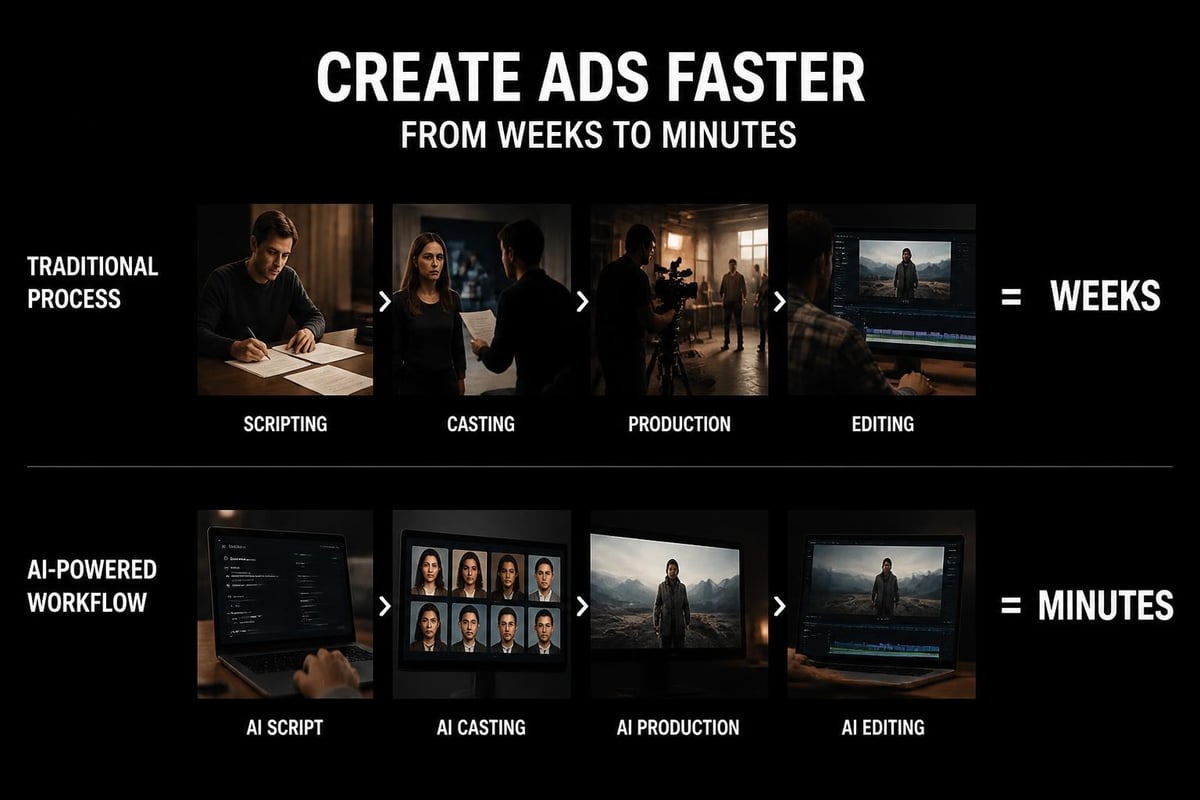
Traditional advertising workflows are expensive and slow. You brief a creative team, wait for concepts, approve storyboards, book talent, coordinate shoots, edit footage, and finally launch. If the ad flops? Start over and burn another month.
AI and advertising have collapsed this timeline. Modern platforms analyze millions of successful ads, identify patterns humans miss, and generate new creative variations based on proven formulas. The results aren't just faster. They're often better.
What AI Actually Does in Advertising Today
The applications go far beyond basic automation. Here's where AI creates tangible value:
- Predictive audience targeting that identifies high-intent users before they even search
- Dynamic creative optimization that personalizes ad elements in real-time
- Automated A/B testing across dozens of variations simultaneously
- Budget allocation that shifts spend to winning campaigns instantly
- Performance forecasting that predicts ROI before you spend a dollar
According to Criteo's comprehensive guide on AI in advertising, the distinction between generative and predictive AI matters tremendously. Generative AI creates new content (scripts, images, videos), while predictive AI analyzes data to forecast outcomes and optimize decisions.
Content Creation Gets Radically Simpler
The content bottleneck has plagued advertisers forever. Good UGC creators charge $300-800 per video. Revision requests? That's another invoice. Need ten variations to test different hooks? Good luck staying on budget.
This is where AI and advertising intersect most powerfully. Modern platforms generate realistic UGC-style video content without cameras, studios, or talent agencies. You write a script, select an AI actor, and receive finished video ads in minutes.
The UGC Revolution Nobody Saw Coming
User-generated content consistently outperforms polished brand content. It feels authentic. People trust it. But scaling UGC creation traditionally meant managing dozens of creators, each with different rates, timelines, and quality levels.
Here's what changed: AI actors now deliver the authenticity of UGC without the coordination headaches. These aren't robotic voices over stock footage. They're realistic digital humans that speak naturally, show emotion, and demonstrate products convincingly.
Platforms focused on AI actors have advanced to the point where viewers often can't distinguish AI-generated content from human-created videos. The technology has crossed the uncanny valley.
| Traditional UGC Creation | AI-Powered UGC |
|---|---|
| $400-800 per video | $10-50 per video |
| 1-2 weeks turnaround | Minutes to hours |
| Limited revisions | Unlimited iterations |
| Scheduling conflicts | 24/7 availability |
| Variable quality | Consistent output |
For brands testing creative concepts, these economics change everything. You can generate twenty variations, run them all, and identify winners before a traditional creator even sends you a first draft.
Data-Driven Targeting Reaches New Heights
Showing the right ad to the right person has always been advertising's holy grail. AI and advertising have made this exponentially more precise through machine learning algorithms that process billions of data points.
Modern AI systems don't just segment audiences by demographics. They predict purchase intent, identify look-alike audiences with uncanny accuracy, and adjust targeting parameters in real-time based on emerging patterns.
Beyond Basic Demographics
Traditional targeting: "Women, 25-40, interested in skincare."
AI-enhanced targeting: "Women who recently viewed competitor products, abandoned carts in the past 30 days, engaged with educational content about ingredients, typically purchase during evening hours, and show price sensitivity patterns suggesting they'll convert with a 15% discount."
The depth of insight available through AI-powered advertising platforms has made spray-and-pray campaigns obsolete. Every dollar now reaches someone statistically likely to care.
Spectrum Reach's recent AI platform launch demonstrates this evolution. Their system uses AI-powered insights to optimize media planning with data-driven recommendations that improve campaign efficiency across channels.
Creative Testing Becomes Affordable
The cost of being wrong has dropped dramatically. Testing used to mean committing serious budget to produce multiple complete campaigns, then burning media spend to see what worked.
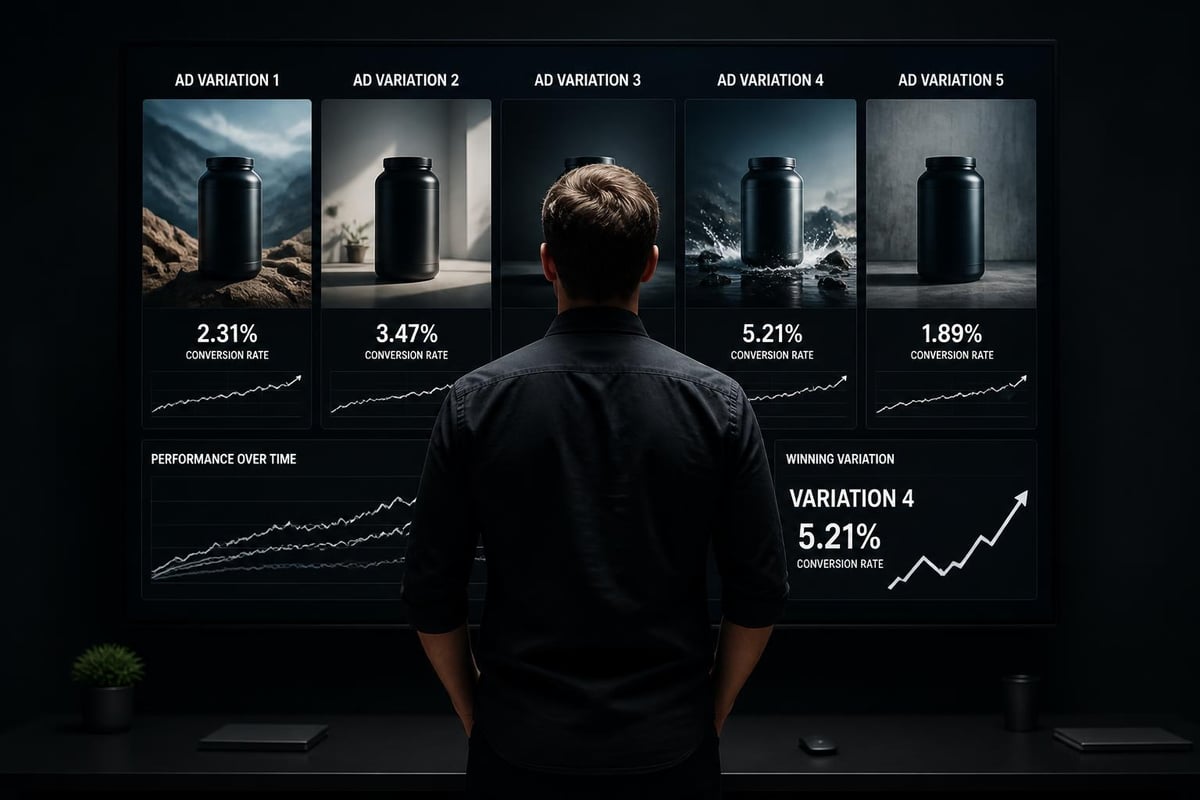
Now? Generate ten different video ads, each with unique hooks, CTAs, and messaging angles. Launch them all with minimal spend. Kill losers within 24 hours. Scale winners immediately.
This rapid iteration cycle is transforming how marketers approach creative development. Instead of debating which concept might work best in conference rooms, you just test everything and let the data decide.
The Testing Framework That Actually Works
Week 1: Generate Variations
- Create 15-20 different ad concepts using AI tools
- Vary hooks, visual styles, and calls-to-action
- Generate both static and video formats
Week 2: Initial Testing
- Launch all variations with small daily budgets
- Track CTR, engagement, and conversion metrics
- Identify top 3-5 performers within 48 hours
Week 3: Optimization
- Kill underperformers immediately
- Generate new variations based on winning elements
- Scale budget on proven concepts
Week 4: Refinement
- Test minor variations of winning ads
- Optimize for cost-per-acquisition
- Document learnings for future campaigns
This approach works because AI makes the generation phase nearly free. You're not invested in any single concept, so killing losers doesn't hurt.
The Personalization Challenge Gets Solved
Consumers expect personalization. Generic ads feel lazy. But creating personalized variations for different audience segments used to be prohibitively expensive.
AI and advertising solve this through dynamic content generation. The same product can be presented differently to different viewers: lifestyle imagery for aspirational buyers, technical specs for analytical purchasers, social proof for skeptics.
Salesforce's research on AI in advertising applications highlights how AI enables mass personalization at scale. Brands can now deliver individualized messaging to millions of users without manually creating millions of ads.
What Personalization Looks Like in 2026
- Geographic customization: Same product, different backdrops and cultural references
- Behavioral targeting: Different hooks based on browsing history
- Device optimization: Vertical video for mobile, horizontal for desktop
- Time-based messaging: Different CTAs for morning versus evening viewers
- Journey-stage awareness: Educational content for new visitors, offers for returning users
The technical complexity happens behind the scenes. From the marketer's perspective, you define parameters and let AI handle the variations.
Budget Optimization Runs on Autopilot
Where should you spend your next advertising dollar? Which campaign deserves more budget? When should you pause underperformers?
These questions kept marketers up at night. AI answers them continuously, automatically, and usually correctly.
Modern advertising platforms use machine learning to allocate budgets across campaigns, ad sets, and individual ads based on real-time performance data. They identify declining performance faster than humans can spot it and shift spend before you waste money on dying campaigns.
| Manual Budget Management | AI-Driven Optimization |
|---|---|
| Daily manual reviews | Continuous monitoring |
| Decisions based on yesterday's data | Real-time adjustments |
| Human bias and assumptions | Data-driven decisions |
| Reactive to problems | Predictive prevention |
| Limited variables analyzed | Thousands of factors considered |
The result? Lower customer acquisition costs and higher return on ad spend without constant babysitting.
The Creative Authenticity Question
Here's the concern everyone raises: Does AI-generated content feel fake?
It's a valid question, especially given reports about AI-generated ads becoming indistinguishable yet potentially losing brand distinctiveness through excessive uniformity.
The answer depends entirely on execution. Bad AI advertising is obvious: stiff delivery, generic scripts, zero brand personality. Good AI advertising feels natural because it's guided by humans who understand storytelling, brand voice, and emotional connection.
Making AI Content Feel Human
The best approach treats AI as a production tool, not a creative replacement. You still need:
- Strong strategic thinking about what messages resonate
- Compelling scriptwriting that sounds conversational and authentic
- Brand consistency in tone, style, and values
- Quality control that rejects anything feeling robotic
When brands approach creating video with AI as a production accelerator rather than a creativity replacement, results stay authentic while production speeds increase dramatically. The human oversight makes all the difference.
Industry-Specific Applications
Different industries leverage AI and advertising in unique ways. The core technology is the same, but applications vary based on what each sector needs to communicate.
E-commerce and Retail
E-commerce brands need massive volumes of product-focused content. AI generates product demonstration videos, model shots showing items from multiple angles, and UGC ads featuring customer testimonials without filming actual customers.
The speed advantage matters enormously for trend-driven businesses. When a product starts trending on social media, you need content immediately. Waiting two weeks for creator deliverables means missing the wave.
B2B and SaaS
B2B advertising focuses on education and trust-building. AI helps create explainer videos, demo walkthroughs, and testimonial-style content that traditionally required extensive production coordination.
Complex products benefit from AI's ability to generate multiple versions explaining the same concept different ways. You can test which explanation resonates with different buyer personas without filming fifteen different versions.
Service Industries
Dental practices, law firms, real estate agents, and other service businesses need content that builds personal connection. AI actors can deliver professional messaging without the awkwardness many business owners feel on camera.
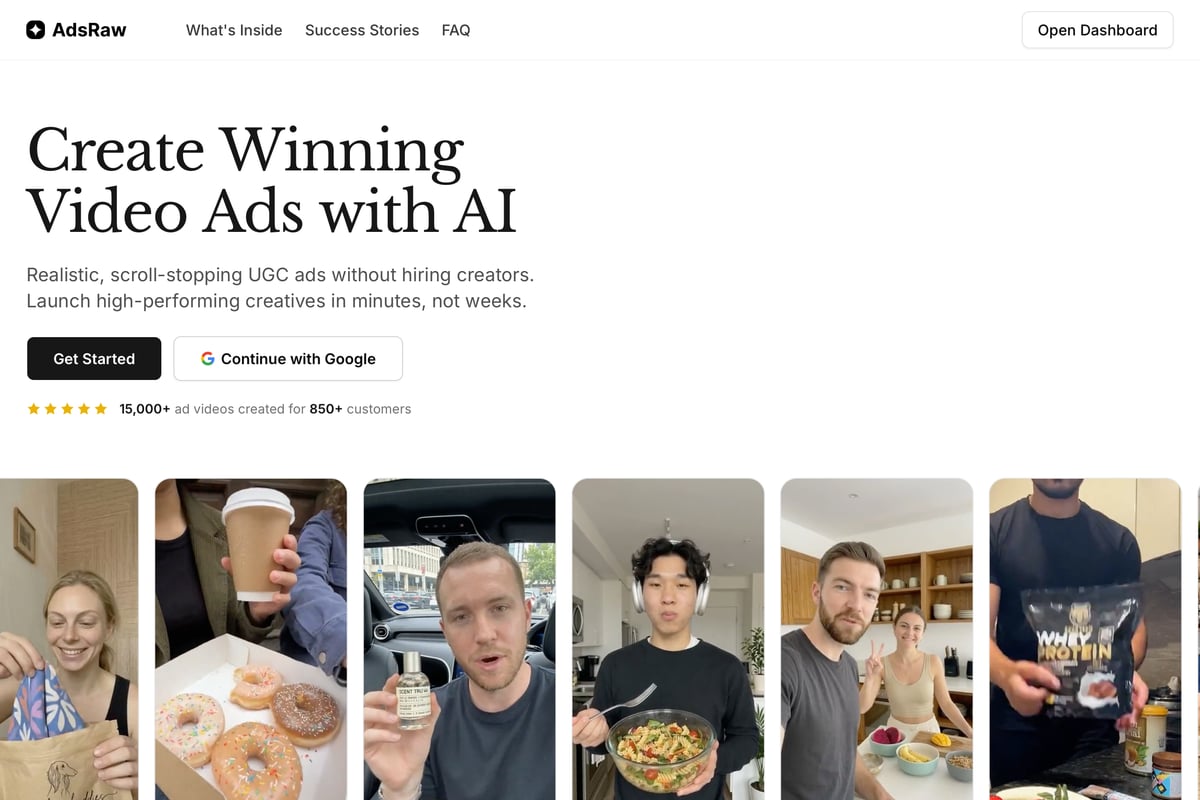
The platform at AdsRaw specifically addresses this need by allowing service businesses to create professional-looking video ads featuring AI actors who deliver their message naturally and confidently.

Common Mistakes to Avoid
The accessibility of AI advertising tools creates new opportunities to mess up. Here's what goes wrong most often:
Over-automation kills brand voice. Just because AI can generate everything doesn't mean it should. Human oversight keeps content aligned with brand values and messaging strategy.
Ignoring quality control. Not every AI output is usable. Review everything before it goes live. One weird gesture or odd phrase can tank credibility.
Forgetting to test. AI makes testing easy, so there's no excuse for assumptions. Generate variations, run them, measure results. Always.
Neglecting audience research. AI optimizes delivery, but you still need to understand who you're talking to and what they care about. Technology doesn't replace market research.
Copying competitors too closely. When everyone uses similar AI tools, differentiation matters more than ever. Your brand voice, unique angle, and creative strategy separate you from the pack.
Privacy and Ethical Considerations
AI and advertising raise legitimate questions about privacy, manipulation, and transparency. Google's efforts to combat AI-generated spam and scam ads highlight ongoing challenges in maintaining advertising integrity.
Responsible use means:
- Transparent disclosure when ads use AI-generated content
- Respect for user data and privacy preferences
- Honest representation of products and services
- Avoiding manipulative tactics that exploit psychological vulnerabilities
- Compliance with regulations around data usage and advertising standards
Academic research on trustworthy commercial interventions emphasizes the need for frameworks that detect, measure, and disclose AI-driven advertising influences. The industry is still developing these standards.
Measuring Success in the AI Era
Traditional advertising metrics still matter (CTR, conversion rate, ROAS), but AI enables more sophisticated measurement.
Advanced Metrics to Track
- Creative fatigue rates: How quickly does each ad variation lose effectiveness?
- Audience saturation points: When does increased frequency decrease performance?
- Cross-channel attribution: Which touchpoints actually drive conversions?
- Predictive lifetime value: Which acquired customers will be most valuable?
- Sentiment analysis: How do people feel about your ads emotionally?
Modern platforms analyze these automatically, surfacing insights that inform strategy rather than just reporting what happened.
The Skills Marketers Need Now
AI doesn't replace marketers. It changes what they need to be good at.
Declining in importance:
- Manual campaign management
- Basic audience segmentation
- Simple creative production
- Spreadsheet reporting
Growing in importance:
- Strategic thinking and planning
- AI tool selection and evaluation
- Creative direction and oversight
- Interpreting complex data patterns
- Cross-channel orchestration
The marketers winning in 2026 combine technological fluency with strategic creativity. They know which tools solve which problems and how to guide AI systems toward business objectives.
Future Trends Worth Watching
AI and advertising will continue evolving rapidly. Several developments are already emerging:
Hyper-realistic avatars that can represent actual employees or brand spokespeople in generated content, maintaining personal brand while scaling production.
Real-time creative adaptation that changes ad content during delivery based on viewer response, weather, trending topics, or inventory levels.
Voice-driven ad creation where marketers describe what they want conversationally and AI handles the technical execution completely.
Cross-platform optimization that automatically reformats and adjusts content for TikTok, Instagram, YouTube, and emerging platforms simultaneously.
Predictive creative testing that forecasts performance before spending any media budget, based on analysis of similar successful campaigns.
According to Zapier's exploration of AI advertising trends, the integration of AI across the entire marketing stack will accelerate, making it harder to separate "AI advertising" from "advertising" generally.
Getting Started Without Overwhelm
The breadth of AI and advertising applications can feel paralyzing. Where do you actually begin?
Start with your biggest pain point:
Is creative production your bottleneck? Focus on AI content generation tools first. Learn about user-generated content examples and start testing AI-generated variations.
Is targeting inefficiency costing you? Invest in platforms with advanced audience AI before worrying about creative automation.
Is budget management consuming too much time? Implement automated bid optimization and spend allocation first.
Is measurement and reporting your headache? Adopt AI analytics tools that surface insights automatically.
You don't need to transform everything simultaneously. Pick one area, implement AI solutions, measure impact, then expand to the next challenge.
AI and advertising have merged into a single, inseparable discipline that's rewriting the rules of what's possible in marketing. The brands winning today aren't necessarily the ones with the biggest budgets anymore-they're the ones moving fastest, testing more variations, and optimizing ruthlessly based on data. If you're ready to create high-performing video ads without the traditional production headaches, AdsRaw lets you generate realistic UGC-style content in minutes, giving you the testing velocity needed to compete in 2026's advertising landscape.