
User Generated Content Examples That Convert in 2026

Modest Mitkus
May 23, 2026
User-generated content has transformed from a marketing buzzword into an essential pillar of digital strategy. When customers create content featuring your products or services, they're doing something no paid advertisement can replicate: they're building authentic trust. The most successful brands in 2026 aren't just encouraging UGC; they're making it the centerpiece of their entire content ecosystem. But what does great user-generated content actually look like in practice?
What Makes User Generated Content So Powerful
The numbers tell a compelling story. According to Sprout Social's comprehensive guide, consumers are 2.4 times more likely to view user-generated content as authentic compared to brand-created content. That authenticity translates directly into purchasing decisions, with 79% of people saying UGC highly impacts their buying choices.
Why does UGC work so well?
- It removes the sales filter that makes traditional advertising feel manipulative
- Real customers show products in genuine, relatable contexts
- Social proof reduces purchase anxiety and builds confidence
- Content creation costs drop dramatically when customers do the heavy lifting
The shift toward UGC isn't just about saving money on production. It's about meeting consumers where they already are: scrolling through feeds filled with content from people they trust. When someone sees their friend using a product, that recommendation carries exponentially more weight than any polished advertisement could achieve.

Social Media UGC That Drives Engagement
Instagram and TikTok have become the primary battlegrounds for UGC excellence. GoPro pioneered the approach by building their entire brand around customer adventure videos. Their #GoPro hashtag has generated millions of submissions, each one showcasing the camera's capabilities better than any scripted commercial could.
Visual Storytelling Through Customer Photos
Fashion brands have mastered the art of reposting customer photos. Aerie's #AerieREAL campaign encourages customers to share unretouched photos wearing their products. This approach has generated over 300,000 posts and counting, creating an endless stream of authentic content that resonates with body-positive audiences.
The strategy works because it transforms customers into collaborators. When brands feature real people instead of professional models, they're sending a clear message: this product is for you, exactly as you are.
| Brand | Campaign | Engagement Strategy | Results |
|---|---|---|---|
| GoPro | #GoPro | Adventure video submissions | 40M+ posts |
| Aerie | #AerieREAL | Unretouched customer photos | 300K+ posts |
| Starbucks | Red Cup Contest | Holiday cup designs | Annual viral moment |
Video Content That Feels Real
TikTok has completely changed how brands think about video UGC. The platform's algorithm actively favors authentic, unpolished content over high-production videos. Brands like Chipotle have leaned into this, creating challenges that encourage customers to film themselves making their favorite orders or dancing with their burrito bowls.
The beauty of TikTok UGC is its reproducibility. When one customer creates a popular video format, hundreds of others recreate it with their own twist. This creates exponential reach without any additional marketing spend.
Review-Based User Generated Content Examples
Written reviews remain one of the most influential forms of UGC, even in our increasingly visual world. Amazon built an empire partly on the strength of its review ecosystem, which provides social proof at the exact moment customers need it most: right before clicking "buy."
High-impact review strategies include:
- Photo and video reviews that show products in actual use
- Verified purchase badges that increase credibility
- Detailed ratings across multiple attributes (fit, quality, value)
- Question-and-answer sections where customers help each other
Glossier has turned reviews into a core part of their product development process. They don't just display customer feedback; they actively respond to it and make product improvements based on common suggestions. This creates a virtuous cycle where customers feel heard and become even more invested in the brand.
The skincare brand also uses a clever tactic: featuring specific review quotes in their product photography. Instead of just showing a moisturizer, they'll overlay genuine customer testimonials like "My skin has never looked better" directly on the product image. This bridges the gap between social proof and visual merchandising.
Community-Driven Content Campaigns
Some of the most powerful user generated content examples come from brands that build entire communities around shared interests. LEGO Ideas is perhaps the ultimate expression of this approach. Customers submit their own LEGO set designs, other community members vote on their favorites, and winning designs get produced as actual retail products.
This model transforms customers into co-creators who have genuine skin in the game. The person who designed the set will obviously buy it, but so will everyone who voted for it, everyone who wants to support the creator, and everyone who simply thinks it's a cool set.
Hashtag Campaigns That Build Movements
The most successful hashtag campaigns tap into something deeper than product promotion. They connect to values, identities, or aspirations that customers already hold. REI's #OptOutside campaign encouraged people to skip Black Friday shopping and spend the day outdoors instead. The company even closed all their stores on one of retail's biggest days.
Was this financially risky? Absolutely. Did it generate massive UGC and brand loyalty? Beyond measure. Thousands of customers shared photos of their outdoor adventures, each one reinforcing REI's brand positioning as a company that prioritizes experiences over consumption.
Product Unboxing and Tutorial Content
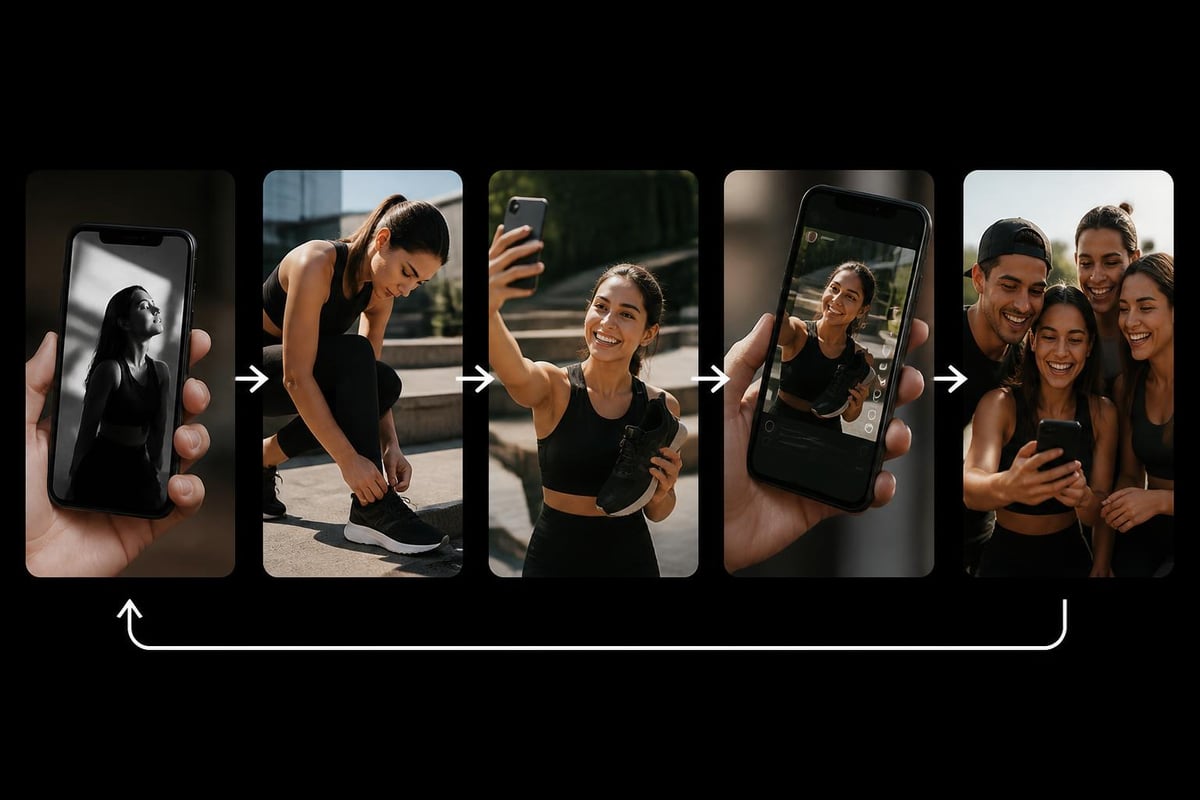
YouTube remains the king of long-form UGC, particularly for unboxing videos and tutorials. These videos serve multiple purposes: they reduce purchase anxiety by showing exactly what customers will receive, they provide usage education that reduces returns, and they generate ongoing search traffic long after publication.
Tech companies especially benefit from this type of content. When Apple releases a new iPhone, they don't need to create dozens of feature demonstration videos-their customers do it for them. Within hours of launch, YouTube floods with unboxing videos, camera comparisons, drop tests, and feature deep-dives.
Beauty brands have similarly capitalized on tutorial content. When customers demonstrate makeup application techniques or show product results over time, they're providing value that no brand-created content could match. These tutorials answer the question every potential customer asks: "Will this actually work for someone like me?"
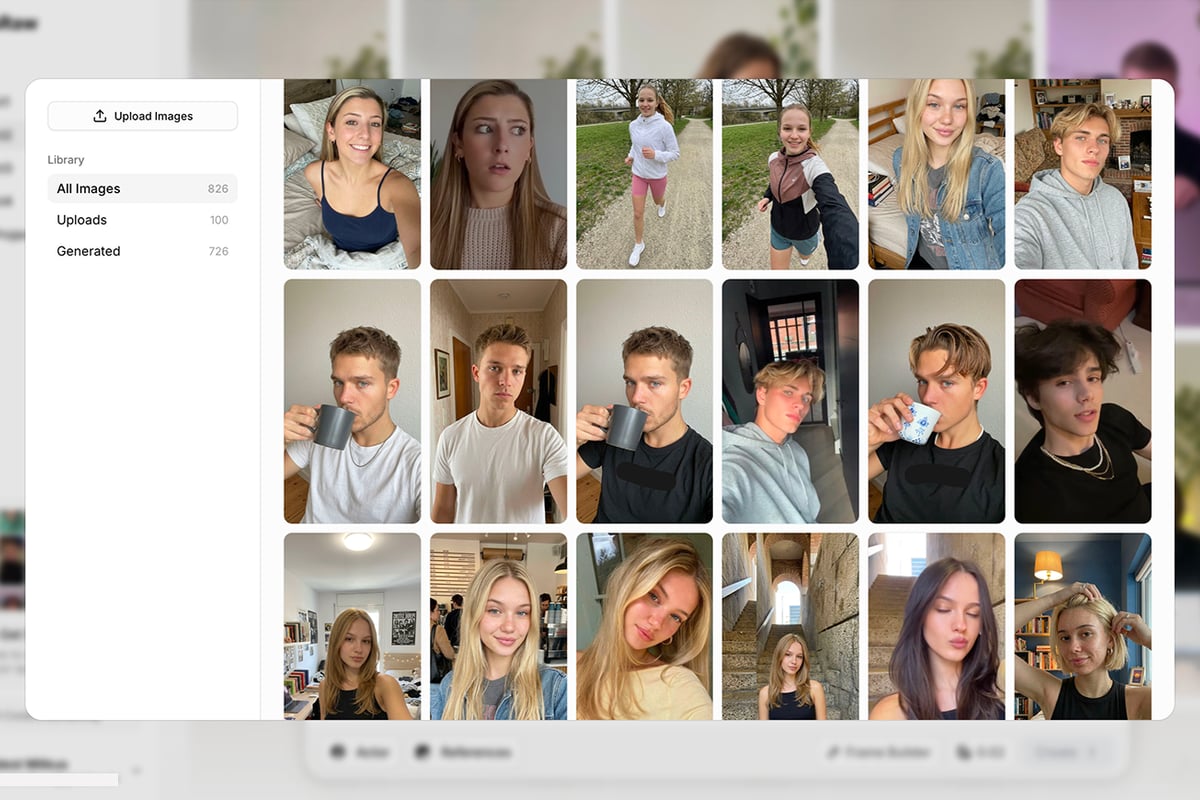
The AI UGC video generator technology has emerged as a way to scale this authentic feel without waiting for customer submissions. Brands can now create UGC-style content that maintains the authentic, unpolished aesthetic while controlling the messaging and production timeline.
Before-and-After Transformations
Few content formats convert better than before-and-after comparisons. Fitness brands, skincare companies, and home improvement businesses have all mastered this approach. The transformation narrative is deeply satisfying to watch and provides concrete proof that products deliver results.
Noom, the weight loss app, features customer transformation stories prominently on their website and social channels. These aren't just photos; they're complete narratives about the journey, challenges overcome, and lifestyle changes maintained. Each story becomes a mini case study that potential customers can see themselves in.
User-Generated Comparison Content
Customers increasingly create their own comparison content, testing multiple brands side-by-side and sharing their findings. This creates incredibly valuable UGC for the winning brand while providing genuine utility to other consumers researching purchases.
Smart brands encourage these comparisons rather than fearing them. If your product genuinely performs well, comparison content will showcase that. Even if you don't "win" every comparison, participating in the conversation builds credibility.
Event-Based and Seasonal UGC
Events create natural content generation opportunities. Music festivals, conferences, store openings, and product launches all encourage attendees to share their experiences. The key to effective event UGC lies in making it easy and rewarding for people to participate.
Successful event UGC strategies:
- Create Instagram-worthy moments specifically designed for photos
- Display a live social media feed showing attendee posts
- Run contests for best photo or most creative content
- Provide unique hashtags that create a sense of belonging
Coachella has perfected this approach. The music festival generates hundreds of thousands of posts annually, each one showcasing the fashion, performances, and overall experience. These posts collectively create a FOMO effect that drives ticket sales for subsequent years while keeping the brand relevant year-round.
Customer Success Stories and Case Studies
B2B companies leverage UGC differently than consumer brands, but it's no less powerful. Customer success stories serve as extended testimonials that demonstrate real-world applications and measurable results. Salesforce maintains an entire library of customer stories, each one detailing specific challenges, solutions implemented, and outcomes achieved.
These stories work because they speak directly to potential customers facing similar challenges. When someone reads about a company like theirs solving a problem they're currently struggling with, the case study becomes a roadmap rather than just marketing material.
The most effective customer stories include specific metrics: "increased revenue by 43%," "reduced processing time from 4 hours to 15 minutes," or "improved customer satisfaction scores from 6.2 to 8.9." These concrete numbers make success tangible and reproducible.
Micro-Influencer and Employee-Generated Content
The line between UGC and influencer content has blurred considerably. Micro-influencers with 1,000-10,000 followers often create content that feels more like genuine UGC than traditional influencer posts. Their smaller audiences tend to be highly engaged and trusting, making their recommendations particularly valuable.
Employee-generated content represents another powerful UGC variation. When team members share behind-the-scenes content, workplace culture insights, or product development updates, they humanize your brand in ways professional marketing can't match. LinkedIn has become the primary platform for this type of content, with employee posts regularly outperforming official company posts.
| Content Type | Average Engagement | Trust Level | Production Cost |
|---|---|---|---|
| Professional ads | 1-2% | Low | High |
| Influencer content | 3-5% | Medium | Medium-High |
| Micro-influencer UGC | 5-8% | High | Low-Medium |
| Customer UGC | 6-10% | Very High | Minimal |
Creating UGC in Controlled Environments
Sometimes the best approach combines the authenticity of UGC with the control of branded content. Glossier invites customers to their showrooms and provides professional photographers to capture them trying products. The resulting images look like UGC but maintain brand quality standards.
Similarly, hospitality brands often provide guests with high-quality cameras or create specific photo opportunities that generate shareable content. The Four Seasons doesn't just hope guests will post; they actively facilitate content creation by designing visually stunning spaces and moments.
This hybrid approach solves a common UGC challenge: you get authentic reactions and genuine users, but you maintain enough creative control to ensure brand consistency. For brands working with AI actors and synthetic content generation, this middle ground becomes even more accessible.

Leveraging UGC Across the Customer Journey
The most sophisticated brands use different types of user generated content examples at different funnel stages. Awareness-stage content might include entertaining UGC that showcases brand personality. Consideration-stage content features detailed reviews and comparisons. Decision-stage content emphasizes specific use cases and transformational results.
Warby Parker excels at this approach. Their social feeds feature fun, lifestyle-oriented customer photos that build brand awareness. Their product pages display detailed fit reviews and customer photos showing glasses from multiple angles. Their email campaigns include customer stories about finding the perfect frame.
UGC in Paid Advertising
Forward-thinking brands repurpose UGC in their paid advertising, often outperforming traditional ad creative. According to research from Buffer, ads featuring UGC have a 4x higher click-through rate and a 50% lower cost-per-click compared to standard brand-created ads.
The challenge lies in obtaining proper usage rights and maintaining quality standards. Some brands run specific campaigns soliciting UGC for advertising purposes, offering compensation or recognition in exchange for usage rights. Others work with platforms that facilitate UGC licensing.
For brands looking to capture the UGC aesthetic without relying entirely on customer submissions, creating video with AI offers a scalable alternative that maintains authentic feel while controlling messaging and timing.
Technical Platforms and Tools for UGC
Managing UGC at scale requires proper tools and workflows. Platforms like Bazaarvoice, Yotpo, and Pixlee help brands collect, curate, and display user-generated content across their digital properties. These tools solve critical challenges around rights management, moderation, and integration with existing tech stacks.
Photo optimization becomes crucial when working with customer-submitted content. Image optimization services from removit help ensure UGC maintains visual quality standards when displayed on websites and in marketing materials, automatically handling background removal and format optimization.
Essential UGC management features:
- Automated moderation to filter inappropriate content
- Rights management systems for tracking usage permissions
- Analytics to measure UGC impact on conversion rates
- API integrations with ecommerce and CMS platforms
- Mobile-first submission flows to reduce friction
Measuring UGC Effectiveness
The Digital Marketing Institute highlights several key metrics for evaluating UGC performance. Volume of submissions indicates campaign reach and resonance. Engagement rates show how audiences interact with UGC versus branded content. Conversion impact measures whether UGC actually drives purchases.
Advanced brands use attribution modeling to understand UGC's role in the customer journey. They track whether someone who engaged with UGC is more likely to convert, has a higher average order value, or shows better lifetime value than customers who only saw branded content.
The most revealing metric is often cost per acquisition. When you factor in the reduced content production costs and typically higher conversion rates, UGC frequently delivers significantly lower CPA than traditional marketing approaches.
Industry-Specific UGC Approaches
Different industries require different UGC strategies. E-commerce brands focus heavily on product reviews and customer photos. SaaS companies emphasize case studies and feature tutorials. Travel companies showcase destination experiences and trip photos. Fashion brands create outfit inspiration through customer styling.
The beauty industry particularly excels at UGC, with makeup tutorials and before-after transformations driving massive engagement. Skincare brands use progress photos to demonstrate results over time, building trust through visible proof.
Service-based businesses face unique challenges since they can't show physical products. Gym and fitness brands focus on transformation stories and workout videos. Restaurant UGC highlights food presentation and dining experiences. Professional services like law firms and chiropractors rely more heavily on testimonials and success stories.
Overcoming Common UGC Challenges
Not every brand naturally generates abundant UGC. Products with longer purchase cycles, higher price points, or less visual appeal face greater challenges. The solution often involves actively incentivizing content creation rather than passively hoping it happens.
Effective UGC incentives include:
- Feature opportunities on brand channels
- Contests with meaningful prizes
- Exclusive access to new products or experiences
- Discount codes for contributors
- Community recognition and status
Quality control presents another challenge. While authenticity matters, brands still need to maintain certain standards. The solution isn't heavy-handed editing but rather smart curation, choosing the best UGC submissions that align with brand values while maintaining genuine feel.
Legal considerations around usage rights, privacy, and disclosure can't be ignored. Clear terms of service, explicit permission requests, and proper FTC compliance for any compensated UGC ensure you avoid legal pitfalls while building your content library.
The Future of User Generated Content
As we move deeper into 2026, UGC continues evolving. Virtual and augmented reality create new formats for customer-generated experiences. AI tools make it easier for customers to create high-quality content while maintaining authentic feel. Voice and audio content expand beyond traditional visual formats.
The most significant trend is the blurring line between "real" UGC and AI-generated content that captures the UGC aesthetic. Brands increasingly use AI to create content that feels user-generated without waiting for customer submissions. This approach maintains the authenticity consumers crave while giving brands control over messaging and timing.
Platform algorithms increasingly favor genuine, engaging content over polished but sterile branded posts. This trend further amplifies the value of UGC and UGC-style content, making it not just a nice-to-have but a competitive necessity for brands hoping to reach audiences organically.
User generated content examples demonstrate one clear truth: authenticity beats polish every single time. From Instagram posts and TikTok videos to detailed reviews and transformation stories, the most effective content comes from real customers sharing genuine experiences. But waiting for organic UGC can slow down your marketing timeline significantly. That's where AdsRaw bridges the gap, letting you generate realistic UGC-style videos in minutes with AI actors who look and sound like real customers. You can test different hooks, scripts, and angles at scale, finding what converts without the weeks-long wait for traditional creator content.