
UGC Ads: The Complete Guide to Authentic Advertising

Modest Mitkus
May 25, 2026
Scroll through your feed for thirty seconds and you'll notice something. The ads that actually make you stop aren't the polished, studio-produced commercials with perfect lighting and actors reading from teleprompters. They're the raw, authentic clips that look like your friend just grabbed their phone and hit record. That's the power of UGC ads, and they're fundamentally changing how brands connect with customers in 2026.
What Makes UGC Ads Different From Traditional Advertising
User-generated content advertising represents a massive shift from the corporate voice to the customer voice. Unlike traditional advertisements where brands control every pixel and word, user-generated content puts real people at the center of your message.
The difference is immediately visible. Traditional ads scream "advertisement" from the first frame. UGC ads blend seamlessly into social feeds because they mirror the organic content people already consume and trust.
The Psychology Behind Why UGC Ads Work
Trust is the foundation of modern advertising. When someone sees a UGC-style ad, their brain processes it differently than a traditional commercial. Research shows consumers are 2.4 times more likely to view UGC as authentic compared to brand-created content.
Here's what drives that trust:
- Relatability: Real people in real settings create instant connection
- Social proof: Seeing others use a product validates purchasing decisions
- Lower production values signal honesty: Perfection feels manufactured; authenticity feels genuine
- Peer recommendation: UGC mimics word-of-mouth from friends
This psychological advantage translates directly to performance metrics. Brands using UGC ads consistently report higher engagement rates, lower cost-per-acquisition, and better return on ad spend.

The Types of UGC Ads That Perform Best
Not all UGC ads are created equal. Understanding which formats resonate with your audience helps you allocate resources effectively and maximize campaign performance.
| UGC Ad Type | Best For | Average Engagement Lift |
|---|---|---|
| Product Unboxing | E-commerce, Physical Products | 45-60% |
| Tutorial/How-To | SaaS, Beauty, Tech | 55-70% |
| Testimonial | Service Businesses, B2B | 40-55% |
| Before/After | Fitness, Skincare, Home Services | 60-80% |
Product demonstrations consistently outperform other formats across industries. When someone shows your product solving their actual problem, viewers visualize themselves having that same experience. This isn't theoretical marketing, it's tangible value they can see and understand.
Testimonial-style UGC ads work particularly well when they focus on specific outcomes rather than generic praise. "This saved me three hours every week" hits harder than "Great product!" The specificity creates believability.
Platform-Specific UGC Strategies
Different platforms reward different UGC approaches. TikTok favors fast-paced, trend-aligned content with strong hooks in the first second. Instagram Reels performs best with slightly more polished UGC that still maintains authenticity. Facebook audiences respond well to longer-form testimonials with detailed stories.
The power of user-generated content in advertising varies significantly based on where your audience spends their time and how they consume content on each platform.
How Brands Source and Scale UGC Ads
The biggest challenge with UGC ads isn't recognizing their value. It's creating enough of them to test, optimize, and scale your campaigns effectively.
Traditional UGC Sourcing Methods
Many brands start by reaching out to existing customers for content. They offer incentives, run contests, or simply ask satisfied buyers to share their experiences. This approach works but scales slowly.
Creator partnerships represent the next level. Brands hire UGC creators who specialize in producing authentic-looking content. These professionals understand what performs well while maintaining that "shot on my phone" aesthetic.
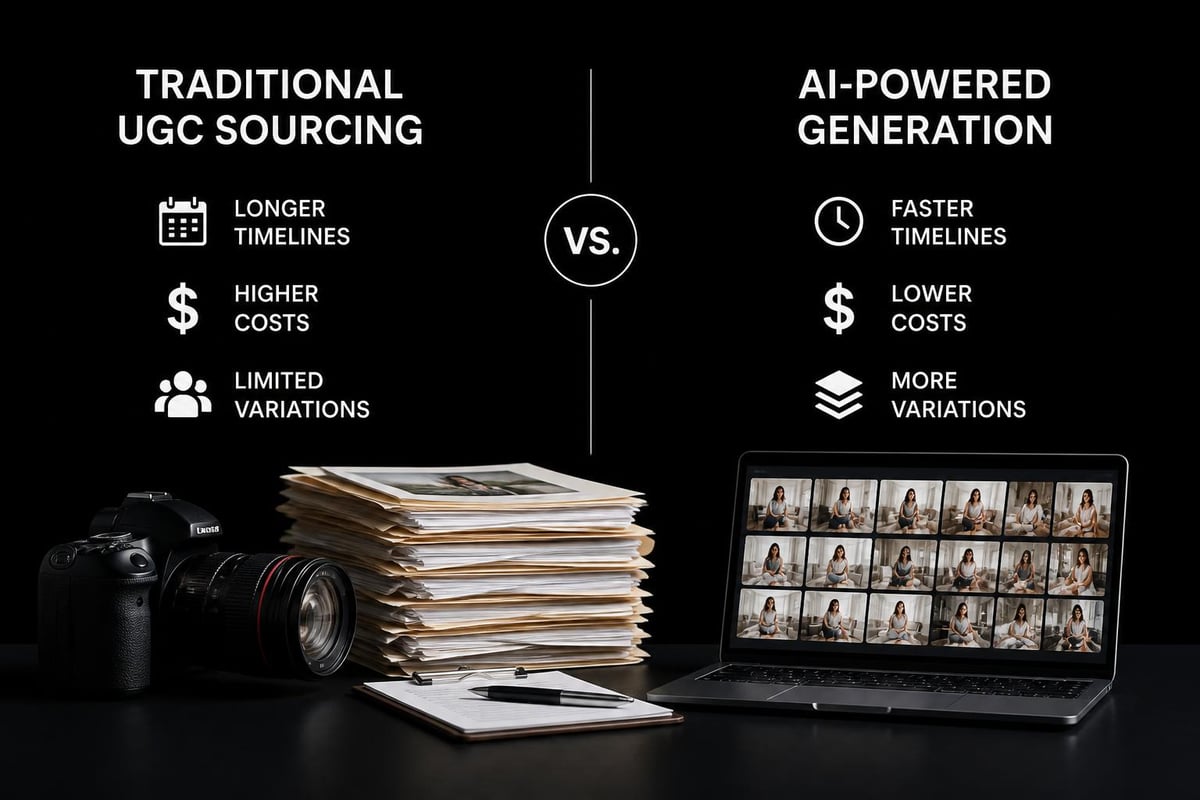
However, both methods face the same bottleneck: time and cost. Getting three variations of a single ad concept might require:
- Hiring three different creators ($200-500 each)
- Waiting 1-2 weeks for delivery
- Multiple revision rounds
- Additional costs for usage rights
When you're testing dozens of angles to find winners, traditional UGC creation becomes prohibitively expensive and slow.
The AI Revolution in UGC Ad Creation
Technology has fundamentally changed the UGC landscape. Modern AI actors can generate realistic UGC-style videos that are virtually indistinguishable from content created by human creators. This isn't about replacing authenticity, it's about democratizing access to it.
With AI-powered platforms, marketers can now test countless variations in the time it once took to create a single piece of content. Want to see how your product pitch performs with five different hooks, three different actors, and two different backgrounds? You can generate all 30 variations in an afternoon instead of waiting months and spending thousands.
Building a High-Performing UGC Ad Strategy
Strategy separates brands that occasionally get lucky with UGC from those that consistently generate winning campaigns. Here's how to build a systematic approach.
Start With Clear Creative Hypotheses
Don't just make random UGC ads and hope something works. Develop specific hypotheses about what will resonate:
Hook hypothesis: "Showing the before/after in the first 2 seconds will stop more scrollers than leading with product features"
Angle hypothesis: "Positioning our product as a time-saver will outperform positioning it as a money-saver for our target audience"
Creator hypothesis: "Using someone who looks like our target demographic (30-45, professional) will convert better than younger creators"
Each hypothesis becomes a testable variable. Run ads against each other and let data tell you what works.
The Testing Framework That Actually Works
- Start broad: Test 5-10 completely different angles with minimal budget
- Identify winners: Look for ads with CTR and conversion rates above your baseline
- Create variations: Make 3-5 versions of each winner with different hooks, scripts, or visual elements
- Scale strategically: Increase budget on consistent performers while continuing to test new concepts
- Refresh continuously: Even winning ads fatigue. Plan to replace them every 2-4 weeks
This framework requires volume. You need the ability to rapidly create and test new UGC ads without breaking your budget. That's where AI-powered solutions create an unfair advantage. Tools like the AI UGC Video Generator let you generate as many variations as you want, different hooks and angles, helping you find what actually converts without the traditional time and cost barriers.
Optimizing Your UGC Ad Creative
The difference between good and great UGC ads often comes down to small details that compound over thousands of impressions.
First three seconds are everything. If your hook doesn't create curiosity or promise value immediately, viewers scroll past. Test aggressive pattern interrupts, bold claims (that you can back up), or visual surprises that demand attention.
Sound-off optimization matters more than you think. Over 85% of social media videos are watched without sound initially. Your UGC ads need to work silently through text overlays, clear visual storytelling, and captions.
Call-to-action clarity separates content from conversion. Your UGC ad might be entertaining, but if viewers don't know what to do next, you've wasted your budget. Make the next step obvious and frictionless.
Measuring UGC Ad Performance Beyond Vanity Metrics
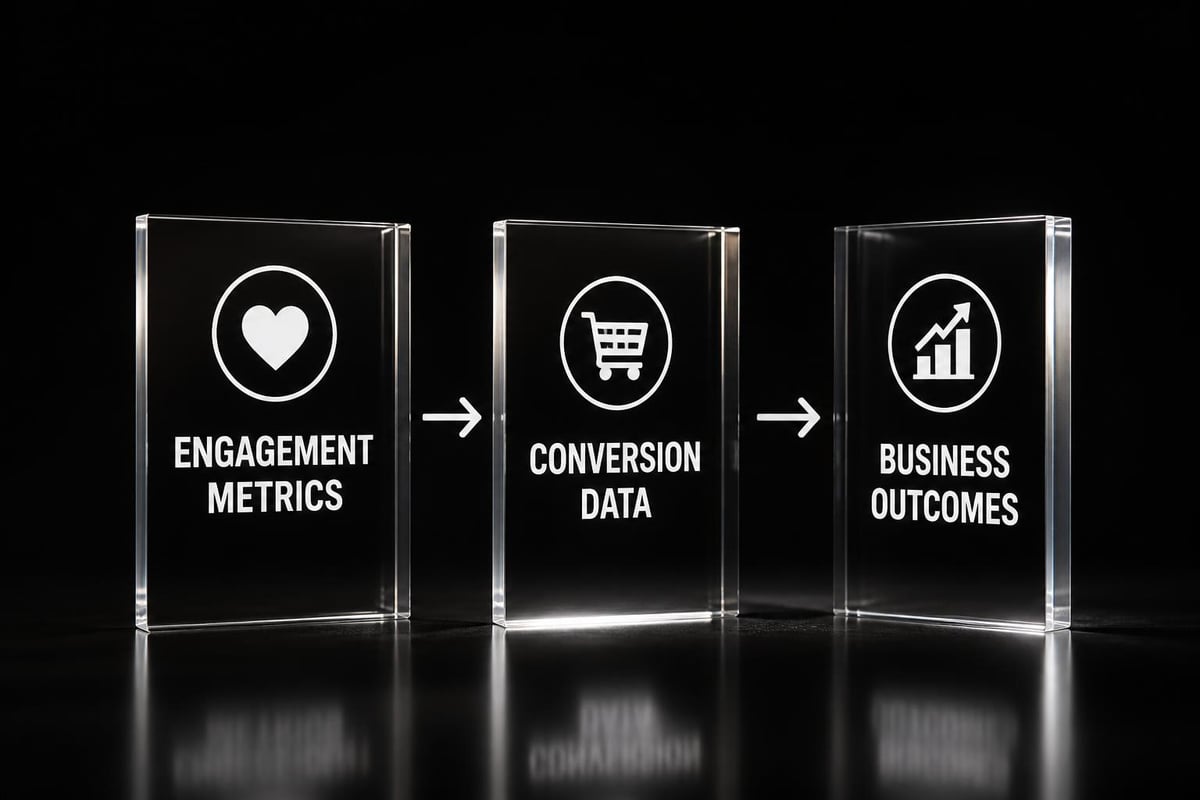
Views and likes feel good but they don't pay the bills. Effective UGC ad campaigns focus on metrics that directly connect to business outcomes.
Metrics That Actually Matter
| Metric | Why It Matters | Target Benchmark |
|---|---|---|
| Hook Rate (3-sec view) | Measures scroll-stopping power | >40% |
| Click-Through Rate | Shows message relevance | 1.5-3% (varies by platform) |
| Cost Per Click | Efficiency indicator | Platform-dependent |
| Conversion Rate | Ultimate success measure | >2% for e-commerce |
| ROAS | Bottom-line impact | >3x minimum |
Attribution complexity creates challenges with UGC ads. Someone might see your ad three times before clicking, then not convert until they see it twice more. Use platform pixels, UTM parameters, and customer surveys to build a complete picture.
Many marketers also track qualitative feedback. What are people commenting? Are they asking questions, tagging friends, or saving the ad for later? These engagement signals often predict conversion performance before you have statistically significant data.
Navigating Legal and Ethical Considerations
UGC ads operate in a complex space between authentic customer experiences and branded advertising. Understanding the legal landscape protects your brand while maintaining trust with your audience.
Rights and Permissions
When using content created by real customers, you need explicit permission to use their likeness and content in advertising. This goes beyond Instagram repost etiquette into legal requirements that vary by jurisdiction.
Written agreements should specify:
- How you'll use the content (which platforms, duration, modifications)
- Whether compensation is involved (money, products, exposure)
- Ownership rights and attribution requirements
- What happens if either party wants to terminate the agreement
With AI-generated UGC-style content, you sidestep many of these complexities since you're not using real people's likenesses without permission. However, transparency about AI usage is increasingly important as best practices for UGC advertising continue to evolve.
Disclosure Requirements
The FTC requires clear disclosure when content is advertising. For UGC ads, this means visible "Paid Partnership" or "Sponsored" labels. Don't bury disclosures in hashtag lists or use misleading terms. Transparency builds long-term trust even if it slightly reduces short-term performance.
Industry-Specific UGC Ad Strategies
Different industries require different approaches to UGC advertising. What works for skincare might completely fail for software.
E-commerce and Physical Products
UGC ads for physical products leverage the tangibility advantage. Viewers can see, and often imagine touching, the product. Focus on:
- Unboxing experiences that build anticipation
- In-use demonstrations showing real-world application
- Scale and sizing references that help visualize the product
- Results-focused content particularly for beauty, fitness, and wellness
The challenge is maintaining freshness. Product-focused UGC can feel repetitive quickly, requiring constant creative refreshes and new angles.
Service-Based Businesses
Services require different UGC approaches since there's no physical product to show. Success comes from visualizing the outcome or experience:
Before-and-after transformations work exceptionally well for any service with visible results. Home services, fitness coaching, and even business consulting can show the contrast between problem and solution.
Day-in-the-life content helps viewers understand what working with your service actually looks like. This transparency reduces anxiety and builds confidence in the decision to purchase.
Agencies focused on digital marketing and local SEO, for instance, might create UGC-style ads showing actual dashboards with increasing traffic numbers or testimonial videos from business owners discussing lead generation improvements.
SaaS and Digital Products
Software companies face unique UGC challenges. You're selling something invisible and often complex. The best UGC ads for SaaS focus on:
- Specific use cases rather than features
- Time or money saved with concrete numbers
- Frustration-to-relief narratives showing the pain point your software solves
- Screen recordings with real user commentary creating pseudo-tutorial content
Breaking down how to create video content with AI can itself become valuable UGC-style content if your product involves content creation or marketing automation.
The Future of UGC Ads in 2026 and Beyond
The UGC advertising landscape continues evolving rapidly. Understanding where things are heading helps you stay ahead of the curve rather than constantly catching up.
AI Integration Becomes Standard
By 2026, the line between human-created and AI-generated UGC has blurred significantly. The question isn't whether to use AI, but how to use it effectively while maintaining authenticity.
Smart brands use AI for rapid testing and iteration, then potentially invest in human creators for top-performing concepts they want to scale. This hybrid approach maximizes both speed and authenticity.
Personalization at Scale
The next frontier combines UGC aesthetics with personalized messaging. Imagine UGC ads that dynamically adjust based on viewer demographics, behavior, or even current events. The technology exists, execution is the challenge.
Platform Evolution
As social platforms continue refining their algorithms, they increasingly reward content that keeps users engaged. UGC ads naturally align with this goal better than traditional advertising, giving them an algorithmic advantage that should persist and possibly strengthen.
Common UGC Ad Mistakes and How to Avoid Them
Even brands committed to UGC advertising often sabotage their own success with avoidable mistakes.
Mistake 1: Making it too polished. The moment your UGC ad looks professionally produced, you've lost the authenticity advantage. Keep it raw, even if it feels uncomfortable at first.
Mistake 2: Focusing on features instead of outcomes. Nobody cares about your product's specifications. They care about how it changes their life. UGC ads should focus relentlessly on results and experiences.
Mistake 3: Using the wrong creators or actors. If your target audience is 40-year-old professionals, using 22-year-old influencers creates a disconnect. Match the creator demographic to your audience.
Mistake 4: Neglecting sound design. Even authentic UGC needs good audio. Invest in decent microphones or use AI tools that generate clear, professional voice-overs that still sound natural.
Mistake 5: Insufficient testing volume. Creating three UGC ads and picking the "best" one isn't testing. You need volume to identify actual patterns versus random variation.
Creating Your UGC Ad Production System
Success with UGC ads requires treating them as a production system rather than individual projects. Build repeatable processes that consistently generate testable content.
Weekly Production Cadence
- Monday: Review previous week's performance data and identify winning angles
- Tuesday: Develop creative hypotheses and script variations for testing
- Wednesday: Produce new UGC ad content (AI-generated or creator-produced)
- Thursday: Upload, set up tracking, and launch new test campaigns
- Friday: Initial check-in on early performance indicators
This cadence creates rhythm and ensures you're always testing while scaling winners. Adjust the schedule to your team's capacity, but maintain consistency.
Building Your Script Library
Winning UGC ads often share similar structural elements even when the specific content varies. Build a library of proven frameworks:
The Problem-Agitation-Solution Framework
- Open with relatable problem
- Agitate by highlighting the frustration
- Present your product as the solution
- Show the outcome/result
- Clear call-to-action
The Story Framework
- Personal context ("I used to struggle with...")
- Discovery moment ("Then I found...")
- Transformation ("Now I...")
- Invitation ("You should try it too")
The Demonstration Framework
- Bold hook or promise
- Live demonstration
- Reaction to results
- Offer/call-to-action
Having these frameworks ready lets you rapidly generate new scripts by plugging in different products, angles, or use cases. Combined with AI generation capabilities, you can test multiple variations of each framework without the traditional production bottleneck.
UGC ads have fundamentally changed advertising by prioritizing authenticity over polish and customer voices over brand messages. The brands winning in 2026 are those who've mastered the balance between maintaining authenticity while achieving the scale necessary for effective testing and optimization. If you're ready to harness the power of UGC advertising without the traditional time and budget constraints, AdsRaw lets you generate realistic, scroll-stopping UGC ad videos in minutes, giving you the creative volume you need to find winning campaigns faster than ever before.