
AI Video Making: How to Create Scroll-Stopping Ads Fast

Modest Mitkus
May 26, 2026
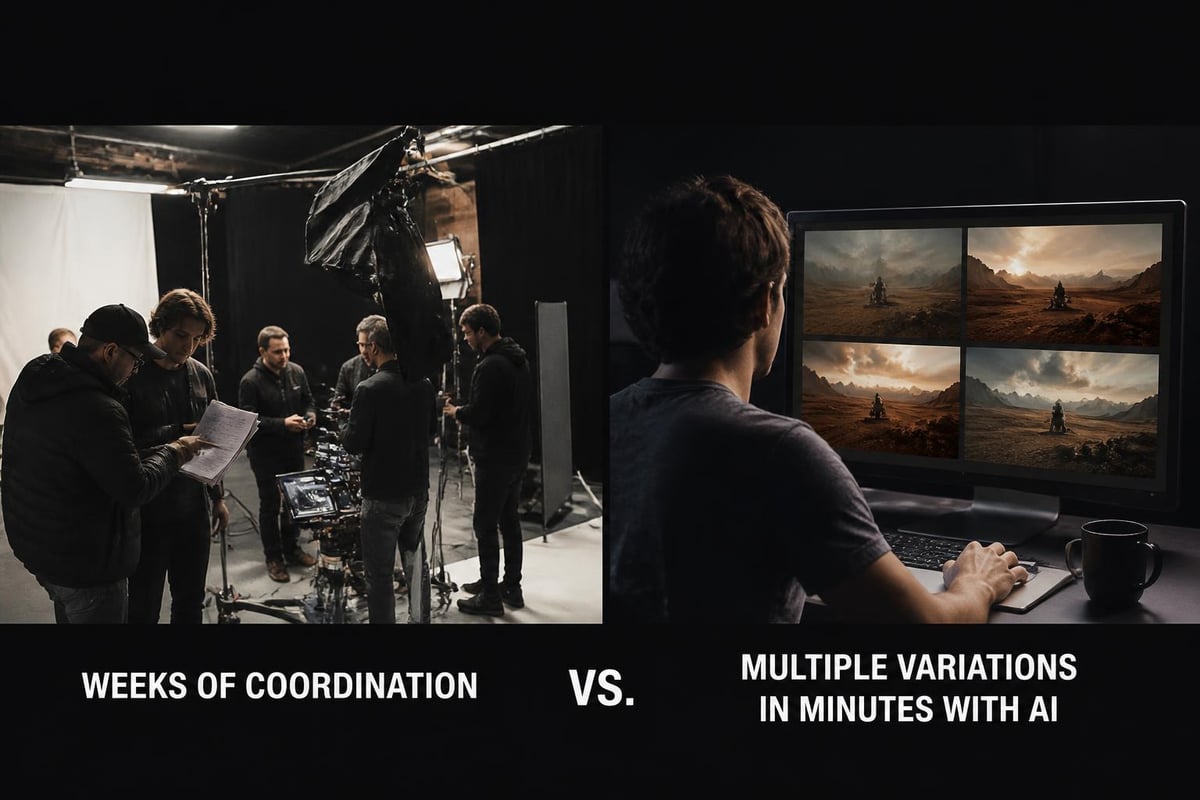
The landscape of video advertising has shifted dramatically. What once required production crews, expensive equipment, and weeks of coordination now happens in minutes through AI video making platforms. For brands and marketers racing to keep up with content demands across multiple platforms, artificial intelligence has become the secret weapon that separates those who scale from those who struggle. The technology has evolved beyond simple templates and stock footage into sophisticated systems that generate realistic, scroll-stopping content that performs.
The Revolution Happening in AI Video Making Right Now
The surge in business demand for AI-driven video creation isn't just hype. According to TechRadar, companies are transforming their content production workflows to meet the overwhelming need for high-quality videos at scale. Traditional video production simply can't keep pace with the velocity modern marketing requires.
Here's what changed in 2026:
- Voice-activated editing: Tools like Google's Gemini Omni let creators modify entire scenes through natural language commands
- Realistic AI actors: Today's AI actors look and sound genuinely human, not uncanny valley experiments
- Instant variations: Generate dozens of different hooks, angles, and approaches without reshoots
- Cost efficiency: Eliminate the $400+ per creator fee every time you need a new take
The technology isn't replacing creativity. It's amplifying it.
Why Traditional Video Production Can't Keep Up
Think about the last time you needed a video ad. You probably spent days (or weeks) on this process:
- Brief a creator or production team
- Wait for their availability
- Review scripts and concepts
- Schedule the shoot
- Wait for editing
- Request revisions
- Finally launch, hoping it works
By the time your video goes live, your competitor has already tested 15 variations and found their winner. That's the core problem ai video making solves: speed without sacrificing quality.
How AI Video Making Actually Works in 2026
The mechanics behind modern ai video making platforms have become surprisingly straightforward. You don't need technical expertise or video editing skills. Most platforms follow a similar pattern that anyone can master.
The core workflow includes:
- Selecting your actor or virtual creator from a library of realistic options
- Writing or uploading your script (some platforms even help generate scripts)
- Choosing settings, backgrounds, and visual styles
- Generating your video in minutes, not days
- Downloading and deploying across your channels
What makes this different from earlier AI tools? The realism factor. When you create video with AI today, viewers can't easily distinguish it from traditional UGC content. The AI handles micro-expressions, natural speech patterns, and authentic delivery that earlier generations struggled with.
The Technical Magic Behind the Scenes
Modern ai video making platforms leverage several advanced technologies working in concert:
| Technology Component | What It Does | Why It Matters |
|---|---|---|
| Generative AI Models | Creates realistic human avatars and motion | Produces authentic-looking actors |
| Natural Language Processing | Converts scripts into natural speech patterns | Eliminates robotic delivery |
| Computer Vision | Ensures visual consistency across frames | Maintains professional quality |
| Deep Learning | Improves output based on performance data | Gets smarter over time |
These systems analyze millions of real videos to understand what makes content engaging. They learn pacing, emphasis, body language, and the subtle details that make videos feel genuine rather than generated.
Why Brands Are Switching to AI Video Making
The adoption curve tells a clear story. Companies that once relied exclusively on traditional creators are now dedicating significant budgets to AI-generated content. But why the shift?
The answer comes down to three critical factors:
Speed matters more than ever in 2026. Social platforms reward fresh content, and audiences expect constant engagement. When you can generate a new video in ten minutes instead of ten days, you maintain momentum that traditional production can't match.
Testing becomes economically viable. Previously, testing different hooks meant paying for multiple creator shoots. Now you can generate 20 variations of the same concept, each with different opening lines, backgrounds, or angles, for a fraction of the cost.
The user-generated content style that performs best on social platforms is exactly what AI excels at creating. Raw, authentic, conversational videos that don't look like polished advertisements consistently outperform traditional ad creative.
Real Performance Numbers
Brands implementing ai video making strategies report impressive results:
- 3-5x increase in creative output volume
- 40-60% reduction in cost per video asset
- Faster time-to-market allowing weekly creative refreshes
- Better A/B testing leading to 20-30% improved conversion rates
These aren't theoretical benefits. They're happening right now for companies that embraced the technology early.
The Types of Videos You Can Generate with AI
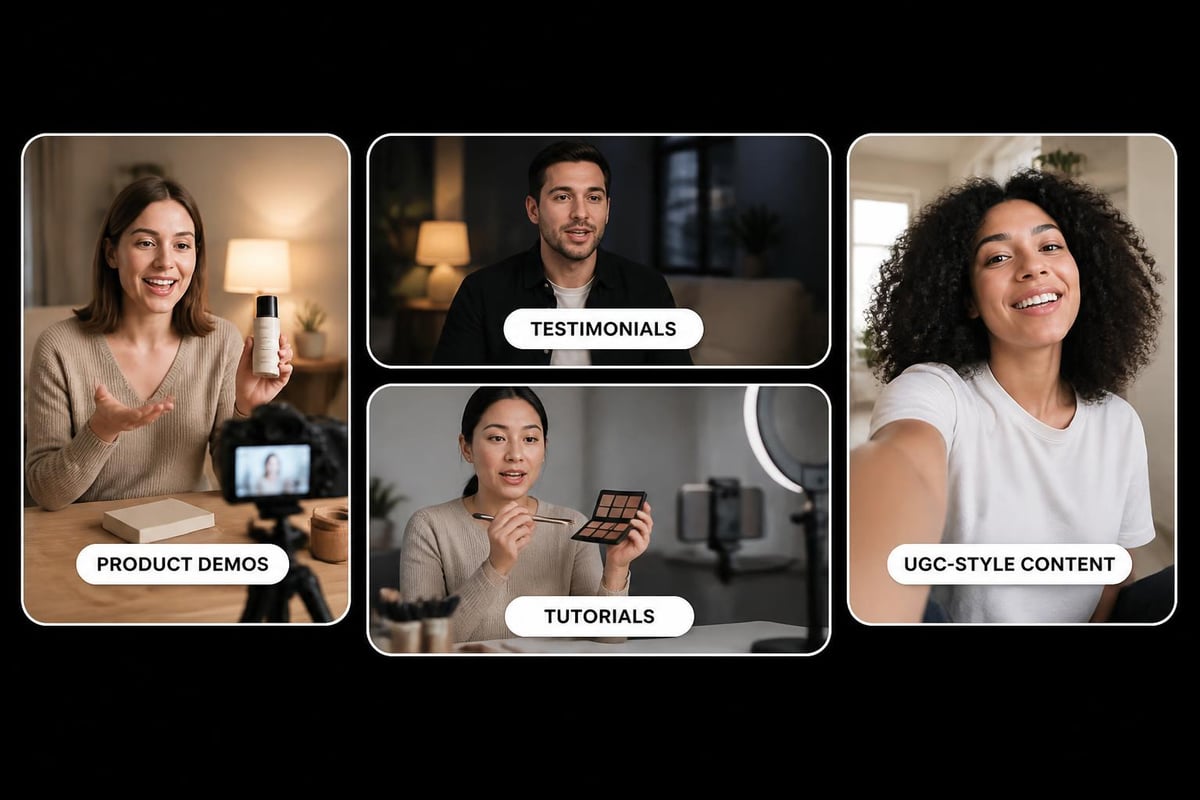
One common misconception is that ai video making only works for certain content types. The reality is far more versatile. Today's platforms handle diverse video formats across multiple use cases.
Product Demonstrations and Reviews
Show your product in action with realistic demonstrations. AI actors can unbox items, demonstrate features, and provide genuine-sounding reviews that drive purchase decisions. This works exceptionally well for e-commerce brands that need constant content refreshes as inventory changes.
Testimonial and Social Proof Videos
Customer testimonials remain one of the highest-converting content types. AI video making lets you scale testimonial production by creating authentic-looking customer stories. While you should still feature real customers when possible, AI-generated testimonials fill gaps and enable rapid testing of different messaging angles.
Educational and Tutorial Content
Break down complex concepts with AI presenters who guide viewers through step-by-step processes. Educational content performs exceptionally well for SaaS companies, service providers, and brands with products requiring explanation.
Platform-Specific Content
Different platforms demand different video specs and styles:
- TikTok: Quick hooks, vertical format, trend-responsive content
- Instagram Reels: Aesthetically polished yet authentic feeling
- YouTube Shorts: Slightly longer form, emphasis on value delivery
- Facebook/Meta: Multiple formats, often benefit from captions
The beauty of ai video making is adapting your core message across all these formats simultaneously. Create once, deploy everywhere, with platform-optimized versions.
Choosing the Right AI Video Making Platform
Not all AI video platforms deliver equal results. The market has exploded with options in 2026, making selection more challenging. Here's what separates platforms that deliver from those that disappoint.
Key evaluation criteria:
- Actor quality: Do the AI actors look genuinely human, or slightly off?
- Voice naturalness: Can you detect robotic patterns in speech delivery?
- Customization options: How much control do you have over the output?
- Asset library: Does the platform include backgrounds, props, and settings you actually need?
- Output quality: What resolution and file formats does it support?
- Turnaround time: How quickly does it actually generate videos?
Price matters, but not as much as output quality. A cheaper platform that produces videos nobody engages with wastes money regardless of cost.
Features That Actually Matter
When evaluating ai video making platforms, focus on capabilities that directly impact your results:
| Feature | Why It Matters | What to Look For |
|---|---|---|
| Script assistance | Saves time and improves messaging | AI-powered script generation and optimization |
| Multiple actor options | Enables audience targeting and testing | Diverse, realistic actor library |
| Brand customization | Maintains visual consistency | Logo placement, color schemes, custom backgrounds |
| Batch generation | Scales production efficiently | Create multiple variations simultaneously |
| Performance analytics | Informs optimization decisions | Integration with ad platforms for tracking |
The AI UGC Video Generator from AdsRaw exemplifies these principles. It creates UGC-style videos with AI actors that look and sound like real people, letting you generate as many variations as you want with different hooks and angles to find what actually converts.
Integrating AI Video Making Into Your Workflow
Adopting new technology often creates friction. The key to successful ai video making implementation is integration rather than disruption. You're not replacing your entire content strategy; you're augmenting it with a powerful new tool.
Start Small and Scale
Begin with one campaign or content category. Test AI-generated videos against your traditional content to establish baseline performance. This approach reduces risk while building internal confidence in the technology.
A practical rollout sequence:
- Select a single product or offer for AI video testing
- Generate 5-10 variations with different hooks and angles
- Run these alongside your traditional creative
- Measure performance metrics (CTR, conversion rate, engagement)
- Scale what works, iterate what doesn't
Most brands discover AI-generated content performs comparably or better than traditional UGC within the first test cycle. Once proven, expansion becomes easier to justify.
Building Your Creative Testing Framework
AI video making transforms how you approach creative testing. Previously, testing multiple concepts required significant budget allocation. Now you can test aggressively without corresponding cost increases.
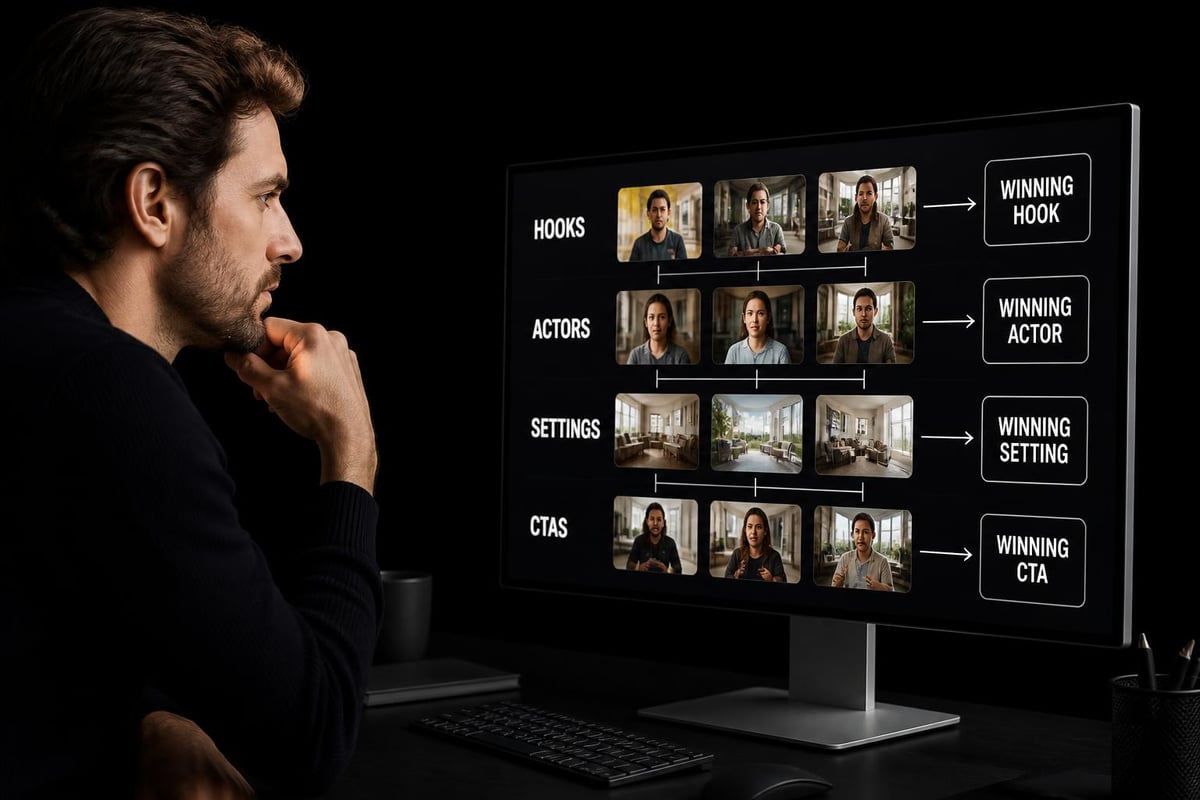
Structure your tests systematically:
- Hook variations: Test 5-7 different opening lines for the same core message
- Actor variations: Try different presenters to identify which resonates with your audience
- Setting variations: Compare performance across different backgrounds and contexts
- Length variations: Test 15-second, 30-second, and 60-second versions
- CTA variations: Experiment with different calls-to-action and closing statements
This level of testing was financially prohibitive before ai video making made production costs negligible.
Common Mistakes to Avoid with AI Video Making
Despite its accessibility, ai video making still requires strategic thinking. Here are the pitfalls that trip up most newcomers:
Over-Relying on AI Without Human Oversight
AI generates content, but humans must guide strategy. The worst implementations happen when teams treat AI as a "set and forget" solution. Your best results come from combining AI efficiency with human creativity and judgment.
Ignoring Platform-Specific Best Practices
An AI-generated video optimized for YouTube won't necessarily perform on TikTok. Each platform has unique content expectations, technical requirements, and audience behaviors. Customize your AI-generated content for each distribution channel.
Sacrificing Authenticity for Volume
Just because you can generate 100 videos doesn't mean you should. Quality still matters. Focus on creating compelling messages delivered authentically rather than flooding channels with mediocre content.
Common red flags that signal poor implementation:
- Using the same actor for every video (audience fatigue sets in quickly)
- Generic scripts that could apply to any product
- Ignoring performance data and continuing to produce similar content
- Failing to refresh creative regularly despite easy generation
- Not testing different concepts before scaling production
The Future of AI Video Making
Where does this technology go from here? Based on current development trajectories and emerging capabilities, several trends are reshaping the landscape.
Enhanced Personalization at Scale
Future ai video making platforms will generate personalized videos for individual viewers based on their browsing behavior, demographics, and preferences. Imagine creating a single base video that automatically adapts its message, actor, and examples to match each viewer's profile.
Real-Time Video Modification
Google's approach to voice-activated video editing hints at where we're heading. Soon, you'll modify AI-generated videos through conversational commands, instantly adjusting scenes, dialogue, or visual elements without technical editing knowledge.
Integration with Performance Data
AI video making platforms will increasingly connect directly with advertising platforms, automatically generating new creative variations based on performance signals. When a video's performance declines, the system generates and tests new variations autonomously.
Expanded Creative Capabilities
Expect AI to handle increasingly complex scenarios:
- Multi-actor scenes with realistic interactions
- Complex product demonstrations requiring precise movements
- Location-specific content incorporating real environments
- Dynamic backgrounds that respond to script content
These advances will further blur the line between AI-generated and traditionally produced content.
Making the Transition to AI Video Making
If you're still producing video content the traditional way, the transition to ai video making might feel daunting. It shouldn't. The learning curve is remarkably gentle compared to the value gained.
Your transition checklist:
- Audit your current video production process and identify bottlenecks
- Calculate your current cost per video asset (include time and money)
- Research platforms that match your specific use case
- Start with a small pilot project to test capabilities
- Measure results against your traditional content benchmarks
- Document your workflows for scaling successful approaches
- Train your team on the platform you select
The brands succeeding with AI video making in 2026 aren't necessarily the most technically sophisticated. They're the ones who recognized the strategic advantage of speed and scale in content production.
Questions to Ask Before You Start
Clarity on these points will guide your implementation:
- What specific content gaps does AI video making solve for your brand?
- Which platforms drive your most valuable traffic and conversions?
- How frequently do you need fresh creative to maintain performance?
- What's your current monthly spend on video content production?
- Do you have the internal resources to manage increased content volume?
Honest answers reveal whether ai video making aligns with your strategic priorities. For most brands fighting content velocity challenges, the answer is clear.
Measuring Success with AI-Generated Videos
Results matter more than process. Establishing clear success metrics for your ai video making initiatives ensures you're optimizing for outcomes rather than just production volume.
Primary metrics to track:
| Metric Category | What to Measure | Why It Matters |
|---|---|---|
| Engagement | View rate, watch time, completion rate | Indicates content resonance |
| Conversion | Click-through rate, conversion rate, cost per acquisition | Measures business impact |
| Efficiency | Production time, cost per asset, assets per week | Tracks operational improvements |
| Testing Velocity | Variations tested, time to identify winners | Measures optimization speed |
The best platforms provide analytics that connect video performance to business outcomes. Surface-level metrics like views matter less than conversion data that proves ROI.
Optimizing Based on Performance
AI video making enables rapid iteration. Use it. When a video underperforms, generate new variations testing different elements. When something works, create similar versions that maintain the winning formula while introducing fresh elements.
This continuous optimization cycle separates brands that extract maximum value from those that merely use the technology. The winners treat ai video making as an ongoing testing engine rather than a one-time production solution.
The ai video making revolution isn't coming; it's already reshaping how smart brands create content in 2026. The ability to generate high-quality, engaging video ads in minutes rather than weeks provides a competitive edge that compounds over time. If you're ready to escape the traditional production bottleneck and start testing creative at scale, AdsRaw offers the fastest path forward with realistic AI actors and instant video generation that converts.