
UGC Strategy: Building Authentic Content That Converts

Modest Mitkus
May 28, 2026
User-generated content has transformed from a marketing buzzword into the cornerstone of performance advertising. Brands that master a comprehensive ugc strategy don't just collect random customer posts-they build systematic pipelines that turn authentic moments into high-converting assets. In 2026, the brands winning on social media understand that UGC isn't about luck; it's about creating repeatable processes that consistently deliver scroll-stopping content. Whether you're a DTC brand testing new creatives or an agency managing multiple clients, your approach to user-generated content determines whether you're constantly fighting for attention or building a sustainable competitive advantage.
What Makes a UGC Strategy Actually Work
A successful ugc strategy goes far beyond asking customers to tag you in posts. It's a structured system with distinct stages: discovery, collection, licensing, distribution, and measurement. Each stage requires specific tools, processes, and team roles.
Think of your ugc strategy as a content assembly line. Discovery means actively searching for content opportunities across platforms, monitoring branded hashtags, and identifying your most engaged customers. Collection involves organized systems for gathering this content-whether through direct outreach, submission forms, or platform integrations.
Licensing protects your brand legally while respecting creators' rights. Distribution ensures the right content reaches the right audience at the right time. Measurement tracks which UGC actually drives business outcomes, not just vanity metrics.
The brands that excel treat each stage with equal importance. According to best practices from leading UGC platforms, companies that implement full-pipeline systems see 5x higher content utilization rates compared to those who simply collect and hope for the best.

The Permission Problem Everyone Ignores
Here's where most ugc strategies fall apart: permissions. You spot amazing customer content, share it without proper licensing, and suddenly face takedown notices or legal headaches. Professional brands establish clear permission workflows before they need them.
Create standardized permission templates for different content types:
- Instagram posts and stories
- TikTok videos
- Customer testimonials
- Product photography
- Unboxing videos
Your permission process should specify usage rights, duration, platforms, and any compensation. Some brands offer store credit, others provide early access to products, and many simply ask nicely with proper attribution. The key is consistency and documentation.
Building Your Content Sourcing Engine
Traditional UGC collection methods focus heavily on hashtag campaigns and contests. While these tactics work, a robust ugc strategy diversifies sourcing channels to maintain consistent content flow.
Direct creator partnerships provide predictable content on defined timelines. Post-purchase email campaigns catch customers at peak excitement. Community platforms like Facebook groups and Discord servers become content goldmines when members feel valued. Review platforms double as UGC sources when customers upload photos and videos alongside text reviews.
The smartest brands automate discovery through monitoring tools that scan multiple platforms simultaneously. Set up alerts for:
- Brand mentions across social platforms
- Product-specific keywords and hashtags
- Competitor brand mentions (for competitive research)
- Industry trend terms relevant to your products
- Location tags for physical retail locations
Incentivizing Without Compromising Authenticity
Your ugc strategy must balance incentives with authenticity. Heavy-handed promotional campaigns produce content that feels forced and performs poorly. The best incentive structures feel like natural extensions of customer relationships.
Tiered recognition programs work exceptionally well. Bronze tier might mean a thank-you comment, silver includes story reshares, and gold offers exclusive product access or affiliate opportunities. This gamification encourages repeat contributions without requiring cash payments that could trigger FTC disclosure requirements.
| Incentive Type | Authenticity Level | Effort Required | Conversion Impact |
|---|---|---|---|
| Store credit | Medium | Low | Medium |
| Exclusive access | High | Medium | High |
| Feature in brand content | High | Low | High |
| Cash payment | Low | High | Low |
| Affiliate commission | Medium | Medium | Medium |
Organizing UGC for Maximum Repurposing
Content organization separates amateur ugc strategies from professional operations. When you collect hundreds or thousands of UGC pieces, finding the right asset becomes impossible without proper systems.
Tag everything comprehensively. Each piece should include product tags, creator demographics, content type, platform, performance metrics, licensing status, and usage rights. This metadata turns random content libraries into strategic asset databases.
Consider organizing by customer journey stage. Awareness-stage UGC showcases lifestyle and aspiration. Consideration-stage content demonstrates specific benefits and features. Decision-stage UGC provides social proof through reviews and testimonials. Loyalty-stage content comes from repeat customers and brand advocates.
Physical product brands should categorize by use case. A fitness apparel brand might organize UGC into categories like gym workouts, outdoor running, yoga, casual wear, and competitive sports. Each category serves different ad campaigns and audience segments.
The Repurposing Multiplier Effect
One stellar UGC piece shouldn't appear in just one place. A comprehensive ugc strategy includes repurposing workflows that multiply content value. That customer testimonial video becomes:
- A standalone Instagram Reel
- Clips for Stories and TikTok
- Pull quotes for static ads
- Testimonial text for landing pages
- Email content
- Website social proof sections
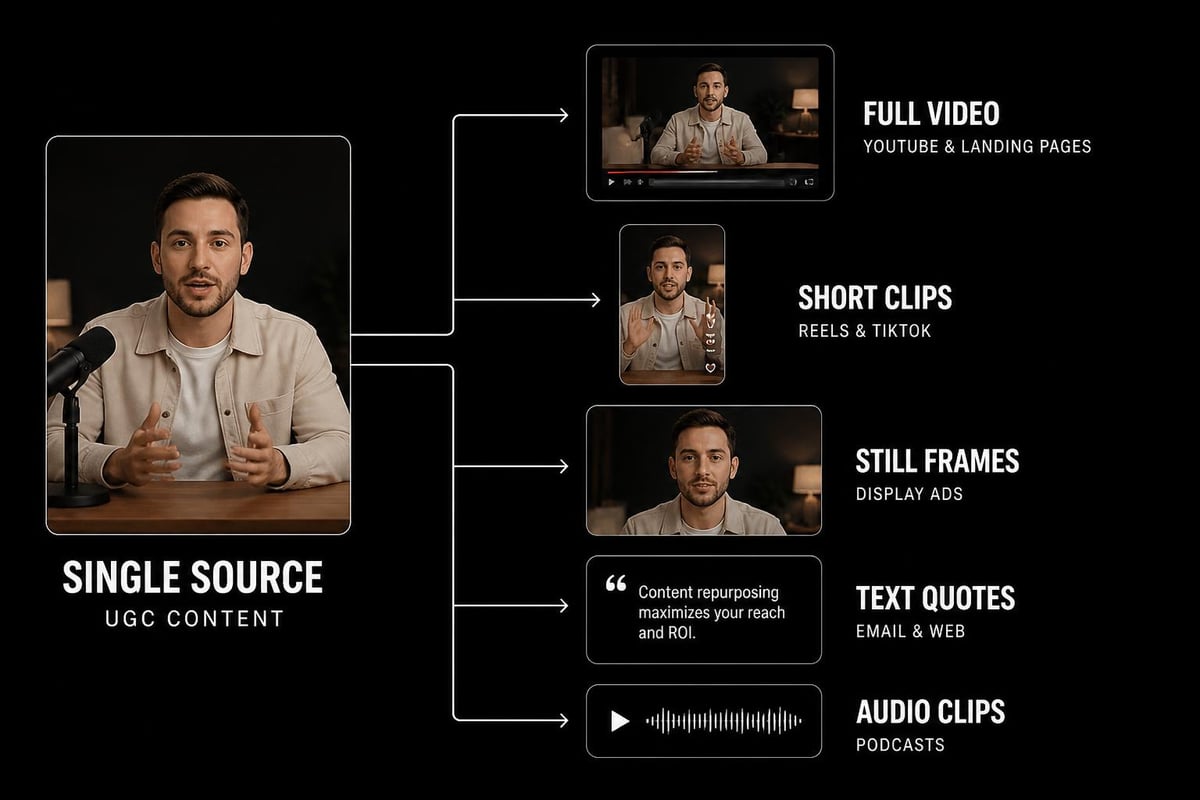
Some brands create UGC repurposing templates that standardize outputs. When new content arrives, team members know exactly which formats to create, reducing decision fatigue and ensuring consistency.
Distribution Strategies That Actually Drive Results
Collection without distribution wastes resources. Your ugc strategy needs intentional distribution plans that align content types with platform strengths and audience behaviors.
Paid advertising remains the highest-leverage UGC distribution channel for most brands. UGC-style ads consistently outperform traditional polished creative on platforms like Facebook, Instagram, and TikTok. The authentic feel stops scrollers and drives higher engagement rates.
Test UGC across different ad placements:
- Feed ads with longer-form testimonials
- Story ads with quick product showcases
- Reels and TikTok ads with trending formats
- YouTube pre-roll with compelling hooks
- Display remarketing with social proof
Organic social distribution extends reach without ad spend. Strategic resharing schedules maintain feed consistency while showcasing community involvement. Balance UGC posts with original content at roughly 40/60 ratios to avoid looking like an aggregator account.
Website integration transforms browsers into buyers. Homepage carousels featuring UGC, product page galleries with customer photos, and checkout page testimonials all reduce friction and increase conversion rates. Brands like Hamilton Island achieved over 3,000% ROI by integrating UGC across their digital properties.
Platform-Specific UGC Tactics
Each platform requires adapted approaches within your broader ugc strategy. Instagram rewards aesthetic cohesion, so curate UGC that maintains brand visual identity. TikTok values raw authenticity, making rough-around-the-edges content more relatable than polished productions.
LinkedIn UGC focuses on professional outcomes and business results. Customer success stories, case studies in video format, and B2B testimonials perform exceptionally well. Email marketing benefits from personalized UGC matching subscriber segments-new customers see onboarding content, while loyal customers receive community highlights.
Scaling UGC Production With AI Technology
Traditional ugc strategies hit scalability walls. You can only source, license, and distribute so much authentic content before resource constraints limit growth. This is where AI-powered solutions transform the entire approach.
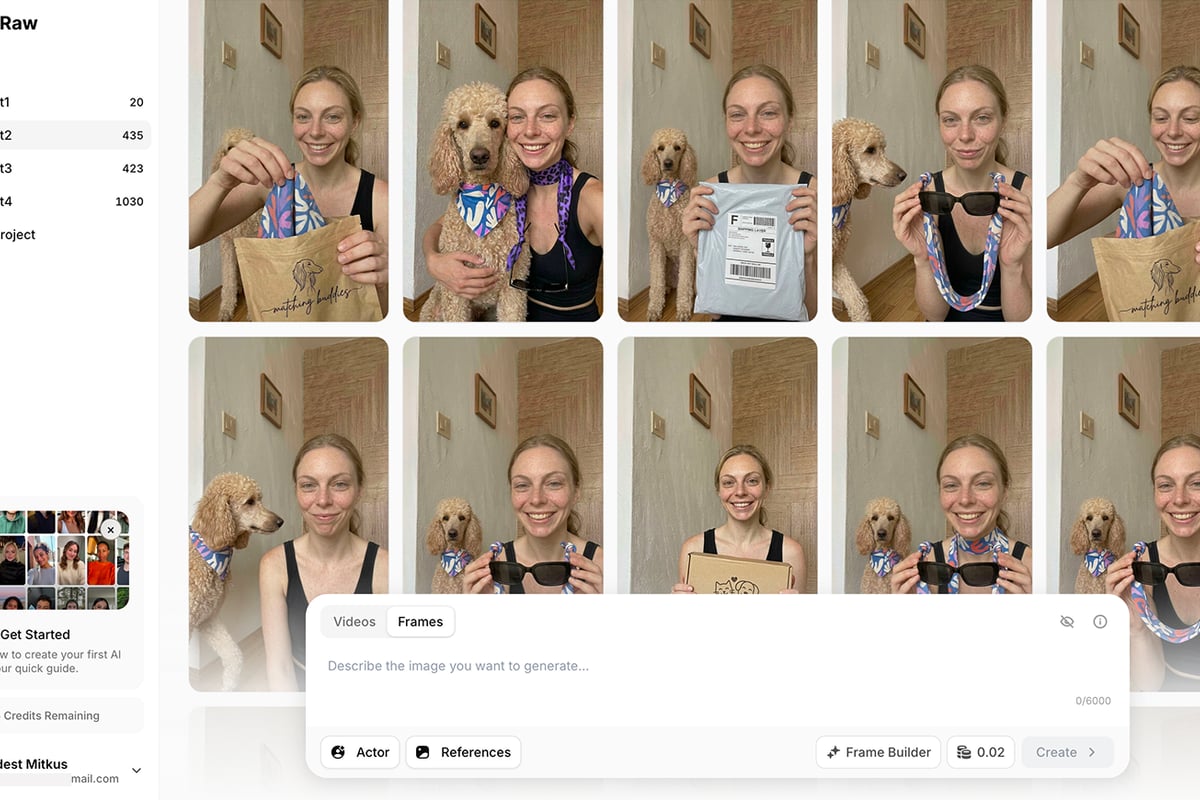
Modern platforms now enable brands to create UGC-style video content using AI actors that maintain the authentic feel audiences respond to while providing complete creative control. This hybrid approach combines real customer testimonials with AI-generated content that fills gaps and enables rapid testing.
When you need twenty variations of a product hook to test different value propositions, waiting for twenty different creators becomes impractical. AI UGC Video Generator tools let you maintain testing velocity without sacrificing the authentic aesthetic that makes UGC effective.
The key is using AI to complement, not replace, genuine customer content. Real testimonials provide authenticity and social proof. AI-generated content provides scale and testing capability. Together, they create a ugc strategy that balances trust-building with performance optimization.
Testing Frameworks That Identify Winners
Your ugc strategy should include rigorous testing protocols. Never assume you know which UGC will perform best-let data decide. Establish testing frameworks that compare:
Hook variations: Test the first 3 seconds with different opening statements, visual elements, or value propositions. Small changes here create massive performance differences.
Creator demographics: Does your audience respond better to creators who match their demographics or aspirational figures? Test systematically rather than guessing.
Content length: Some products need 60 seconds to explain value; others convert in 15. Find your optimal length through structured testing.
Call-to-action approaches: Direct CTAs ("Shop now") versus soft CTAs ("Link in bio") versus no explicit CTA each work differently depending on audience and platform.
| Test Variable | Minimum Variations | Sample Size Needed | Testing Duration |
|---|---|---|---|
| Hook | 5+ | 1000+ impressions each | 3-7 days |
| Creator type | 3+ | 2000+ impressions each | 7-14 days |
| Length | 3+ | 1500+ impressions each | 5-10 days |
| CTA | 3+ | 1000+ impressions each | 3-7 days |
Measuring What Matters in Your UGC Strategy
Vanity metrics kill ugc strategies. Likes and shares feel good but don't pay bills. Focus measurement on business outcomes: customer acquisition cost, return on ad spend, conversion rates, and customer lifetime value.
Track content-level performance. Which specific UGC pieces drive the most conversions? What characteristics do top performers share? Building a performance database reveals patterns that inform future content collection and creation.
Monitor creator-level metrics. Some creators consistently produce high-performing content. Identify these high-value contributors for ongoing partnerships and preferential treatment in your community.
Analyze audience response patterns. How do different audience segments respond to various UGC types? Effective UGC measurement requires segmentation to understand which content resonates with which customers.
Attribution Challenges and Solutions
UGC often contributes to conversions without being the last click. Someone sees UGC on Instagram, researches on Google, then converts via a retargeting ad. Traditional attribution models undervalue the UGC's contribution.
Implement multi-touch attribution that recognizes UGC's role throughout customer journeys. View-through tracking, engagement-weighted attribution, and cohort analysis all provide clearer pictures of UGC impact than last-click models.
Survey new customers about what influenced their purchase decisions. Direct feedback often reveals UGC impact that tracking pixels miss. Many brands discover that UGC creates awareness and consideration that other channels can't replicate.
Learning From Successful UGC Campaigns
Coca-Cola's multi-brand UGC activation generated over 3,500 images and 500 videos by implementing systematic collection processes across nine different brands. Their success came from clear brand guidelines, easy submission processes, and consistent community engagement.
Four Seasons localized UGC across 100+ properties by empowering individual locations to collect and showcase unique customer moments. This decentralized approach generated over 160,000 UGC pieces while maintaining brand cohesion through shared guidelines and approval workflows.
These examples share common threads: clear processes, dedicated resources, and long-term commitment. UGC success rarely happens from one-off campaigns. It requires building systems that become part of organizational DNA.
Common UGC Strategy Mistakes to Avoid
Even sophisticated brands make predictable ugc strategy errors. Inconsistent posting schedules confuse algorithms and audiences. Ignoring negative UGC damages credibility when customers notice selective curation. Over-editing authentic content removes the genuine feel that made it valuable.
Failing to credit creators breeds resentment and discourages future contributions. Always tag, mention, and acknowledge content sources. Treating UGC as free labor without reciprocal value creates extraction rather than collaboration.
Launching without legal frameworks exposes brands to copyright issues and permissions disputes. Establish clear terms of service and usage rights before scaling collection efforts.
Building Community That Fuels Your UGC Engine
The most sustainable ugc strategies don't extract content from customers-they cultivate communities that naturally create and share. Community-building transforms one-time buyers into brand advocates who consistently contribute content.
Create exclusive spaces where customers connect with each other, not just your brand. Facebook groups, Discord servers, or dedicated forums become content creation hubs when members feel genuine belonging.
Recognize and celebrate contributions publicly. Monthly "featured creator" programs, anniversary acknowledgments, and milestone celebrations make contributors feel valued beyond their content's utility.
Involve the community in product development. When customers see their feedback shape actual products, they become invested in success and naturally share their involvement. This creates authentic UGC that money can't buy.
The Long-Term UGC Relationship Model
Shift perspective from transactional content collection to relational community building. The strongest ugc strategies resemble customer loyalty programs more than marketing campaigns. Points, tiers, and exclusive benefits keep contributors engaged over years, not just single transactions.
Develop creator progression paths. New contributors receive welcome kits and getting-started guides. Regular contributors unlock exclusive product access and early launches. Top contributors become brand ambassadors with formal partnerships and meaningful compensation.
This investment pays dividends through consistent, high-quality content from people who genuinely love your brand and products. Their enthusiasm translates into authentic content that performs better than any paid creative could achieve.
Building an effective ugc strategy requires systematic processes, authentic community relationships, and continuous optimization based on performance data. When you treat user-generated content as a strategic asset rather than random social posts, you create sustainable competitive advantages that compound over time. AdsRaw helps brands scale their UGC approach by combining the authenticity audiences crave with the testing velocity performance marketing demands-letting you generate realistic UGC-style videos in minutes while maintaining the scroll-stopping quality that drives conversions.