
AI Video Generator from Text Prompt: Complete 2026 Guide

Modest Mitkus
June 3, 2026
Remember when creating video content meant booking studios, hiring actors, and waiting weeks for final deliverables? That world feels ancient now. The ai video generator from text prompt technology has completely transformed how brands approach video creation, turning simple written descriptions into polished video content in minutes. Whether you're a performance marketer testing dozens of ad variations or a content creator exploring new concepts, understanding how these tools work can revolutionize your creative workflow.
What Is an AI Video Generator from Text Prompt?
An ai video generator from text prompt is exactly what it sounds like: software that reads your written description and creates corresponding video content. You type what you want to see, and the AI brings it to life.
The technology relies on sophisticated machine learning models trained on millions of video clips, images, and text descriptions. These systems learn the relationships between language and visual elements, understanding that "a woman smiling while holding a coffee cup" translates into specific visual components, movements, and scenes.
The Technology Behind Text-to-Video Generation
Modern AI video generators use diffusion models and latent space generation techniques. Research on Imagen Video from Google demonstrates how text-conditional video generation systems produce high-definition videos with remarkable controllability. The system breaks down your text prompt into semantic components, then constructs video frames that match these elements.
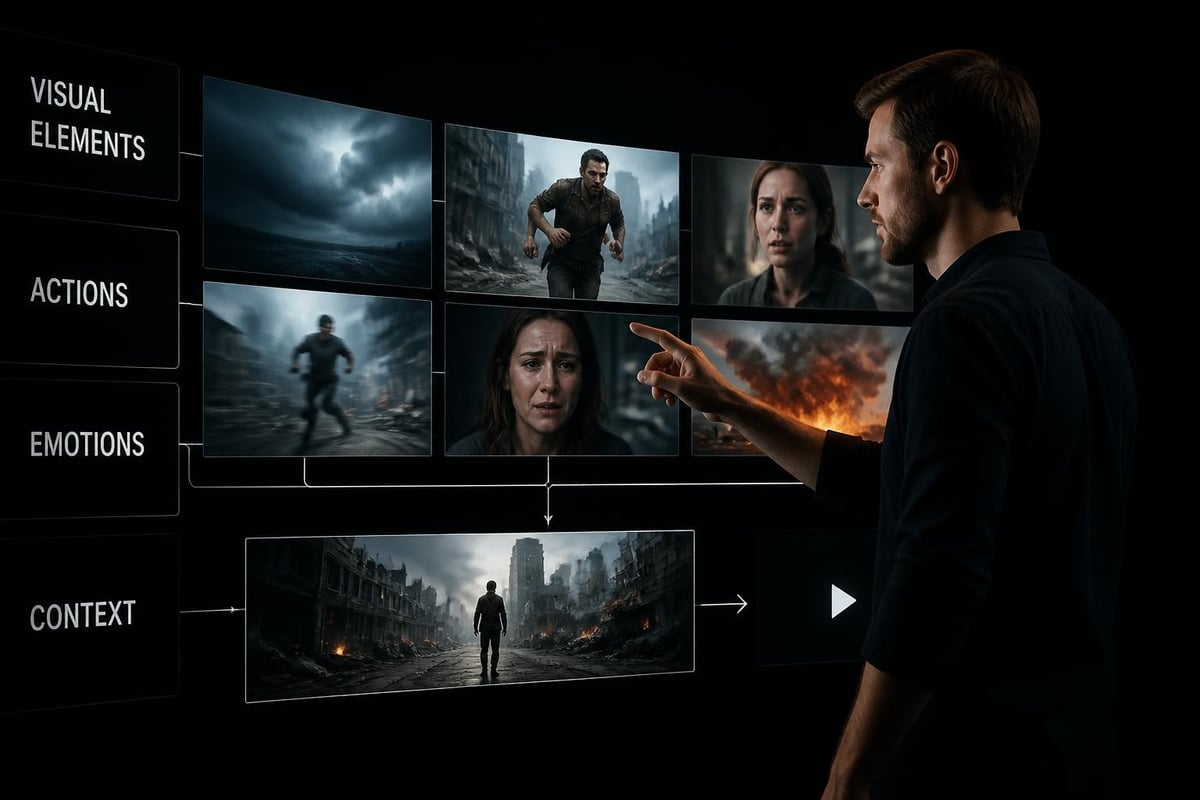
Think of it like this: when you write "an actor enthusiastically reviewing a skincare product," the AI processes multiple layers of information simultaneously.
- Visual elements: person, product, setting
- Actions: holding, gesturing, speaking
- Emotions: enthusiasm, excitement
- Context: product review scenario
The generator assembles these components into coherent video sequences with appropriate motion, lighting, and continuity between frames.
Key Features of Modern Text-to-Video Platforms
Not all ai video generator from text prompt tools are created equal. The best platforms in 2026 offer capabilities that go far beyond basic scene generation.
Actor Selection and Customization
Top-tier platforms let you choose specific actor types, ages, ethnicities, and presentation styles. You're not stuck with randomly generated faces. You can specify "a 30-year-old male fitness enthusiast demonstrating workout equipment" or "a young professional woman explaining software features."
This level of control matters tremendously for brand consistency and audience targeting. The AI actors you choose become the face of your brand, so customization options directly impact performance.
Script-to-Video Conversion
The most powerful feature? Writing exactly what you want your actor to say and having them say it. You input your script, select voice characteristics, and the AI generates a realistic person delivering your message with appropriate lip sync, intonation, and facial expressions.
| Feature | Basic Generators | Advanced Platforms | Impact on Quality |
|---|---|---|---|
| Actor customization | Random generation | Full demographic control | High |
| Script accuracy | Text overlay only | Realistic lip sync | Critical |
| Scene variety | Limited templates | Unlimited scenarios | Medium |
| Output resolution | 720p standard | 4K capable | Medium |
| Generation speed | 10-30 minutes | 2-5 minutes | High |
Scene and Background Control
Want your actor in a modern office? A cozy living room? Against a clean white background? Advanced generators let you specify environments with the same ease as describing the actor. Some even allow you to upload reference images for specific aesthetic matching.
How Brands Use AI Video Generators for Advertising
The advertising industry has embraced text-to-video AI faster than almost any other sector. Why? Because ads require constant testing, iteration, and scaling, everything traditional video production makes expensive and slow.
Rapid Creative Testing
Performance marketers know that finding winning ad creative is a numbers game. You need to test multiple hooks, different value propositions, varied presentation styles. With an ai video generator from text prompt, you can create 20 variations of an ad concept in the time it would take to brief a single creator.
UGC ads have become the gold standard for social media advertising because they feel authentic and relatable. AI-generated UGC maintains that authenticity while giving you unprecedented control over messaging and testing velocity.
Benefits for ad testing:
- Generate variations in minutes, not days
- Test different hooks without reshooting
- A/B test actor demographics quickly
- Iterate on scripts without additional costs
- Scale winning concepts instantly
Product Demonstrations and Reviews
Showing your product in action builds trust faster than static images. An ai video generator from text prompt lets you create demonstration videos where actors showcase features, explain benefits, and provide authentic-feeling reviews.
The Phenaki model showcases how variable-length video generation handles complex product stories, creating videos that flow naturally from introduction to demonstration to call-to-action.
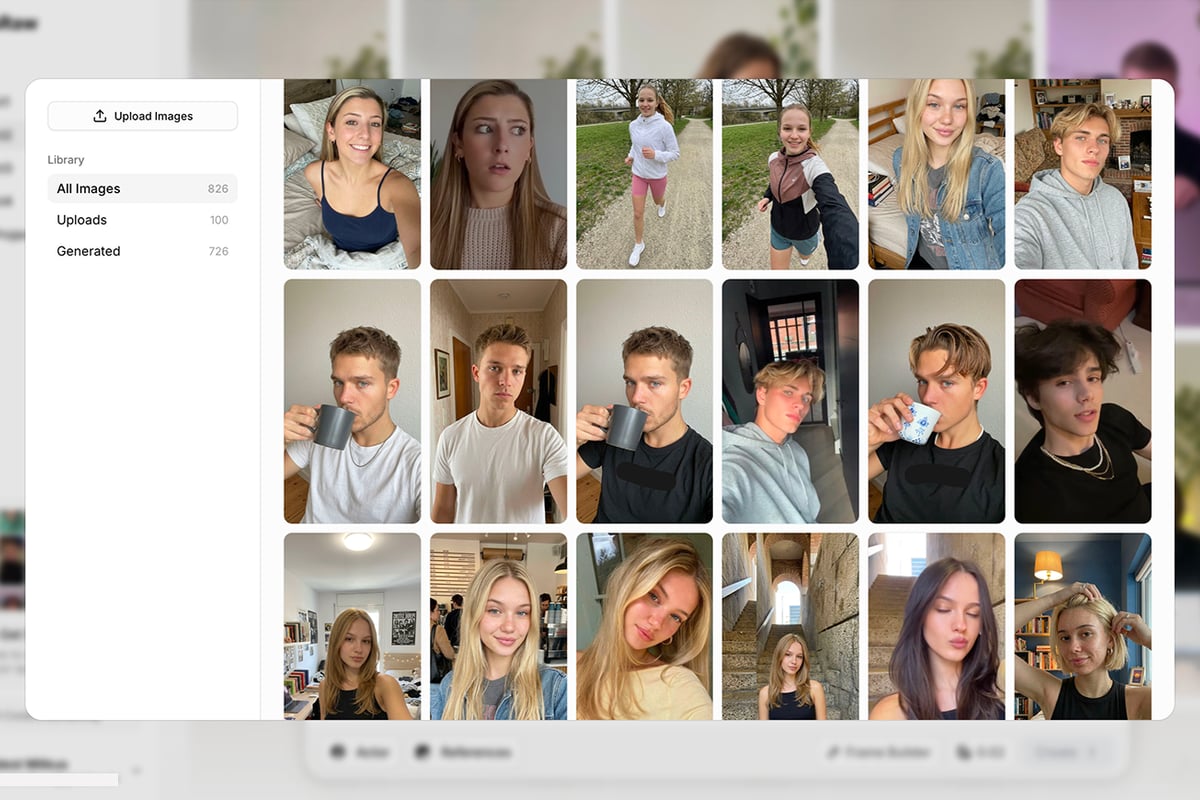
When you need UGC-style videos at scale, platforms like AdsRaw let you generate unlimited variations with different actors, scripts, and presentation angles. Write your script, pick your actor, and generate scroll-stopping content that converts.
Localization and Market Testing
Launching in a new market? You can generate videos with actors who match your target demographic, speaking appropriate language, in culturally relevant settings. All from text prompts. No international production crews required.
Writing Effective Prompts for Video Generation
Your output quality depends directly on prompt quality. The ai video generator from text prompt is only as good as the instructions you provide.
Structure Your Prompts Strategically
Think like a director. Your prompt needs to communicate:
- Who: Actor characteristics (age, gender, style, energy level)
- What: Actions they're performing
- Where: Setting and environment
- How: Tone, emotion, pacing
- Why: Context that informs delivery
Example of a weak prompt: "Person talking about product"
Example of a strong prompt: "Energetic woman in her late 20s, casual style, sitting in a bright modern apartment. She's holding a skincare serum bottle, speaking directly to camera with genuine excitement about how it improved her skin texture. Natural, conversational tone like she's talking to a friend."
Common Prompt Mistakes to Avoid
Even experienced marketers make these errors when starting with AI video generation:
- Being too vague about desired emotions
- Forgetting to specify camera angles or framing
- Omitting important context about product usage
- Using contradictory descriptors
- Overcomplicating with unnecessary details
The sweet spot is specific enough for clarity but flexible enough for the AI to work naturally.
Comparing Leading AI Video Generation Platforms
The market has exploded with options. Research comparing Sora and Veo 3 highlights how different platforms prioritize different capabilities.
Platform Categories
General-purpose generators like Runway and Sora excel at creative exploration and artistic projects. They offer maximum flexibility but require more prompt engineering expertise.
Marketing-focused platforms prioritize speed, actor realism, and features specifically built for ad creation. They trade some creative flexibility for streamlined workflows and UGC-authentic outputs.
Hybrid tools like Luma AI's Ray3 Modify blend AI generation with real footage, letting you enhance existing video with AI-generated elements.
What to Look for in 2026
| Priority | Why It Matters | Questions to Ask |
|---|---|---|
| Generation speed | Fast iteration = better testing | Can I generate videos in under 5 minutes? |
| Actor quality | Realism drives engagement | Do the actors look genuinely human? |
| Script control | Precise messaging matters | Can I control exact dialogue and delivery? |
| Output formats | Platform requirements vary | Does it export for TikTok, Instagram, YouTube? |
| Variation options | Testing requires options | Can I easily create multiple versions? |
Technical Considerations and Limitations
Even the best ai video generator from text prompt has boundaries. Understanding these helps you plan better and avoid frustration.
Current Quality Benchmarks
In 2026, top platforms generate videos that are remarkably realistic but not perfect. You'll notice:
- Occasional unnatural micro-expressions
- Subtle inconsistencies in longer videos
- Limitations with complex physics or interactions
- Some artifacts in rapid motion sequences
For social media ads and most marketing applications? These minor imperfections rarely impact performance. Viewers scroll fast, and authentic-feeling content outperforms overly polished productions anyway.
Resolution and Length Constraints
Most platforms max out at 10-30 second clips at launch, though this is rapidly expanding. YouTube Shorts' integration with Veo 3 shows how platforms are democratizing access to shorter-form AI video.
Typical specifications in 2026:
- Video length: 5-60 seconds
- Resolution: Up to 4K (1080p standard)
- Frame rate: 24-60 fps
- File formats: MP4, MOV, WebM
- Aspect ratios: 16:9, 9:16, 1:1
Content Policy Restrictions
All reputable platforms implement content policies. You can't generate videos depicting illegal activities, explicit content, misleading medical claims, or unauthorized use of copyrighted material. These guardrails protect both users and platforms.
Integration with Marketing Workflows
The real power of an ai video generator from text prompt emerges when you integrate it into your existing systems.
From Concept to Published Ad
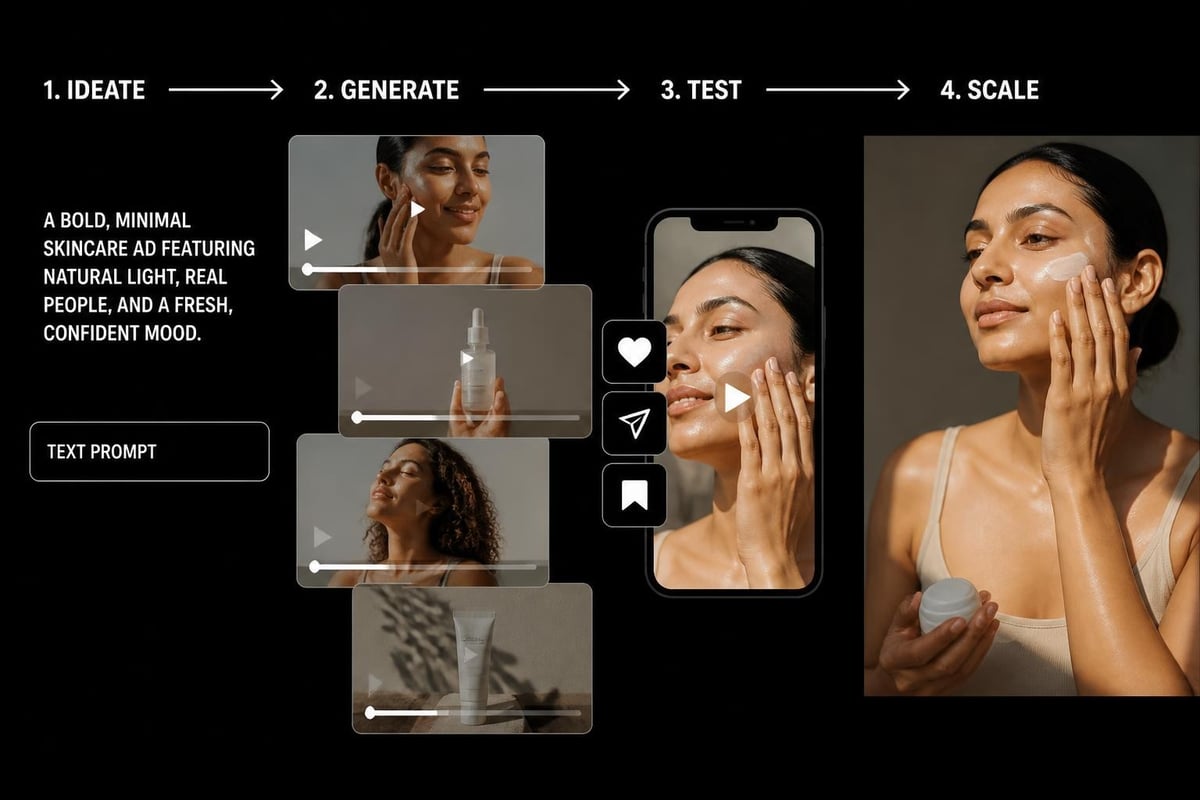
Here's how modern marketing teams work:
- Brainstorm hooks in your creative brief document
- Generate variations using your AI platform
- Review and select top performers
- Add captions and branding in your video editor
- Push to ad platforms for testing
- Analyze performance and iterate
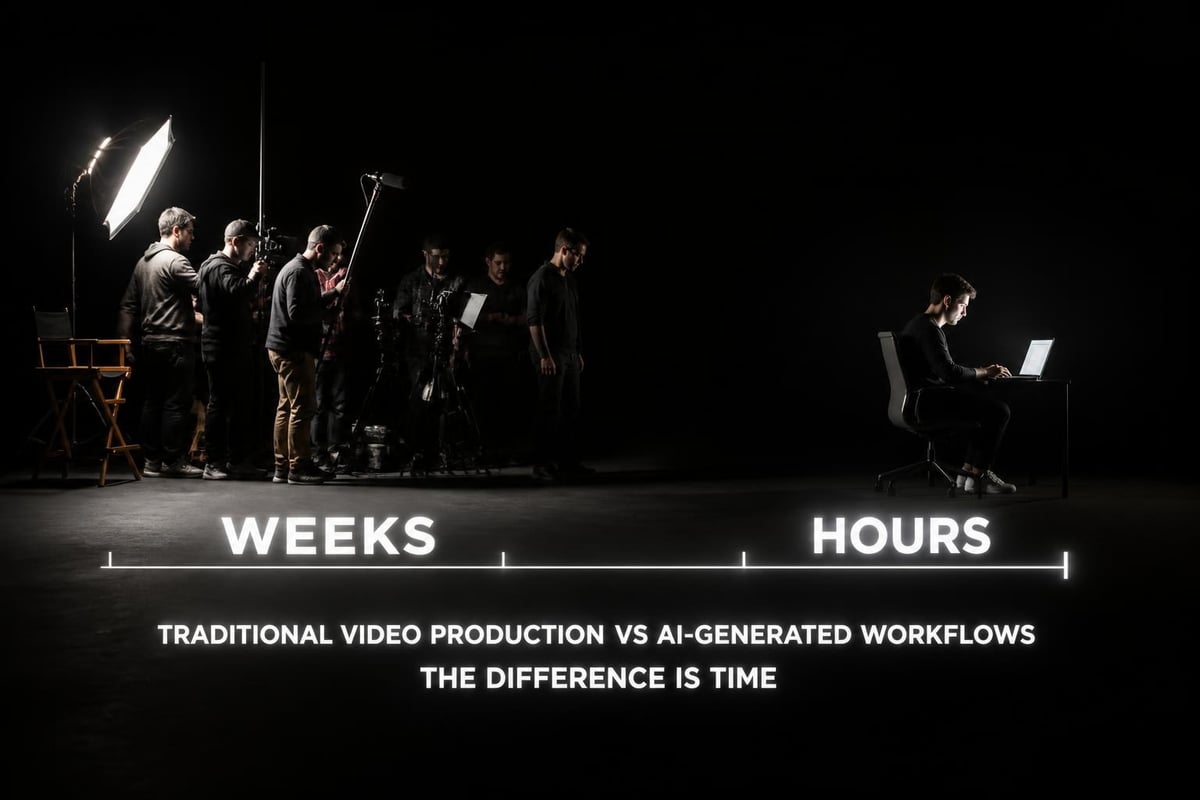
This entire cycle can happen in a single day. Compare that to traditional production timelines of 2-4 weeks.
Teams using create video with AI approaches report 5-10x increases in creative testing velocity. More tests mean finding winners faster and scaling profitably.
Building a Content Library
Smart marketers generate more content than they immediately need. With minimal marginal cost per video, you can:
- Create seasonal variations in advance
- Build backup content for underperforming campaigns
- Test future concepts without commitment
- Develop content for untapped channels
Looking at UGC video examples shows the variety possible when production constraints disappear.
Future Developments in Text-to-Video AI
The pace of advancement in AI video generation is breathtaking. What's coming next?
Longer-Form Content
Current research focuses on extending video length while maintaining consistency. VideoGen research demonstrates reference-guided approaches that enhance temporal consistency across longer sequences.
Expect 2027 to bring reliable 2-3 minute video generation. This opens opportunities for explainer videos, detailed product demonstrations, and educational content.
Interactive Editing
Future platforms will let you edit generated videos with text prompts. Don't like the background in a generated clip? Type "change background to outdoor cafe" and watch it transform. Want a different expression? "Make the actor more enthusiastic at the 5-second mark."
This iterative refinement approach combines generation speed with editing precision.
Multi-Speaker Scenarios
Current ai video generator from text prompt tools excel at single-actor content. The next frontier is realistic conversations between multiple AI actors, opening possibilities for testimonial-style content, expert interviews, and scenario-based demonstrations.
Cost Considerations and ROI
How does AI video generation compare financially to traditional production?
Traditional Production Costs
Hiring UGC creators typically runs $400-800 per video for established creators. That gets you one version with limited revisions. Need five variations to test different hooks? You're spending $2,000-4,000.
Professional production scales even higher: $3,000-15,000 for a single polished ad spot.
AI Generation Economics
Most platforms offer subscription models ranging from $30-300 monthly, with unlimited or high-volume generation included. The math becomes compelling quickly.
ROI calculation example:
- Monthly platform cost: $100
- Videos generated: 50
- Cost per video: $2
- Traditional creator cost: $500
- Savings per video: $498
- Monthly savings: $24,900
Even accounting for some traditional shoots for hero content, the blended cost drops dramatically.
Best Practices for Maximum Impact
After generating thousands of AI videos, these patterns consistently drive better performance:
Focus on the first three seconds. Your hook determines whether viewers keep watching. Test multiple opening lines and actor deliveries.
Match platform aesthetics. TikTok content looks different from LinkedIn ads. Adjust your prompts to match where the video will appear.
Embrace imperfection. Overly polished videos often underperform. The slight imperfections in AI-generated content can actually enhance authenticity.
Test actor diversity. Don't assume one demographic performs best. Let the data decide which actors resonate with your audience.
Iterate on scripts obsessively. Since generating new versions costs virtually nothing, test subtle wording changes. Small script adjustments often yield surprising performance differences.
Ethical Considerations and Disclosure
As AI video becomes mainstream, transparency matters. Should you disclose that videos are AI-generated?
Platform policies vary. Most social networks don't require disclosure for AI-generated marketing content, but some brands choose to be transparent anyway. The decision depends on your brand values and audience expectations.
What's universally important: never deceive viewers about product capabilities or create misleading testimonials. Early research on generating videos from text emphasizes the importance of responsible deployment.
Ethical guidelines:
- Accurately represent your product's real benefits
- Don't create fake customer testimonials
- Respect intellectual property in your prompts
- Follow platform-specific AI content policies
- Consider disclosure when building long-term audience trust
Industry-Specific Applications
Different industries find unique value in text-to-video AI.
E-commerce brands use it for endless product showcases without inventory photoshoots. Dropshipping ads benefit enormously since you're often marketing products you've never physically touched.
SaaS companies create feature demonstrations and customer success stories at scale. SaaS ads require frequent updates as products evolve, making AI generation particularly valuable.
Service businesses like law firms, dental practices, and real estate agencies use AI actors to build trust and explain complex offerings. Dental ads featuring friendly practitioners explaining procedures outperform traditional stock footage.
Fashion and beauty brands test products on diverse body types and skin tones without extensive photoshoots. The ability to show products on varied models democratizes representation while reducing costs.
The ai video generator from text prompt has fundamentally changed what's possible in video marketing, turning weeks-long production cycles into minutes of creative work. As these tools continue advancing, the competitive advantage belongs to brands that adopt them early and learn to prompt effectively. If you're ready to transform your ad creative workflow and start testing video variations at unprecedented scale, AdsRaw gives you everything you need to generate realistic UGC-style ads in minutes, select from diverse AI actors, and iterate your way to winning creative without ever hiring a single creator.