
AI in Advertising Examples: Proven Strategies for 2026

Modest Mitkus
June 1, 2026
The advertising landscape has undergone a seismic shift. What once required weeks of production, multiple creators, and substantial budgets can now happen in minutes. Artificial intelligence isn't just changing how we create ads-it's revolutionizing who can create them, how quickly they can be tested, and the scale at which brands can operate. The most compelling ai in advertising examples aren't found in futuristic concept labs-they're running right now, generating millions in revenue for brands that understood the opportunity early.
Programmatic Advertising That Actually Thinks
Programmatic advertising has evolved beyond simple automation. Modern AI systems analyze thousands of data points simultaneously, making split-second decisions about ad placement, bidding strategies, and audience targeting that no human team could replicate.
Real-time bidding platforms now leverage machine learning to predict which impressions will convert before the auction even completes. These systems examine user behavior patterns, device types, time of day, browsing history, and countless other signals to determine the perfect bid amount.
Here's what AI-powered programmatic delivers:
- Dynamic budget allocation that shifts spending toward high-performing placements within minutes
- Predictive analytics that forecast conversion likelihood before serving an impression
- Fraud detection that identifies bot traffic and invalid clicks in real-time
- Cross-channel optimization that balances spend across display, video, native, and social
Spectrum Reach has deployed over 15,000 AI-powered campaigns, demonstrating how even traditional media channels benefit from intelligent automation. Small businesses that previously couldn't afford television advertising now access broadcast-quality commercials through AI-assisted production and smart media buying.

The beauty lies in continuous learning. Each impression, click, and conversion feeds back into the algorithm, making tomorrow's campaigns smarter than today's.
UGC-Style Video Content at Scale
User-generated content consistently outperforms traditional advertising in engagement and conversion rates. The problem? Coordinating with multiple creators, managing revisions, and maintaining quality across dozens of variants drains time and budgets.
The Creator Bottleneck Solved
Traditional UGC production follows a painful timeline:
- Brief creation and creator outreach (3-5 days)
- Negotiations and contracts (2-3 days)
- Content creation and submission (5-7 days)
- Revision rounds (3-5 days)
- Final delivery and implementation (2-3 days)
That's roughly three weeks for one batch of content. Testing ten different hooks means months of coordination.
AI-powered platforms flip this model entirely. Brands selecting AI actors and scripting content variations generate finished videos in minutes rather than weeks. This acceleration fundamentally changes testing methodology-instead of carefully selecting three concepts to produce, marketers can test thirty.
| Traditional UGC | AI-Generated UGC |
|---|---|
| 15-20 days per batch | Minutes per batch |
| $500-2000 per video | Fraction of traditional cost |
| 3-5 variations maximum | Unlimited variations |
| Revision delays of 3-5 days | Instant adjustments |
The competitive advantage isn't just speed-it's iteration velocity. Brands discovering what resonates in week one can triple down on winning formulas in week two, while competitors are still waiting for their first creator deliverables.
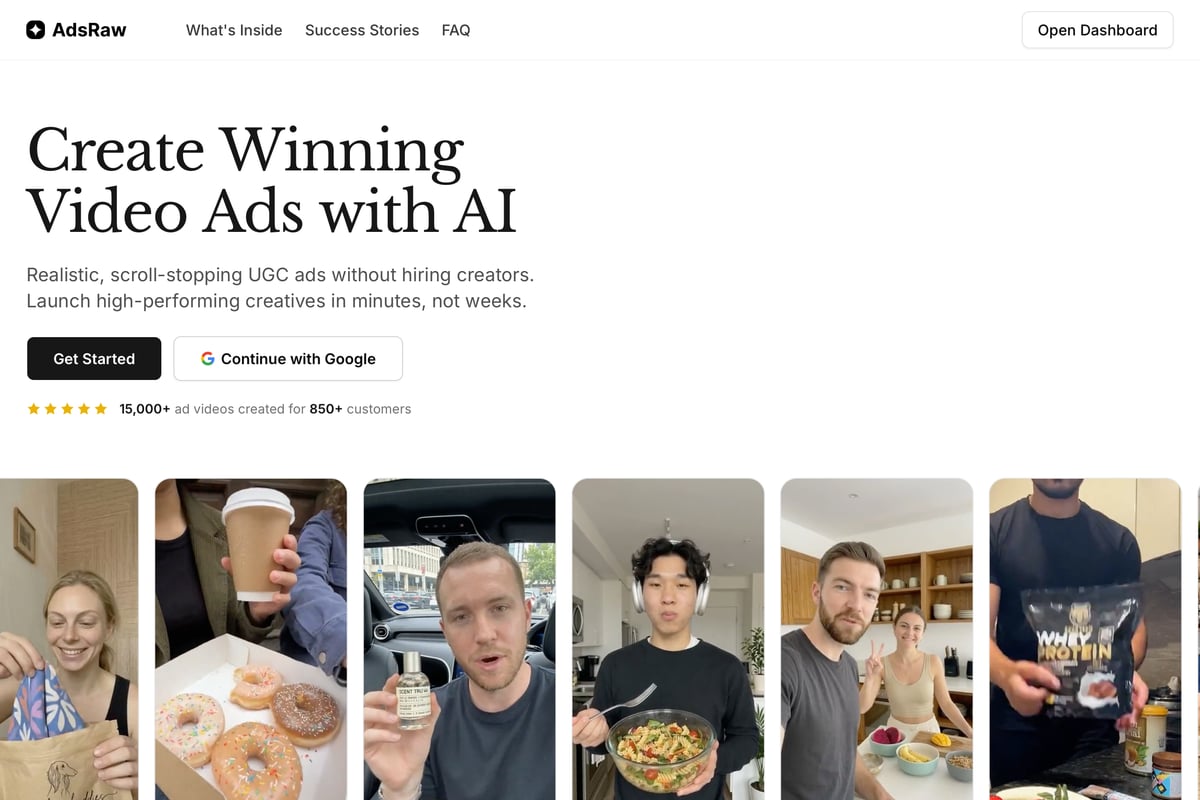
AdsRaw exemplifies this transformation, enabling marketers to generate realistic UGC-style videos without the traditional creator coordination headaches. The platform lets you select actors, craft scripts, and produce high-performing ad creatives instantly, fundamentally changing how quickly brands can test and optimize their messaging.
Personalization Beyond First Names
Remember when adding a first name to an email subject line felt revolutionary? Modern AI personalization makes that look quaint.
Dynamic Creative Optimization in Action
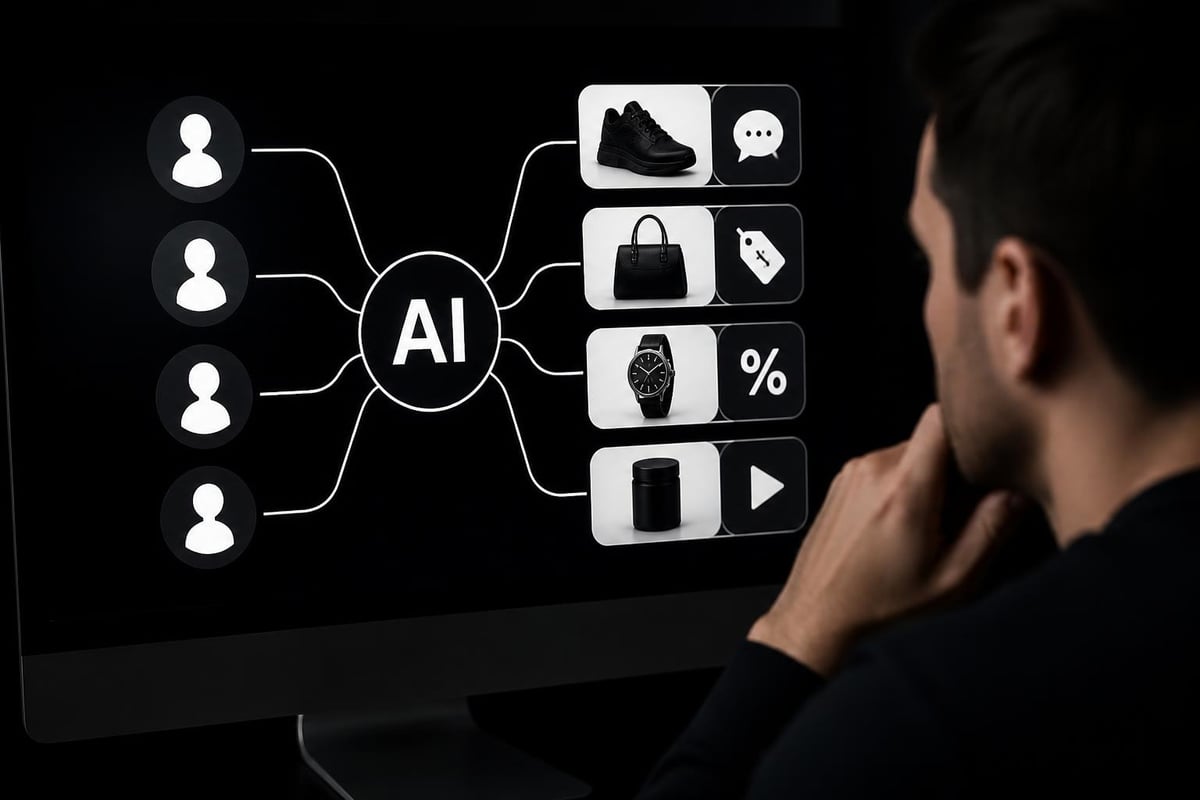
Dynamic creative optimization (DCO) assembles ads in real-time based on who's viewing them. The same campaign might show:
- Product A to users who browsed that category yesterday
- A 20% discount message to cart abandoners
- Social proof elements to first-time visitors
- Urgency messaging to users in their third session this week
These aren't separate campaigns requiring individual setup. AI systems test thousands of combinations simultaneously, learning which elements perform best for each micro-segment.
Key personalization dimensions AI manages:
- Geographic location and local preferences
- Device type and screen size optimization
- Time of day and day of week patterns
- Previous engagement history
- Demographic indicators
- Purchase stage in the customer journey
One e-commerce brand testing AI-generated UGC content across customer segments discovered that new visitors responded to educational content, while returning visitors converted best with limited-time offers and social proof. The AI automatically served appropriate creative to each group.
The sophistication extends to predictive personalization. Instead of reacting to what users already did, AI anticipates what they'll do next, serving content that addresses questions before they're asked.
Conversational Advertising and Chatbots
Static ads lead to static responses. Conversational AI creates interactive experiences where potential customers engage in dialogue rather than passive viewing.
From Click to Conversation
Chatbot-powered ads on Facebook Messenger and WhatsApp initiate conversations directly from ad units. Users asking about product specifications, availability, or pricing receive instant, accurate responses without leaving the platform.
This approach transforms the traditional funnel:
Old model: Ad → Landing page → Form → Wait for response New model: Ad → Instant conversation → Immediate answers → Purchase
Conversion rates improve dramatically when friction disappears. One beauty brand implementing conversational ads for skincare recommendations saw consultation-to-purchase rates triple compared to traditional landing page funnels.
The AI handles objection management, too. When users express price concerns, the system automatically presents payment plans or bundle discounts. Questions about ingredients trigger detailed explanations and certifications.
Predictive Analytics That Shape Strategy
The most powerful ai in advertising examples often happen before the ad even runs. Predictive analytics guide strategy by forecasting outcomes before budget deployment.
Audience Prediction and Lookalike Modeling
AI analyzes existing customer data to identify patterns invisible to human analysis. Machine learning algorithms processing thousands of variables determine that customers who purchase on Tuesday evenings, browse from mobile devices, and engage with video content have 3.2x higher lifetime value than average.
| Capability | Business Impact |
|---|---|
| Churn prediction | Retarget at-risk customers before they leave |
| Lifetime value forecasting | Optimize acquisition spending by segment |
| Purchase timing prediction | Serve ads when conversion probability peaks |
| Content preference modeling | Deliver formats users actually engage with |
Platforms like Google's AI capabilities in advertising demonstrate how predictive systems optimize everything from keyword bidding to ad scheduling, continuously learning what works and doubling down automatically.
Smart marketers use these predictions to inform creative strategy. Knowing that high-value customers respond best to educational content while price-sensitive segments prefer promotional messaging shapes production priorities.
Visual Recognition and Context-Aware Placement
AI doesn't just analyze structured data-it understands visual content within web pages and videos, enabling contextually relevant ad placement that feels native rather than intrusive.
Scene Recognition Technology
Modern AI systems analyze the actual content of videos and images where ads appear. A cooking video triggers food product ads. Fitness content surfaces athletic wear. Travel vlogs show luggage and booking services.
This goes far beyond keyword targeting. The AI actually watches the video, identifies objects, understands the mood, and determines whether the content aligns with brand safety requirements.
Advanced capabilities include:
- Sentiment analysis of video content
- Brand logo recognition to avoid competitor content
- Scene classification for mood-appropriate ad matching
- Audio analysis for topical relevance
Research into AI-driven contextual advertising explores how these systems optimize bidding strategies based on media context, creating more efficient ad spend while improving user experience through relevance.
The impact on performance is measurable. Ads appearing in contextually relevant environments see engagement rates 2-3x higher than random placement, with significantly better brand recall.
Voice-Activated and Audio Advertising
As smart speakers proliferate and podcast consumption grows, AI-powered audio advertising represents one of the fastest-growing channels in 2026.
Conversational Audio Ads
Voice-activated ads on smart speakers invite interaction. Instead of passive listening, users can ask follow-up questions, request samples, or make purchases through conversation.
A skincare brand's smart speaker ad might conclude: "Want to know which moisturizer is right for your skin type?" Users responding affirmatively enter a brief consultation that recommends products and offers immediate purchase options.
Dynamic audio insertion places different ads based on:
- Geographic location for local store mentions
- Time of day for meal delivery timing
- Listening history for relevant product categories
- Weather conditions for seasonal products
Content Generation and Creative Automation
Perhaps the most visible ai in advertising examples involve content creation itself. From copywriting to image generation to video production, AI tools handle creative tasks at unprecedented scale.
Multi-Format Content Production
Brands maintaining presence across Instagram, TikTok, YouTube, Facebook, and emerging platforms need constant content. AI systems generate platform-optimized variations from a single creative brief.
Input a product description and target audience. Output:
- 15-second TikTok video with trending audio and native-looking UGC-style presentation
- Instagram Story sequence with interactive elements
- YouTube pre-roll ad in multiple lengths (6, 15, 30 seconds)
- Facebook carousel with dynamic product showcases
- Display ads in every IAB standard size
The efficiency gain is staggering. What previously required coordinating multiple vendors and weeks of production now happens in one afternoon.
Copywriting AI generates hundreds of headline variations, tests them algorithmically, and identifies winners before human review. Image generation creates product photography in endless variations-different backgrounds, lighting conditions, model demographics-without physical photoshoots.
Sentiment Analysis and Social Listening
AI monitors social conversations at scale, identifying emerging trends, sentiment shifts, and opportunities for timely advertising responses.
Real-Time Trend Capitalization
When a topic starts trending, AI systems detect the pattern within minutes and adjust advertising strategy accordingly. This might mean:
- Pausing campaigns that could be misinterpreted during sensitive news events
- Launching new creative that taps into positive trending topics
- Adjusting messaging to reflect current sentiment
- Identifying micro-influencers driving conversations worth amplifying
One athletic apparel brand's AI detected early signals of a fitness challenge going viral on TikTok. Within hours, they launched UGC ads featuring the challenge hashtag, riding the wave to 10x normal engagement rates.
Sentiment analysis also guides customer service integration. Negative sentiment spikes trigger support team alerts and can automatically adjust ad spending in affected regions until issues resolve.
Attribution Modeling and Multi-Touch Analysis
The customer journey rarely follows a straight line. AI attribution models trace the complex path from first awareness to final conversion, crediting each touchpoint appropriately.
Cross-Channel Journey Mapping
Traditional last-click attribution massively undervalues upper-funnel activity. AI-powered multi-touch attribution recognizes that the Instagram ad viewed two weeks ago, the Google search last Tuesday, and the retargeting display ad yesterday all contributed to today's purchase.
Modern attribution considers:
- Device switching throughout the journey
- Offline influences like TV and radio exposure
- Dark social sharing that doesn't show in traditional analytics
- Delayed conversions from long consideration cycles
This intelligence reshapes budget allocation. Brands discover that channels showing poor last-click ROI actually drive substantial assisted conversions, deserving continued investment.
Email Optimization Through AI
Email might seem old-school, but AI makes it one of the most sophisticated advertising channels available.
Predictive Send Time Optimization
Rather than sending all emails at 10 AM Tuesday because a blog post from 2015 said so, AI analyzes individual engagement patterns to determine when each recipient is most likely to open and click.
Some users engage mornings on mobile during commutes. Others check email after dinner on desktop. AI sends to each person at their optimal time.
Subject line optimization tests thousands of variations simultaneously. The system learns that questions outperform statements for some segments, while urgency language works for others. It even adjusts emoji usage and length based on past performance.
Content personalization extends beyond "Hi [FirstName]." AI selects:
- Product recommendations based on browsing and purchase history
- Content topics aligned with demonstrated interests
- Offer types matching price sensitivity indicators
- Visual styles performing best for each recipient
One travel company's AI-optimized email program achieved 40% higher open rates and 65% higher click-through rates compared to their previous best-practices approach.
The Authenticity Challenge
As AI-generated advertising becomes more sophisticated, maintaining authenticity poses interesting challenges. Recent discussions about AI-generated ads becoming indistinguishable from human-created content raise important questions about transparency and brand differentiation.
Smart brands use AI as a tool for efficiency and scale while preserving unique brand voices. The technology handles repetitive production tasks, freeing creative teams to focus on strategy, emotional resonance, and innovative concepts AI can't replicate.
Hybrid Approaches Win
The most successful implementations combine:
- Human strategic thinking for campaign concepts and brand positioning
- AI execution for variant production and optimization
- Human creative direction ensuring brand consistency and emotional impact
- AI testing and learning to identify what resonates with audiences
This partnership leverages each party's strengths. Humans excel at creativity, empathy, and strategic thinking. AI excels at speed, scale, and pattern recognition across massive datasets.
Privacy-First Advertising Intelligence
With third-party cookie deprecation and privacy regulations tightening, AI helps advertisers navigate the post-tracking landscape through sophisticated first-party data strategies.
Cookieless Targeting Solutions
AI analyzes first-party data-website behavior, purchase history, email engagement-to build detailed customer understanding without privacy-invasive tracking.
Contextual targeting makes a comeback, but it's AI-enhanced. Rather than simple keyword matching, modern systems understand content semantically. An article discussing "budget-friendly family vacation planning" triggers ads for affordable hotels, even without those exact keywords appearing.
Federated learning enables audience insights without collecting personal data. The AI learns patterns across aggregated data while individual privacy remains protected.
Measuring What Matters
The explosion of ai in advertising examples creates a new challenge: determining which metrics actually matter. AI helps cut through vanity metrics to focus on business outcomes.
Incrementality Testing at Scale
AI-powered incrementality testing uses matched market testing and synthetic controls to measure true causal impact. Did the campaign actually drive sales, or would those purchases have happened anyway?
This approach reveals that some high-engagement campaigns generate zero incremental revenue, while others with modest click-through rates drive substantial new business.
The testing happens continuously and automatically, with AI adjusting spending away from non-incremental activities toward proven revenue drivers.
Looking Forward: AI Advertising in 2026 and Beyond
The ai in advertising examples we've explored represent current reality, not future speculation. Brands implementing these strategies today gain compounding advantages as their AI systems learn and improve.
The trajectory points toward even greater integration. As Google demonstrates with AI-generated TV commercials, the line between traditional and digital advertising blurs. Every channel becomes measurable, optimizable, and personalizable.
Research exploring how AI agents interact with advertisements suggests we're entering an era where AI systems advertise to other AI systems-personal AI assistants making purchasing decisions on behalf of users based on learned preferences and needs.
The brands winning this evolution aren't necessarily the biggest or most established. They're the ones willing to experiment, iterate quickly, and let data guide decisions over assumptions.
| Success Factor | Traditional Approach | AI-Enhanced Approach |
|---|---|---|
| Testing velocity | 3-5 tests monthly | 30-50 tests weekly |
| Creative production | Weeks per batch | Minutes per batch |
| Optimization cycles | Weekly manual reviews | Real-time automatic adjustments |
| Personalization depth | Broad segments | Individual-level customization |
| Budget efficiency | 60-70% of spend optimized | 90%+ of spend optimized |
The democratization aspect deserves emphasis. AI tools like those enabling rapid UGC video creation mean small businesses compete creatively with enterprises. The advantage shifts from production budget to strategic thinking and testing discipline.
AI has fundamentally transformed advertising from a creative gamble to a data-driven science, enabling brands to test faster, personalize deeper, and optimize continuously. The examples we've explored represent proven strategies already driving results for forward-thinking marketers. Whether you're scaling UGC content, optimizing programmatic campaigns, or personalizing customer journeys, AI provides the speed and intelligence modern advertising demands. AdsRaw helps you capture this opportunity by generating realistic UGC-style ad videos in minutes, letting you test unlimited variations and discover what actually converts without the traditional production bottlenecks holding your competitors back.