
UGC Style Ads: The Ultimate Guide for 2026

Modest Mitkus
May 5, 2026
The digital advertising landscape has undergone a dramatic transformation over the past few years, with consumers increasingly tuning out polished, corporate-feeling content. Instead, audiences gravitate toward authentic, relatable videos that feel less like traditional advertisements and more like recommendations from friends. This shift has given rise to ugc style ads, a format that has quickly become one of the most effective tools in performance marketing. These ads mimic the organic, creator-driven content that dominates social platforms, delivering significantly higher engagement rates and conversion metrics compared to traditional branded content.
Understanding UGC Style Ads and Their Impact
UGC style ads represent a fundamental departure from conventional advertising approaches. Unlike traditional commercials that showcase high production values, professional actors, and carefully scripted narratives, UGC ads are designed to look and feel like organic content created by everyday users. This format leverages the raw, unpolished aesthetic that audiences have come to trust on platforms like TikTok, Instagram, and YouTube.
The effectiveness of this approach stems from a simple psychological principle: people trust people more than they trust brands. When scrolling through social feeds, users have developed sophisticated filters for identifying and skipping obvious advertisements. However, content that appears to come from a peer or authentic creator breaks through this resistance.
Key Characteristics That Define UGC Style Ads
Several distinct elements separate ugc style ads from traditional advertising formats:
Casual filming style with natural lighting and handheld camera work
Direct-to-camera delivery that creates personal connection
Authentic language patterns without corporate jargon or scripted dialogue
Real product demonstrations showing actual use cases
Relatable settings like homes, cars, or everyday environments
Genuine enthusiasm rather than forced promotional energy
These characteristics combine to create content that feels native to social platforms. The videos blend seamlessly into user feeds, reducing the psychological friction that typically accompanies ad exposure.

The Business Case for UGC Style Ads
Brands allocating significant portions of their advertising budgets to ugc style ads have documented compelling performance improvements. The format addresses several critical challenges that plague modern digital marketing teams.
Performance Metrics That Matter
| Metric | Traditional Ads | UGC Style Ads | Improvement |
|---|---|---|---|
| Click-through Rate | 0.9% | 2.4% | +167% |
| Conversion Rate | 2.1% | 4.8% | +129% |
| Cost Per Acquisition | $45 | $28 | -38% |
| Engagement Rate | 1.2% | 5.7% | +375% |
These improvements translate directly to bottom-line results. A brand spending $50,000 monthly on paid social can potentially see double the conversions by shifting to ugc style ads, effectively halving their customer acquisition costs.
Combating Ad Fatigue at Scale
One of the most significant advantages of this format involves creative refresh rates. Traditional branded content requires extensive production timelines, making it difficult to maintain creative variety. The cost-effectiveness of UGC ads allows brands to test dozens of creative variations simultaneously, identifying winning combinations faster and keeping campaigns fresh.
Ad fatigue sets in when audiences see the same creative repeatedly. With ugc style ads, brands can produce high volumes of diverse content, rotating creatives before performance degradation occurs. This approach maintains campaign effectiveness over extended periods.
Creating Effective UGC Style Ads in 2026
The production landscape for ugc style ads has evolved significantly. While many brands initially relied exclusively on hiring individual creators, several approaches now exist for generating this content at scale.
Traditional Creator Partnerships
Working with content creators remains a viable path for many organizations. This approach involves:
Identifying relevant creators whose audiences align with target demographics
Establishing clear creative guidelines while allowing authentic expression
Providing products or detailed briefs for creators to develop content
Reviewing and selecting top-performing assets for paid promotion
Negotiating usage rights for extended campaign deployment
However, this method introduces challenges around consistency, timeline management, and costs that can quickly escalate as volume requirements increase.
The AI-Powered Alternative
Recent technological advances have introduced new possibilities for brands seeking ugc style ads at scale. AI-generated UGC-style content now achieves remarkable realism, allowing businesses to produce diverse creative assets without coordinating with multiple creators.
This technological approach offers several distinct advantages:
Immediate production without scheduling or coordination delays
Unlimited variations for extensive creative testing
Consistent brand messaging while maintaining authentic feel
Predictable costs without negotiation or hidden fees
Complete creative control with rapid iteration capabilities
The platforms enabling this transformation have matured significantly in 2026, producing content that audiences cannot distinguish from creator-generated material.
Strategic Implementation for Maximum Performance
Success with ugc style ads requires more than simply producing authentic-looking content. Strategic deployment across platforms and optimization based on performance data determine ultimate results.

Platform-Specific Considerations
Different social platforms require tailored approaches to maximize ugc style ads effectiveness:
TikTok demands shorter hooks (under 3 seconds), trending audio integration, and vertical formatting optimized for mobile viewing. The platform's algorithm particularly favors content that keeps viewers watching beyond the first few seconds.
Instagram Reels and Stories perform best with lifestyle integration, showing products in natural contexts rather than isolated demonstrations. The visual aesthetic should match organic creator content prevalent on the platform.
Facebook audiences respond to slightly longer-form content (30-60 seconds) with clear value propositions and direct calls-to-action. UGC-style static ads also perform exceptionally well on this platform, particularly for remarketing campaigns.
YouTube Shorts bridges the gap between traditional YouTube content and short-form video, allowing for slightly more detailed product explanations while maintaining the authentic ugc style ads format.
Creative Testing Frameworks
Developing a systematic approach to creating UGC-style video ads requires establishing clear testing protocols. Successful brands typically implement the following framework:
Phase 1: Concept Validation Launch 5-10 different creative concepts simultaneously with modest budgets. Each concept should explore different hooks, pain points, or value propositions. Monitor performance for 48-72 hours to identify early winners.
Phase 2: Iteration and Scaling Take the top 2-3 performing concepts and create variations testing different elements:
Opening hooks and attention-grabbing techniques
Product demonstration approaches
Testimonial styles and authenticity signals
Call-to-action phrasing and placement
Background settings and environmental context
Phase 3: Optimization and Refresh Continuously monitor performance metrics, retiring underperforming creatives and introducing fresh variations. Maintain a pipeline of new content to prevent ad fatigue.
Best Practices for 2026 and Beyond
The ugc style ads landscape continues evolving as platforms update algorithms and audience preferences shift. Several best practices have emerged as particularly effective in the current environment.
Authenticity Over Polish
The temptation to over-edit ugc style ads undermines their fundamental appeal. Viewers subconsciously recognize when content has been overly produced. Effective ads maintain elements of imperfection:
Natural speech patterns including pauses and filler words
Authentic lighting conditions rather than studio setups
Minimal color grading that preserves realistic tones
Genuine reactions and unscripted moments
These elements signal authenticity to viewers, building the trust that drives conversion performance.
Script Development Techniques
While ugc style ads should feel unscripted, the most effective content follows proven structural frameworks:
| Section | Duration | Purpose |
|---|---|---|
| Hook | 0-3 sec | Stop scrolling, introduce problem |
| Agitation | 3-10 sec | Deepen pain point awareness |
| Solution | 10-20 sec | Introduce product naturally |
| Demonstration | 20-40 sec | Show product solving problem |
| Call-to-Action | 40-45 sec | Direct next steps |
This structure maintains the authentic feel while ensuring all essential messaging elements receive coverage.
Diversity in Creative Assets
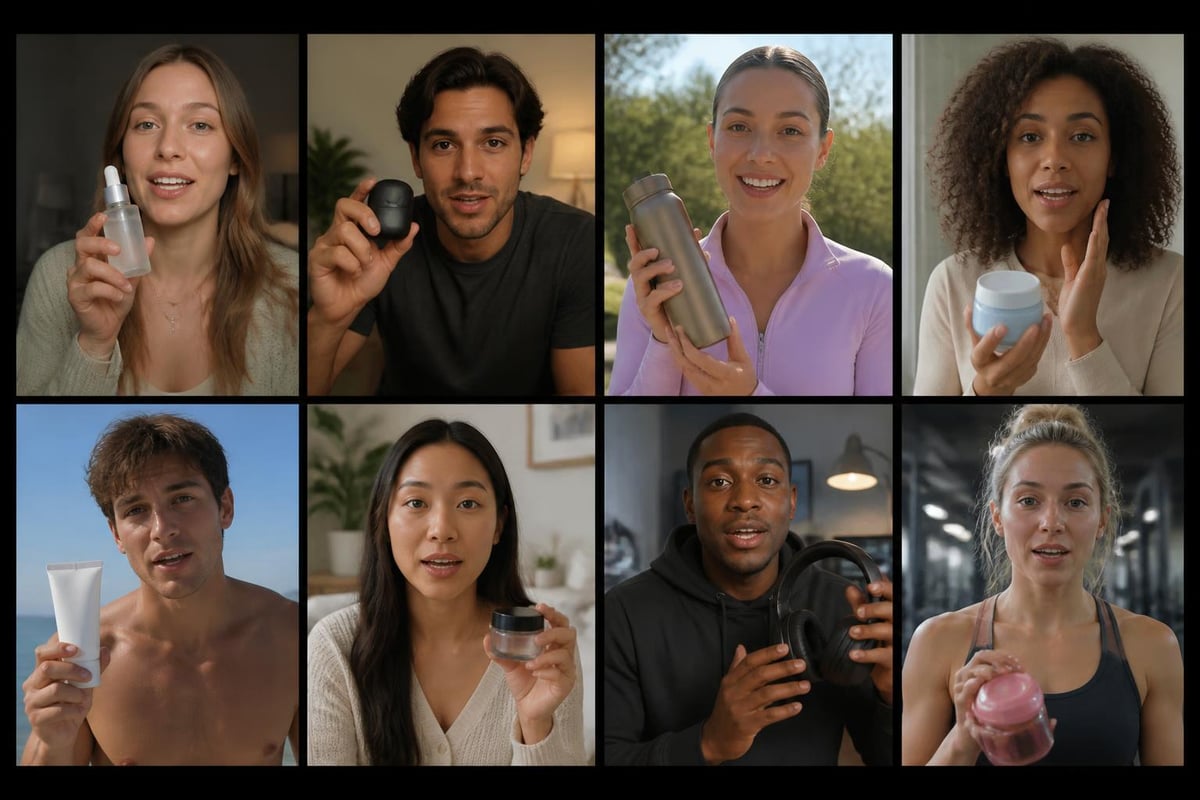
Audiences respond differently to various presentation styles. Successful UGC ad campaigns incorporate diversity across multiple dimensions:
Spokesperson variety including different ages, genders, and demographics
Use case scenarios demonstrating product versatility
Emotional tones ranging from humorous to serious depending on context
Visual settings across home, outdoor, and lifestyle environments
Problem-solution angles addressing different customer pain points
This diversity prevents creative fatigue while ensuring messaging resonates across audience segments.
Measuring Success and ROI
Implementing ugc style ads requires establishing clear performance benchmarks and measurement frameworks. Beyond vanity metrics, focus on indicators that directly correlate with business objectives.
Primary Performance Indicators
Thumb-Stop Ratio measures how effectively ads capture attention in the crucial first seconds. Calculate this by dividing 3-second video views by impressions. Successful ugc style ads typically achieve thumb-stop ratios above 30%.
Hook Rate tracks the percentage of viewers who watch beyond the first 3 seconds. This metric indicates whether the opening successfully creates curiosity or addresses relevant pain points.
Conversion Rate remains the ultimate success indicator, measuring how many viewers take desired actions. Track this metric across different creative variations to identify messaging and presentation approaches that drive results.
Cost Per Result provides the clearest ROI picture, showing how efficiently ad spend converts to business outcomes. Compare these figures across ugc style ads and traditional creative to quantify format effectiveness.
Attribution Challenges and Solutions
The multi-touch nature of modern customer journeys complicates direct attribution. A customer might encounter ugc style ads on TikTok, research on Google, and finally convert through an email campaign. Advanced attribution modeling helps brands understand the true contribution of each touchpoint.
Implementing platform pixels, UTM parameters, and dedicated landing pages for different creative variations provides granular performance data. This information enables informed decisions about creative direction and budget allocation.
Common Pitfalls to Avoid
Despite the proven effectiveness of ugc style ads, several common mistakes undermine campaign performance. Awareness of these pitfalls helps brands maximize their success potential.
Over-Branding Content
Heavy brand presence transforms ugc style ads into obvious advertisements, defeating their fundamental purpose. Logos, brand colors, and corporate messaging should be subtle or delayed until after establishing authentic connection. The product demonstration should feel organic rather than promotional.
Inconsistent Creative Testing
Sporadic testing yields unreliable results. Commit to consistent creative refresh cycles with sufficient budget allocation to gather statistically significant data. A single test with limited spend rarely provides actionable insights.
Ignoring Platform-Native Features
Each social platform offers unique features that boost organic reach when utilized. Incorporating trending sounds on TikTok, using relevant hashtags, and optimizing for platform-specific aspect ratios significantly improves performance metrics.
Failing to Refresh Creative
Even the highest-performing ugc style ads eventually experience fatigue as audiences see them repeatedly. Establish systematic refresh protocols before performance degradation becomes severe. Proactive creative rotation maintains consistent campaign efficiency.
Production at Scale for Enterprise Brands
Large organizations running substantial advertising budgets face unique challenges implementing ugc style ads across multiple product lines, regions, and audience segments. Traditional creator partnerships struggle to deliver the volume and consistency required.
Volume Requirements and Economics
An enterprise brand executing campaigns across 10 products in 5 markets may require over 200 unique creative assets each month to ensure freshness and facilitate comprehensive testing. At this scale, traditional creator partnerships can become logistically complex and financially burdensome.
The economics shift dramatically when production costs drop. Platforms like AdsRaw enable enterprise-scale production without proportional cost increases, making comprehensive creative testing economically viable. This capability fundamentally changes how brands approach paid social strategy.
Quality Control and Brand Safety
Producing ugc style ads at volume introduces quality control challenges. Establishing clear brand guidelines, approval workflows, and performance monitoring systems ensures consistency while maintaining the authentic aesthetic that drives results.
Automated quality checks can flag content containing prohibited elements, while human review focuses on strategic messaging alignment. This hybrid approach balances efficiency with brand protection requirements.
UGC style ads have fundamentally transformed digital advertising by prioritizing authenticity and audience connection over polished production values. The format's proven performance advantages make it essential for brands serious about paid social success in 2026. Whether you choose traditional creator partnerships or leverage AI-powered solutions, the key lies in maintaining authentic aesthetics while systematically testing and optimizing for results. AdsRaw empowers businesses to create realistic UGC style video ads using AI in minutes, enabling the rapid testing and scaling that modern performance marketing demands without the complexity and costs of managing creator networks.