
Facebook Ads AI: The Complete Guide for 2026

Modest Mitkus
May 13, 2026
The landscape of digital advertising has transformed dramatically, and nowhere is this shift more evident than in how brands approach Facebook advertising. Facebook ads AI has evolved from a futuristic concept into an essential toolkit that's reshaping how marketers create, target, and optimize their campaigns. Whether you're a seasoned performance marketer or just starting to explore paid social, understanding how artificial intelligence powers modern Facebook advertising isn't optional anymore-it's fundamental to staying competitive in 2026.
The Evolution of Facebook Ads AI
Facebook's advertising platform has been incorporating machine learning for years, but the recent surge in generative AI capabilities has created an entirely new playing field. The platform's AI now handles everything from audience segmentation to creative optimization, making decisions in milliseconds that would take human marketers hours or days to process.
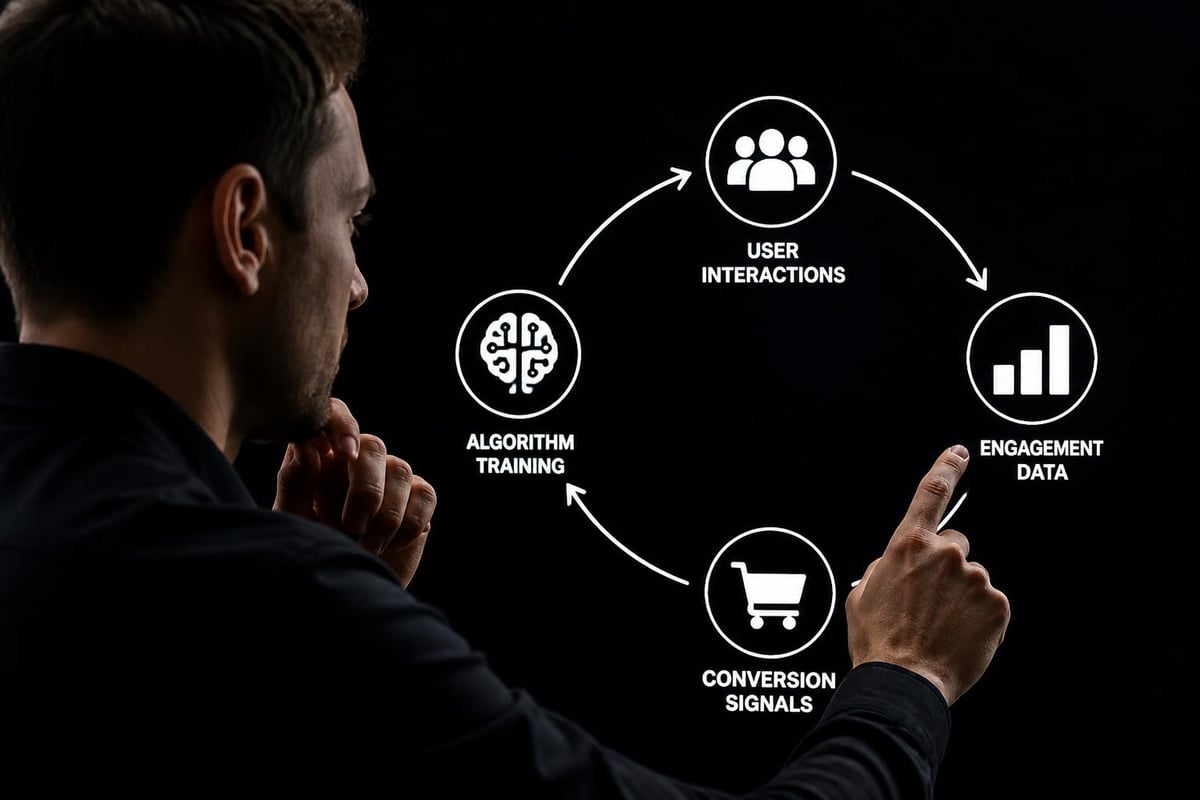
What changed? The answer lies in the sophistication of modern AI models. Facebook's algorithms can now analyze billions of data points across user behavior, engagement patterns, and conversion signals to predict which users are most likely to take action. This isn't just about showing ads to people who might be interested-it's about understanding intent at a granular level.
How AI Powers Facebook's Ad Delivery System
The magic happens behind the scenes through multiple AI layers working simultaneously:
- Predictive modeling that estimates conversion probability before showing your ad
- Dynamic creative optimization that assembles the best-performing combinations of headlines, images, and calls-to-action
- Budget allocation algorithms that shift spending toward the best-performing placements in real-time
- Fraud detection systems that identify and block suspicious activity
Recent research has shown how reinforcement learning enhances generative ad text on Facebook, demonstrating measurable improvements in click-through rates. These aren't marginal gains-we're talking about meaningful performance lifts that directly impact your bottom line.
Creative Generation: Where Facebook Ads AI Meets Content Production
Here's where things get interesting for brands struggling with the constant demand for fresh ad creative. Traditional ad production meant hiring photographers, videographers, and creators for every campaign iteration. That model doesn't scale when you need to test dozens of variations weekly.
Facebook ads AI has opened the door to entirely new approaches to creative production. While the platform itself offers some automated creative tools, the real revolution is happening in how brands generate the content that feeds into Facebook's system.
The UGC Content Challenge
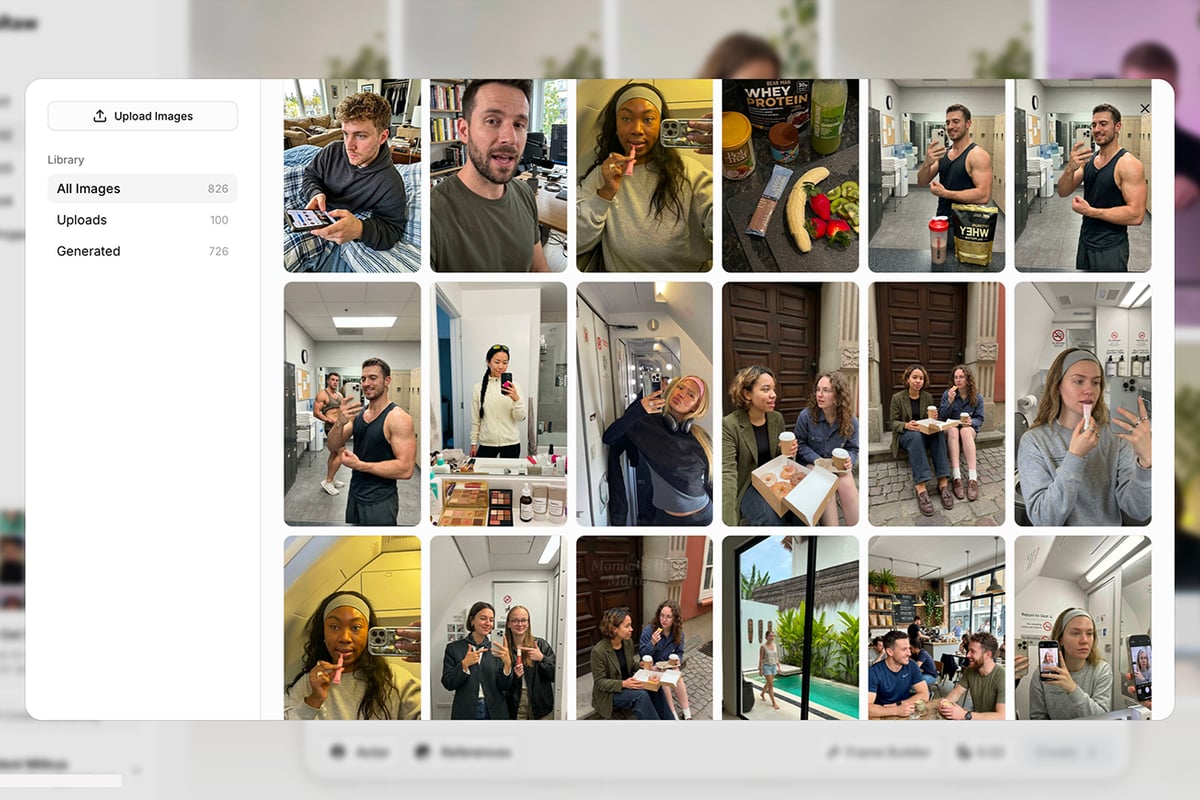
User-generated content style ads consistently outperform polished brand content on Facebook. Why? Because they feel authentic. They look like content from a friend, not an advertisement. But here's the problem: producing authentic UGC at scale is expensive and time-consuming.
Traditional UGC production involves:
- Recruiting creators who match your brand aesthetic
- Briefing them on product features and messaging
- Waiting for content delivery (often 1-2 weeks)
- Revisions and approvals
- Starting over when something doesn't work
That timeline doesn't match the pace of modern performance marketing, where successful brands test 20-30 creative variations per week. For brands looking to scale their creative production without the traditional bottlenecks, AI UGC Video Generator tools have emerged as a game-changing solution that produces realistic, scroll-stopping video content in minutes rather than weeks.
Targeting Precision: How AI Reads Between the Lines
Facebook's targeting capabilities have always been powerful, but facebook ads ai has taken them to another level entirely. The platform doesn't just target based on demographics or interests anymore-it predicts behavior.
Consider this: Facebook's AI can identify users who are likely to make a purchase within the next seven days, even if they've never visited your website. How? By analyzing patterns across millions of similar users and identifying the behavioral signatures that precede conversions.
| Traditional Targeting | AI-Powered Targeting |
|---|---|
| Age, gender, location | Predicted purchase intent |
| Stated interests | Behavioral patterns |
| Manual audience building | Automatic lookalike expansion |
| Static segments | Dynamic micro-segments |
| Quarterly updates | Real-time adjustments |
The Privacy Paradox
But there's a catch. As AI becomes more sophisticated at predicting user behavior, privacy concerns have intensified. Recent studies have revealed that large language models can infer private attributes from ad exposure alone, raising questions about what AI can deduce about users without accessing their data directly.
This has real implications for advertisers. While Facebook ads AI delivers better targeting, it operates within increasingly strict privacy frameworks. The deprecation of third-party cookies and iOS privacy changes have forced the platform to rely more heavily on on-platform signals and predictive modeling.
Campaign Optimization: AI as Your Always-On Media Buyer
Remember when you had to manually adjust bids throughout the day to capture peak performance windows? Facebook ads AI has automated that entirely-and taken it several steps further.
Modern campaign optimization handles complexities that human media buyers simply can't match at scale:
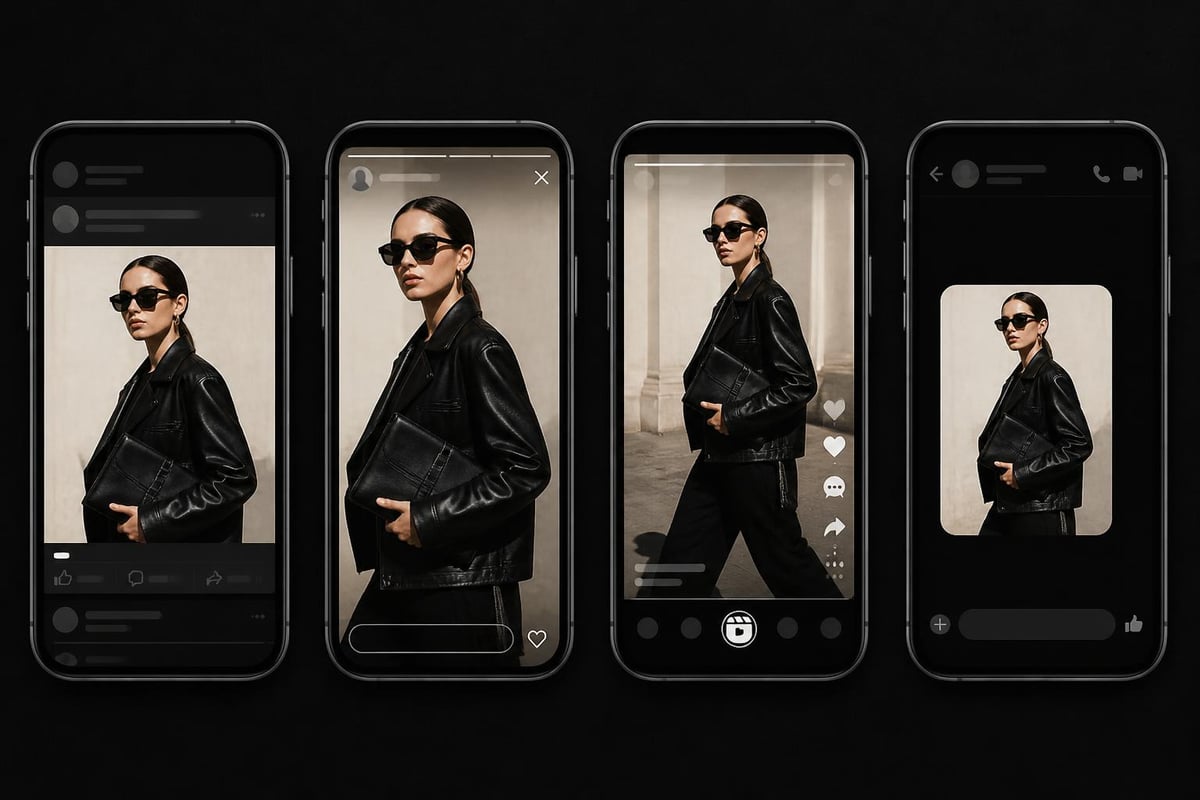
- Cross-placement budget allocation that moves money between Feed, Stories, Reels, and Messenger based on real-time performance
- Bid strategy automation that adjusts for auction competition every single impression
- Creative fatigue detection that identifies when an ad is losing effectiveness before metrics visibly decline
- Seasonal adjustment modeling that anticipates demand fluctuations based on historical patterns
The result? Campaigns that perform better with less manual intervention. But-and this is crucial-that doesn't mean you can set it and forget it.
The Human-AI Partnership
The most successful Facebook advertisers in 2026 aren't the ones who hand everything over to AI. They're the ones who understand how to work with the algorithms. This means:
Strategic inputs that guide AI toward your business objectives, not just surface-level metrics like clicks. If you optimize for clicks when you need purchases, the AI will deliver exactly what you asked for-lots of clicks from people who won't buy.
Creative diversity that gives the AI multiple options to test and optimize. Facebook's algorithms can identify winning creative, but they can only work with what you provide. Feed the system with varied hooks, formats, and messaging angles.
Ongoing testing frameworks that systematically introduce new variables. The brands winning on Facebook aren't running the same campaigns month after month-they're constantly testing new audiences, creative approaches, and offers.

The Dark Side: AI-Powered Ad Fraud and Scams
Not all applications of facebook ads ai are beneficial. The same tools that help legitimate businesses create better ads have also empowered bad actors. Research has documented how spammers and scammers utilize AI-generated images on Facebook to build audience and credibility before pivoting to fraudulent schemes.
The security implications extend beyond spam. Cybercriminals have created sophisticated campaigns where fake Facebook ads for AI video tools distribute malware, exploiting user interest in AI technologies to compromise devices.
Transparency and Trust
In response to these challenges, regulatory bodies are stepping in. South Korea now requires advertisers to label AI-generated ads, and similar regulations are emerging globally. This isn't just about compliance-it's about maintaining user trust in a landscape where the line between human-created and AI-generated content is increasingly blurred.
For legitimate advertisers, this means being proactive about disclosure. If you're using AI to generate creative content, consider being transparent about it. The brands that build trust now will have a significant advantage as consumers become more aware of AI's role in advertising.
Practical Implementation: Getting Started with Facebook Ads AI
Enough theory-how do you actually put this into practice? Let's break down a systematic approach that works in 2026.
Step 1: Audit Your Current Creative Production
How long does it take you to produce ad creative? What's your cost per asset? Most brands discover they're spending 60-80% of their ad production budget on content that never makes it past initial testing. That's backwards.
The winning approach: Generate more, spend less per asset. This allows you to test aggressively and discover what actually works before committing significant resources.
Step 2: Build a Testing Framework
| Test Type | Frequency | Variables | Success Metric |
|---|---|---|---|
| Hook tests | Weekly | Opening 3 seconds | 3-second view rate |
| Format tests | Bi-weekly | Video, carousel, static | CTR |
| Offer tests | Monthly | Price points, bundles | ROAS |
| Audience tests | Monthly | Interest/lookalike variations | CPA |
Your testing calendar should be aggressive but organized. Random testing produces random results. Systematic testing produces insights.
Step 3: Leverage Facebook's Native AI Tools
Don't overlook what's already built into the platform:
- Advantage+ shopping campaigns that automate audience targeting entirely
- Dynamic creative that tests different combinations of assets automatically
- Automated rules that pause underperforming ads based on your criteria
- Attribution modeling that shows you the true customer journey, not just last-click
These tools are free. Use them. The brands still manually managing every campaign setting are leaving performance on the table.
Step 4: Feed the Algorithm Quality Signals
Facebook ads AI is only as good as the data it receives. This means:
Installing the Facebook Pixel correctly and tracking meaningful events, not just page views. An event for "Add to Cart" is infinitely more valuable than "Page View" for optimization purposes.
Setting up Conversions API for server-side tracking that isn't affected by iOS privacy changes or ad blockers. This gives Facebook more complete data to optimize against.
Defining clear conversion windows that match your actual sales cycle. If people typically take 7 days to purchase, don't optimize for 1-day conversions.
The Content Velocity Advantage
Here's what separates winning brands from everyone else in 2026: content velocity. The ability to rapidly produce, test, and iterate on creative assets.
Think about it this way: If Competitor A tests 5 creative concepts per month and Competitor B tests 25, who's more likely to find the winning angle first? The math is simple, but execution is hard with traditional production methods.
This is where AI-powered content creation tools become strategic assets rather than nice-to-haves. When you can generate realistic video variations in minutes instead of weeks, your testing velocity increases by an order of magnitude. Suddenly you're not choosing between testing hook variations OR testing different offers-you can test both simultaneously.
The tools available through platforms focused on AI-driven ad creation have made this level of testing accessible to brands of all sizes, not just those with six-figure creative budgets.
Data Privacy and Personalization: Walking the Tightrope
Meta's announcement that they'll start using AI chat data to target ads sparked immediate backlash, highlighting the tension between personalization and privacy that defines modern facebook ads ai.
As an advertiser, you're caught in the middle. Users want relevant ads (nobody wants to see irrelevant promotions), but they're increasingly uncomfortable with how that relevance is achieved. The solution isn't to retreat from personalization-it's to be thoughtful about it.
Principles for responsible AI-powered advertising:
Focus on contextual relevance over behavioral tracking where possible. If you sell running shoes, targeting people interested in marathons is less invasive than targeting based on their private messages about fitness goals.
Be transparent about data usage in your privacy policies and ad copy. Users appreciate honesty about how their information is used.
Provide value in exchange for attention. The best ads don't feel like ads-they provide genuine information, entertainment, or solutions.
Advanced Strategies: Going Beyond the Basics
Once you've mastered the fundamentals, facebook ads ai opens up sophisticated strategies that weren't possible in the pre-AI era.
Multi-Variant Sequential Testing
Instead of A/B testing, try A/B/C/D/E testing with automated sequential elimination. Launch five creative variants, let the AI identify the top two performers after 1,000 impressions each, eliminate the bottom three, and scale the winners. This finds optimal creative faster than traditional split testing.
Predictive Budget Allocation
Don't set monthly budgets-set campaign objectives and let AI allocate budgets based on predicted performance. If the algorithm sees opportunity in a particular audience segment, why artificially constrain it with arbitrary budget caps?
Cross-Platform Creative Syncing
What works on Facebook often works on Instagram, but not always in the same format. Use AI to automatically resize and reformat winning creative across placements, then let platform-specific algorithms optimize from there.
Measuring Success: Metrics That Matter
With facebook ads ai handling optimization, what should you actually measure? The metrics that matter have shifted.
Old metrics to deprioritize:
- Cost per click in isolation
- Impressions and reach without conversion context
- Click-through rate on its own
- Individual ad performance without creative category analysis
New metrics to prioritize:
| Metric | Why It Matters | Target Benchmark |
|---|---|---|
| Blended ROAS | True profitability across all touchpoints | 3.0+ for most DTC |
| MER (Marketing Efficiency Ratio) | Total revenue / total ad spend | 4.0+ sustainable |
| Creative win rate | % of new creative that beats control | 20%+ indicates good testing |
| Time to scale | Days from test to scaled campaign | <7 days ideal |
| Hook hold rate | % of viewers who watch past 3 seconds | 35%+ for UGC style |
The brands winning with facebook ads ai aren't obsessing over individual metrics-they're looking at the full funnel and optimizing for business outcomes, not vanity numbers.
Future-Proofing Your Facebook Ads Strategy
What's next for facebook ads ai? While we can't predict every development, several trends are clearly emerging.
Increased video dominance: Facebook's algorithm increasingly favors video content, especially Reels. AI makes video production scalable, which means the competitive advantage goes to brands that can produce high-quality video at velocity.
Voice and audio integration: As AI voice synthesis improves, expect more ads featuring AI-generated voiceovers that sound indistinguishable from human speakers. This removes another production bottleneck.
Real-time personalization: Imagine ads that dynamically adjust messaging, visuals, and offers based on the specific user viewing them. The technology exists-expect broader adoption in 2026.
Augmented reality experiences: AI-powered AR try-ons and product visualizations directly in Facebook ads will become standard for fashion, beauty, and home goods categories.
The common thread? All these advances reduce the friction between creative concept and execution. The barrier to testing new ideas continues to fall, which means the brands that win will be those that think faster, not just those with bigger budgets.
Building Your AI-Powered Ad System
Creating a sustainable facebook ads ai system isn't about chasing every new tool or feature. It's about building a systematic approach that compounds over time.
Start with foundation: proper tracking, clear conversion goals, and budget flexibility for testing. Without these basics, no amount of AI sophistication will save you.
Layer in automation strategically: Don't automate everything at once. Introduce AI-powered tools one at a time, measure their impact, and adjust. This lets you understand what's actually moving the needle.
Maintain creative diversity: The biggest mistake brands make is finding one winning ad and running it into the ground. AI can optimize creative, but it can't invent entirely new concepts-that's still your job.
Review and iterate: Set weekly reviews of campaign performance, creative win rates, and testing results. The insights you gain should inform next week's tests, creating a continuous improvement cycle.
Remember that facebook ads ai is a tool, not a strategy. The strategy still comes from understanding your customers, your market position, and your unique value proposition. AI amplifies good strategy-it doesn't create strategy for you.
Facebook ads AI has fundamentally changed what's possible in paid social advertising, but success still requires the right combination of strategic thinking and systematic execution. When you can produce high-quality, scroll-stopping creative at scale, test aggressively, and let AI optimize the details, you unlock performance that simply wasn't achievable a few years ago. AdsRaw helps brands bridge the gap between AI-powered optimization and creative production by generating realistic UGC-style video ads in minutes, giving you the content velocity needed to feed Facebook's algorithms and discover winning campaigns faster.