
Create Video from Image AI: The 2026 Guide

Modest Mitkus
May 9, 2026
The ability to create video from image AI has fundamentally changed how businesses approach visual content in 2026. What once required expensive production crews, elaborate setups, and weeks of post-production now happens in minutes through sophisticated AI models. This transformation isn't just about convenience - it's about unlocking creative possibilities that were previously impossible for most brands. Whether you're testing ad variations, bringing product photography to life, or creating scroll-stopping social content, image-to-video AI has become an essential tool in the modern marketer's arsenal.
How Image-to-Video AI Technology Works
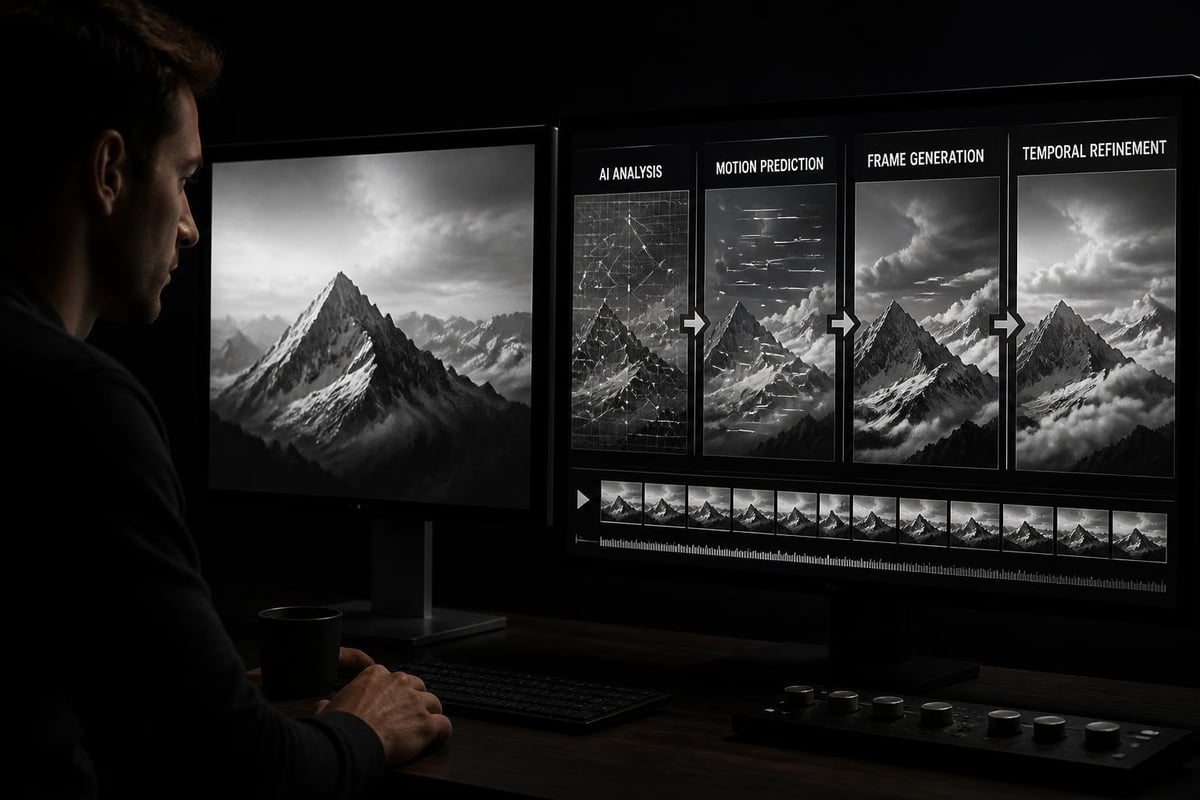
The technology behind the ability to create video from image AI relies on advanced diffusion models and temporal coherence algorithms. These systems analyze static images and generate intermediate frames that create smooth, natural motion. Unlike early attempts that produced jerky or uncanny results, today's models understand physics, object permanence, and realistic movement patterns.
Modern image-to-video systems typically work through several key processes:
- Analyzing the spatial relationships and depth information within the source image
- Predicting logical motion paths based on object types and scene context
- Generating temporally consistent frames that maintain visual coherence
- Applying refinement passes to ensure smooth transitions and natural motion
The Step-Video-TI2V Technical Report showcases how state-of-the-art models with 30 billion parameters can now generate videos up to 102 frames based on both text and image inputs. This represents a massive leap from earlier systems that struggled with consistency beyond a few seconds.
The Evolution of Motion Generation
Creating convincing motion from still images requires understanding context. When you create video from image AI in 2026, the system doesn't just animate pixels randomly. It understands that a product shot should showcase the item naturally, that a person in an image might blink or shift their weight, and that environmental elements like fabric or hair should move according to physics.
Recent research like NVIDIA's Motion-I2V framework demonstrates how explicit motion modeling creates consistent results even with large motion and viewpoint variations. This matters tremendously for brands that need reliable, on-brand content rather than experimental outputs.
Practical Applications for Businesses
The applications for image-to-video AI extend far beyond simple animation effects. Businesses across industries are leveraging this technology to solve real production challenges and accelerate their content pipelines.
E-Commerce and Product Marketing
Product pages that feature video convert significantly better than those with static images alone. But commissioning professional product videos for every SKU, every angle, and every variation quickly becomes cost-prohibitive. When you create video from image AI, you can transform existing product photography into dynamic showcases that demonstrate features, highlight details, and create engagement without reshooting anything.
Consider a fashion brand with 500 SKUs. Traditional video production might cost $200-500 per product video, totaling $100,000-250,000. AI-generated videos from existing product images reduce this to a fraction of the cost while enabling rapid testing of different presentation styles.
| Traditional Video Production | Image-to-Video AI |
|---|---|
| $200-500 per product | $5-20 per product |
| 2-4 weeks turnaround | Minutes to hours |
| Requires reshoot for changes | Instant variations |
| Limited test variations | Unlimited iterations |
Social Media Content Creation
Social platforms increasingly prioritize video content in their algorithms. Brands need a constant stream of fresh video to maintain visibility, but hiring creators or building in-house video teams isn't feasible for everyone. The ability to create video from image AI allows marketing teams to repurpose existing photo libraries, transform user-submitted images, and generate multiple variations for A/B testing.
The TIP-I2V dataset with over 1.70 million user-provided prompts reveals how diverse real-world use cases have become. From simple product animations to complex narrative sequences, the applications span nearly every content category.
Advanced Techniques and Control Methods
Modern platforms that create video from image AI offer sophisticated controls beyond basic "animate this image" functionality. Understanding these capabilities helps you achieve professional results that align with your brand standards.
Motion Trajectory Control
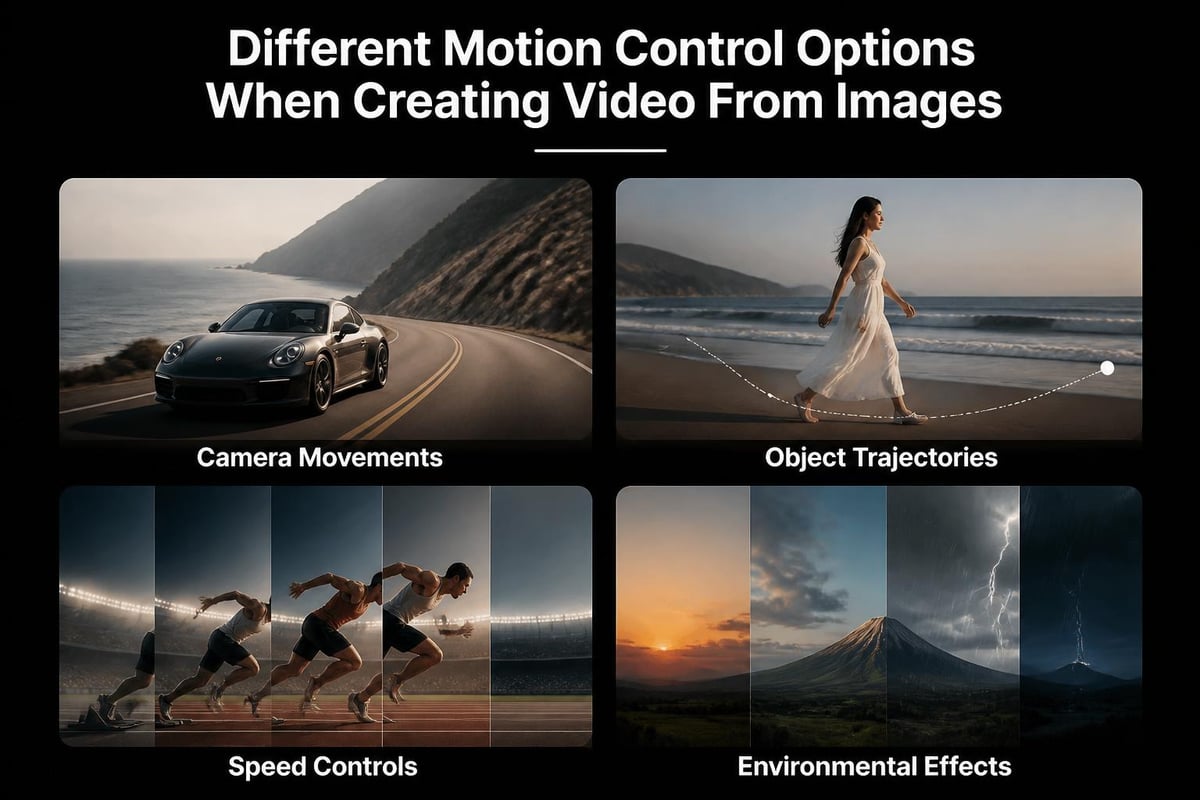
Rather than accepting whatever motion the AI generates by default, advanced systems let you specify exactly how elements should move. Adobe's MotionCanvas research demonstrates how users can design cinematic video shots by controlling both object motion and camera movements in a scene-aware manner.
Key controllable parameters include:
- Camera movement (pan, tilt, zoom, dolly)
- Object motion paths and speeds
- Focal points and depth of field changes
- Transition timing and easing curves
- Environmental effects (wind, lighting shifts)
This level of control transforms image-to-video from a novelty into a production tool. You're not gambling on whether the output matches your vision - you're directing it.
Multi-Shot Sequences
Creating a single animated clip from one image is useful, but many marketing applications require cohesive sequences. Advanced workflows now support multi-shot narratives where different source images connect into longer video stories. This enables use cases like:
- Product journey videos - showing packaging, unboxing, product in use
- Before/after transformations - demonstrating product benefits across stages
- Story-based ads - connecting multiple scenes into narrative arcs
- Tutorial sequences - walking through step-by-step processes
When you create video from image AI using multi-shot approaches, the system maintains visual consistency across cuts while allowing each segment to have distinct motion and focus.
Quality Considerations and Best Practices
Not all AI-generated videos achieve the same quality level. Understanding what impacts output quality helps you get better results consistently.
Source Image Optimization
The quality of your input images directly affects the videos you can create. Higher resolution sources with good lighting and clear subjects produce superior animations. Specific optimization strategies include:
- Resolution: Use images at least 1920x1080 for HD output
- Lighting: Well-lit subjects with clear shadows help the AI understand depth
- Composition: Clean backgrounds and unobstructed subjects animate more convincingly
- Focus: Sharp, in-focus elements translate better than soft or blurry areas
A product photographer's high-quality hero shot will consistently outperform a smartphone snapshot when you create video from image AI, even though the latter can still produce usable results.
Motion Appropriateness
Different subjects suit different types of motion. Understanding what works for each content type prevents awkward or unnatural results:
| Content Type | Effective Motion | Avoid |
|---|---|---|
| Product shots | Slow rotation, subtle zoom, floating | Rapid spinning, dramatic tilts |
| Portraits | Slight breathing, eye movement, hair flow | Exaggerated expressions, body movement |
| Environments | Atmospheric elements, camera drift | Object motion, unrealistic physics |
| Text/graphics | Depth parallax, subtle perspective shifts | Character animation, organic motion |
Integration with Marketing Workflows
The true power of image-to-video AI emerges when integrated into existing marketing operations rather than used as a standalone novelty. Smart teams are building these capabilities into their standard content production pipelines.
Rapid Creative Testing
Performance marketers know that finding winning ad creative requires testing dozens or hundreds of variations. When you create video from image AI, you can generate multiple video versions of the same concept in the time it would take to produce a single traditional video.
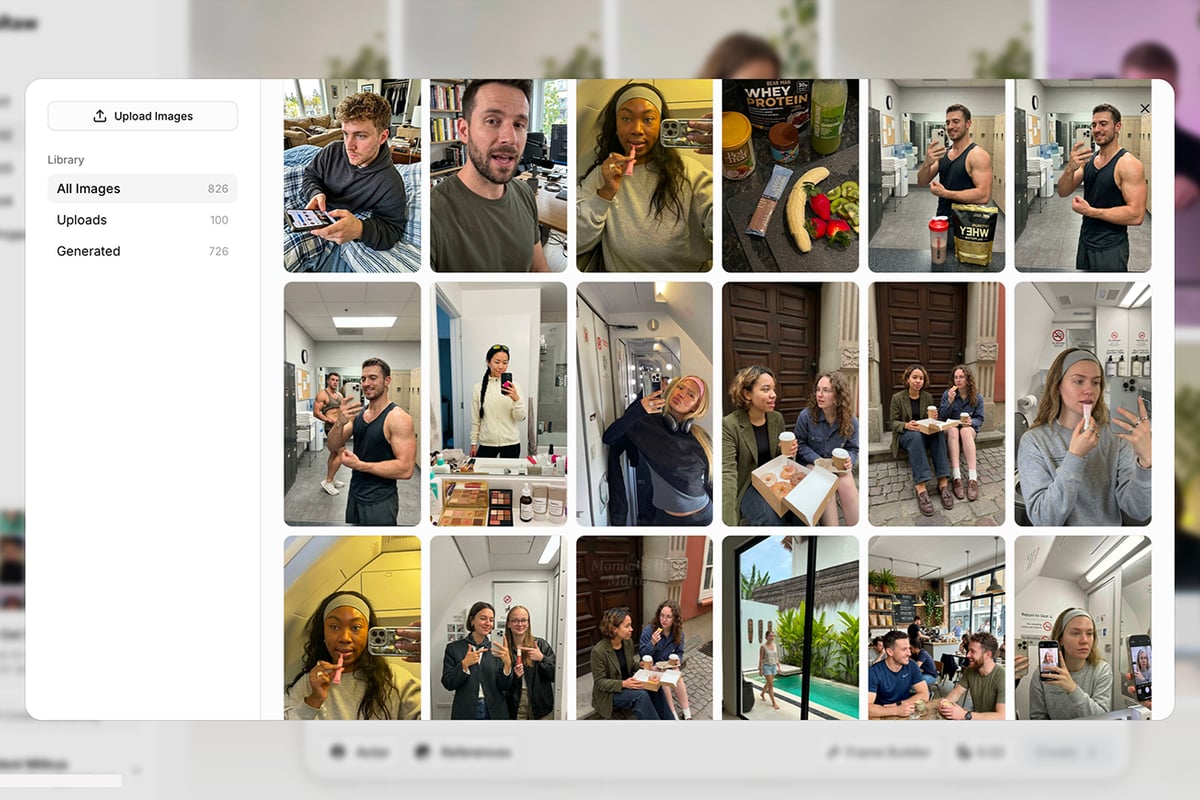
For brands focused on user-generated content style advertising, AI-generated videos from product images provide the authentic, relatable feel that performs well on social platforms. AdsRaw specializes in this exact use case, allowing businesses to create realistic UGC-style video ads from product images without hiring creators. The platform enables rapid testing of different angles, presentations, and hooks to identify which creative approaches drive the best performance before scaling media spend.
Content Localization
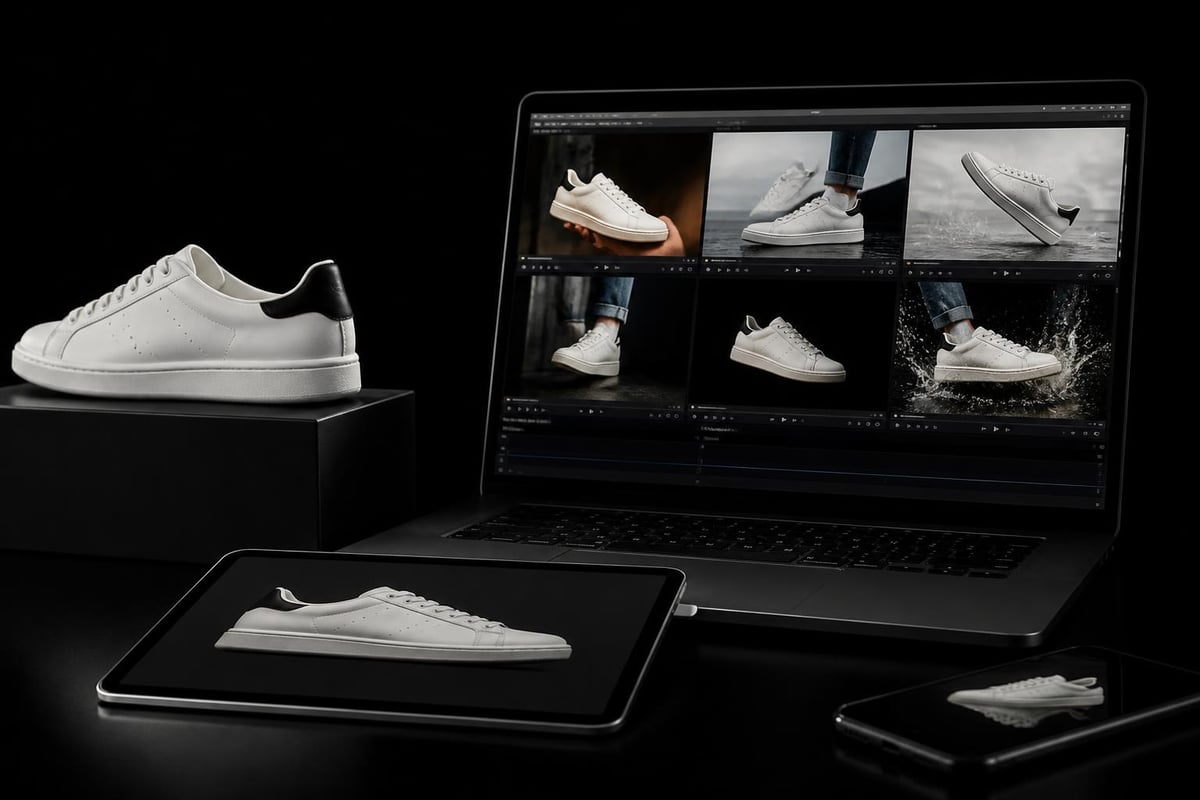
Global brands often need the same creative concepts adapted for different markets. Traditional video production requires reshooting with local talent, locations, and cultural contexts. Image-to-video AI enables more flexible approaches where visual elements can be adjusted and reanimated for regional variations without starting from scratch.
The AIGCBench evaluation framework provides comprehensive benchmarks for assessing video generation quality across different tasks, helping teams establish quality standards for localized content.
Current Limitations and Workarounds
While the technology to create video from image AI has advanced dramatically, understanding current limitations helps set realistic expectations and plan effective workflows.
Temporal Coherence Challenges
Despite improvements, maintaining perfect visual consistency across longer videos remains challenging. Objects may subtly shift appearance, lighting can fluctuate, and background elements might "breathe" unnaturally. Most platforms perform best with shorter clips (5-10 seconds) rather than extended sequences.
Workarounds include:
- Planning content as connected short clips rather than single long takes
- Using motion and composition to minimize visible consistency issues
- Strategically placing cuts at natural transition points
- Applying stabilization and smoothing in post-processing
Complex Motion Scenarios
Certain types of motion remain difficult for AI systems. Human hands performing detailed tasks, complex object interactions, and physics-dependent scenarios (liquids, fabrics under stress) may produce unconvincing results. The Imagen Video research explores these challenges in text-to-video generation, many of which also apply to image-to-video scenarios.
When you need these specific elements, combining AI-generated base animations with traditional VFX work often produces better results than relying solely on automated generation.
Platform Selection Guide
Dozens of tools now offer image-to-video capabilities, but they differ significantly in quality, control options, and pricing models. Selecting the right platform depends on your specific use case and requirements.
Evaluation Criteria
When comparing platforms, consider these key factors:
- Output quality and consistency - Request test generations before committing
- Control granularity - Can you specify motion, or is it automatic?
- Processing speed - Minutes vs. hours makes a difference at scale
- Resolution and format options - Does it support your target platforms?
- Batch processing - Can you create video from image AI in bulk?
- Integration capabilities - API access, existing tool compatibility
- Pricing structure - Per-video, subscription, or credit-based models
The comprehensive survey of text-to-image and text-to-video models provides academic context for understanding different technical approaches and their trade-offs.
Specialized vs. General-Purpose Tools
Some platforms focus specifically on image-to-video generation, while others offer it as one capability within broader AI creative suites. Specialized tools often provide more refined controls and higher quality for this specific task, while general-purpose platforms offer workflow convenience if you're already using them for other functions.
For marketing teams specifically focused on ad creative production, platforms designed for that use case typically deliver better results than general AI art tools adapted for video. They understand the specific requirements of advertising content - authentic presentation, brand consistency, performance-oriented variations - rather than treating video generation as pure artistic expression.
Future Developments to Watch
The trajectory of image-to-video AI technology suggests several developments likely to emerge over the next 12-24 months that will further transform how businesses create video from image AI.
Extended Duration and Quality
Current systems excel at 5-10 second clips but struggle with longer narratives. Emerging architectures specifically designed for temporal consistency should enable reliable generation of 30-60 second sequences while maintaining visual coherence. This will unlock new use cases in explainer videos, product demonstrations, and narrative advertising.
Interactive Generation
Rather than generating complete videos in a single pass, next-generation systems will likely support iterative refinement where you adjust motion, timing, and elements through conversational interfaces. This "dialogue with the AI" approach appears in early research implementations and dramatically improves creative control.
Multi-Modal Integration
Future platforms will seamlessly combine image-to-video generation with other AI capabilities - voiceover synthesis, music generation, script development - creating end-to-end video production systems. The TiVGAN text-to-image-to-video approach demonstrates early explorations of these integrated pipelines.
Production Workflows for Different Team Sizes
How you integrate the ability to create video from image AI into your operations depends significantly on team structure and resources.
Solo Marketers and Small Teams
For individual marketers or small teams, image-to-video AI eliminates the need for video specialists. Your workflow might look like:
- Source or create high-quality product/brand images
- Generate multiple video variations testing different presentations
- Review outputs and select top performers
- Add text overlays, captions, or branding in simple editing tools
- Deploy to social platforms or ad accounts
The entire process can happen in under an hour for several video variations, compared to days or weeks with traditional production.
Agency Operations
Agencies managing multiple clients benefit from standardized workflows that create video from image AI at scale. Successful agency implementations typically include:
- Template libraries for common client use cases and industries
- Quality control checkpoints ensuring outputs meet brand standards
- Client approval workflows streamlining feedback and revisions
- Performance tracking connecting generated videos to campaign metrics
- Automated delivery pushing approved content directly to client accounts
Enterprise Marketing Departments
Large organizations often integrate image-to-video AI into broader martech stacks, connecting asset management systems, brand compliance tools, and campaign management platforms. Enterprise workflows emphasize:
- Brand consistency enforcement across all generated content
- Rights management for source imagery and generated outputs
- Budget allocation and cost tracking by department or campaign
- Performance analytics to optimize future generation parameters
- Compliance documentation for regulated industries
Technical Requirements and Setup
Getting started with image-to-video AI requires minimal technical expertise, but understanding basic requirements helps ensure smooth implementation.
Infrastructure Needs
Most modern platforms operate through web interfaces or APIs, eliminating the need for specialized hardware. However, your requirements may vary:
For occasional use:
- Standard computer with modern browser
- Reliable internet connection (upload speed matters for image transfer)
- Basic image editing tools for source material preparation
For production-scale operations:
- API access for automated workflows
- Storage for source images and generated videos
- Version control for tracking iterations and variations
- Render farm capacity if self-hosting models
The Klyra AI documentation provides practical tutorials on various image-to-video platforms, helping you evaluate setup requirements for different tools.
Learning Curve and Training
Most teams achieve productive use within days rather than weeks. The learning curve typically involves:
- Understanding what makes good source images (1-2 hours)
- Exploring motion control options and parameters (2-4 hours)
- Developing quality evaluation criteria (ongoing)
- Building efficient workflows for your specific use cases (1-2 weeks)
Investing time upfront to create video from image AI systematically pays dividends through faster iteration and better results over time.
Cost Analysis and ROI Calculation
Understanding the economics of image-to-video AI helps justify investment and set appropriate expectations for returns.
Direct Cost Comparison
Traditional video production costs vary widely, but typical ranges include:
- Freelance videographer: $500-2,000 per day
- Production company: $3,000-10,000+ per finished minute
- Creator partnerships: $200-1,000 per video (UGC style)
- In-house team: $80,000-150,000 annual salary per full-time video specialist
AI-generated video costs depend on platform and volume:
- Pay-per-video: $5-50 per generation
- Subscription models: $50-500/month for various usage tiers
- Enterprise licensing: Custom pricing based on volume
The cost advantage becomes dramatic at scale. Creating 100 product videos traditionally might cost $20,000-50,000, while AI generation runs $500-5,000.
Indirect Value Creation
Beyond direct cost savings, the ability to create video from image AI generates value through:
Speed to market - Testing creative concepts in hours rather than weeks means faster campaign launches and more agile responses to trends.
Testing volume - Running 20 creative variations to find winners is practical with AI generation but prohibitively expensive traditionally.
Inventory activation - Existing photo libraries gain new utility as video source material rather than remaining static assets.
Reduced dependencies - Teams move faster without coordinating external vendors, schedules, and approvals.
For performance marketing teams at AdsRaw's blog, these velocity advantages often outweigh pure cost savings in terms of impact on campaign performance.
The ability to create video from image AI has matured from experimental technology into a practical production tool that's reshaping content marketing in 2026. Whether you're generating product showcases, testing ad variations, or scaling social content, image-to-video AI delivers quality results faster and more affordably than traditional approaches. If you're ready to transform your static product images into scroll-stopping UGC-style video ads without the hassle of hiring creators, AdsRaw enables you to launch high-performing video creative in minutes and rapidly test what actually converts for your brand.