
AI UGC Video Generator: Create Authentic Ads in Minutes

Modest Mitkus
May 15, 2026
User-generated content has become the gold standard for advertising in 2026, but here's the problem: finding, vetting, and managing creators costs a fortune and takes forever. What if you could skip the entire creator hiring process and still get authentic, scroll-stopping UGC videos that convert? An ai ugc video generator makes this possible, transforming how brands approach video advertising by combining the authenticity of creator content with the speed and scalability of artificial intelligence.
What Makes AI UGC Video Generators Different
Traditional video production follows a predictable pattern. You brief a creator, wait for them to shoot footage, review what they send, request revisions, and hope the final product performs well. The entire process can take weeks and cost hundreds or even thousands of dollars per video.
An ai ugc video generator flips this model completely.
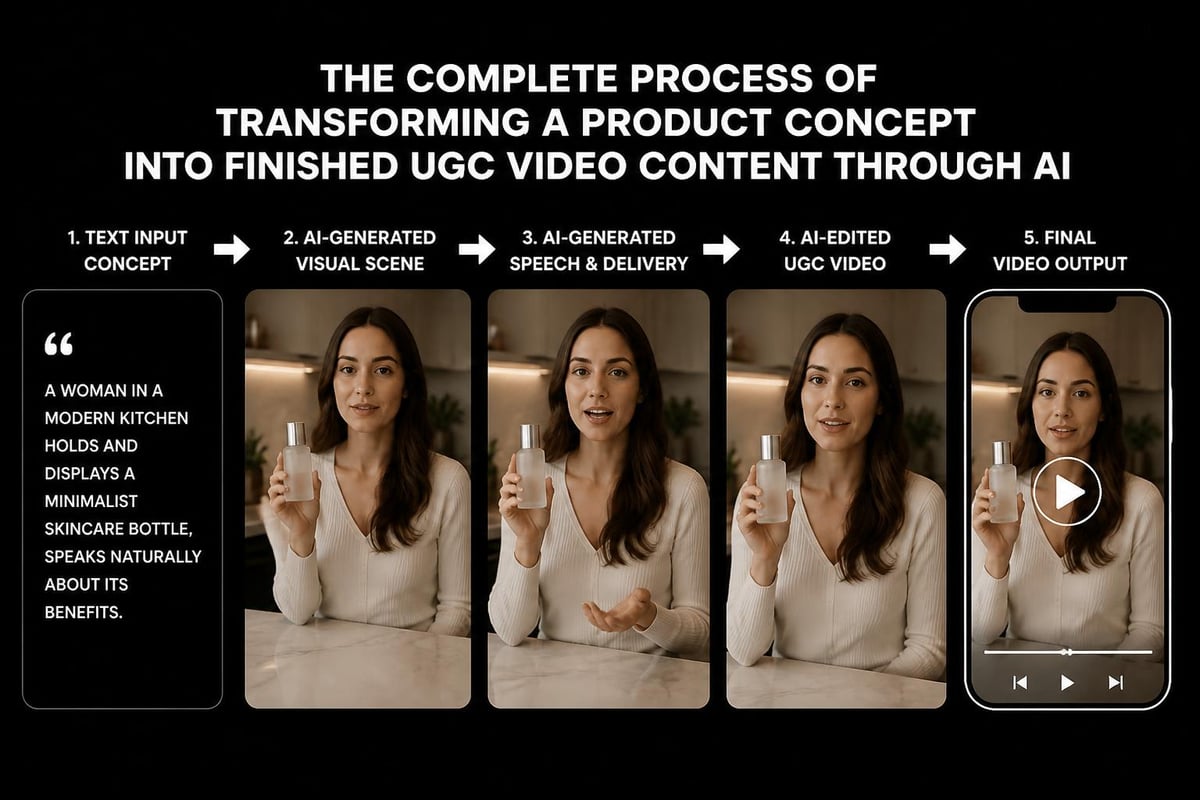
Instead of coordinating with human creators, you describe what you want to see, select from AI-generated actors, and receive completed video content in minutes. These tools don't just slap text on stock footage or create generic animations. They generate realistic human actors who speak naturally, hold products convincingly, and deliver hooks that feel genuinely authentic.
The Technology Behind Realistic AI Creators
Modern AI video generation combines several advanced technologies:
- Synthetic human models that replicate natural movements and expressions
- Text-to-speech systems that sound conversational, not robotic
- Motion synthesis that creates realistic gestures and body language
- Scene composition that matches lighting, angles, and backgrounds to UGC aesthetics
The result? Videos that look like they came from a real person's phone, not a corporate production studio.
Research into perceptual quality assessment of user-generated videos has helped developers understand exactly what makes UGC content feel authentic. These insights directly inform how AI models generate movement, frame composition, and overall video aesthetics.
Why Brands Are Switching to AI UGC Video Generators
The shift toward AI-generated UGC isn't just about cutting costs. It's about solving fundamental problems that plague traditional creator partnerships.
Speed matters more than ever. When you're testing ad creative across multiple platforms, waiting two weeks for a single video revision means burning through budget while competitors iterate faster. An ai ugc video generator delivers variations in the time it takes to grab coffee.
The Real Cost Comparison
Let's break down what traditional UGC actually costs:
| Expense Category | Traditional Creator | AI UGC Generator |
|---|---|---|
| Initial video production | $300-$1,500 | $10-$50 |
| Revision turnaround | 3-7 days | Minutes |
| Number of variations | 1-3 per shoot | Unlimited |
| Usage rights | Limited by contract | Full ownership |
| Time to first draft | 1-3 weeks | 5-15 minutes |
Those numbers tell only part of the story. The hidden costs include project management time, communication overhead, and the opportunity cost of slow iteration cycles.
Testing becomes affordable. Want to try five different hooks for the same product? With traditional creators, you're looking at thousands of dollars. With AI generation, you can test dozens of angles for the cost of a single creator video.
How AI UGC Video Generators Work
Understanding the mechanics helps you get better results faster. Most platforms follow a similar workflow, though implementation details vary.
The Basic Creation Process
- Upload your product image or video to establish what you're promoting
- Write a script or description explaining what the actor should say or do
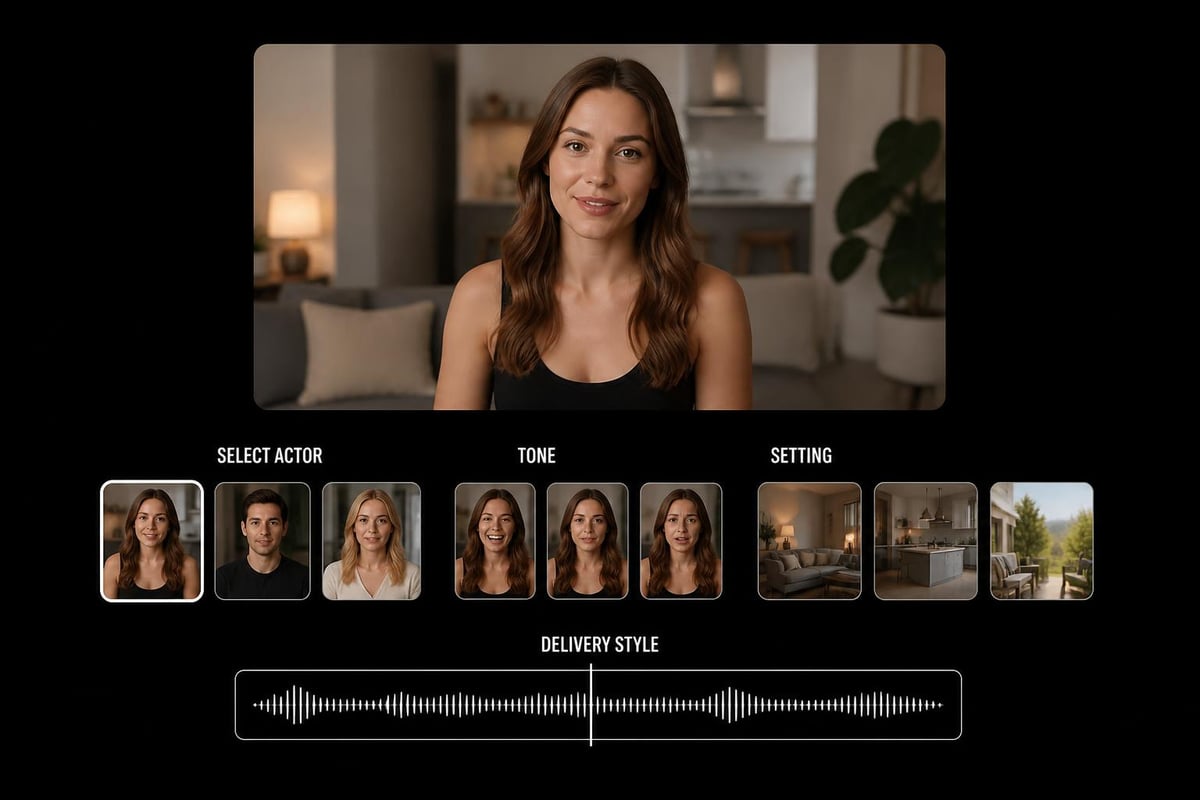
- Select an AI actor from a library of diverse, realistic personas
- Choose style parameters like setting, tone, and video format
- Generate and review your video, making adjustments as needed
The beauty of this approach is iteration. Don't like how the first version turned out? Adjust the script, change the actor, or modify the setting and regenerate in seconds.
Leading AI video generators offer different strengths. Some excel at product demonstrations, others at testimonial-style content. The best choice depends on your specific use case and creative requirements.
Advanced Customization Options
Beyond basic video generation, sophisticated platforms offer granular control:
- Emotional tone adjustment to match brand personality
- Background replacement for different contexts
- Product placement precision ensuring items appear naturally in frame
- Scene duration control optimizing for platform-specific requirements
- Voice characteristics from enthusiastic to conversational
This level of customization means you're not stuck with generic output. You can craft videos that align precisely with your brand guidelines and campaign objectives.
Finding Winning Ads Through Rapid Testing
The real power of an ai ugc video generator emerges when you embrace volume testing. Traditional advertising wisdom says you should carefully craft each creative. Modern performance marketing proves you should test relentlessly and let data decide.
Volume unlocks insights. When you can generate 20 variations in the time it previously took to create one, you discover patterns that would otherwise remain hidden. Maybe your audience responds better to direct product demos than testimonial-style content. Maybe close-up shots outperform wide angles. You'll never know without testing.
Building a Testing Framework
Smart marketers approach AI-generated UGC systematically:
Start with hook variations. The first three seconds determine whether viewers keep watching or scroll past. Generate multiple versions testing different opening lines, questions, or attention-grabbers.
Test actor diversity. Different demographics respond to different presenters. Create versions featuring various ages, genders, and presentation styles to identify what resonates with your specific audience.
Experiment with contexts and settings. The same product can be presented in a bedroom, kitchen, office, or outdoor setting. Each context sends different signals about use cases and lifestyle fit.
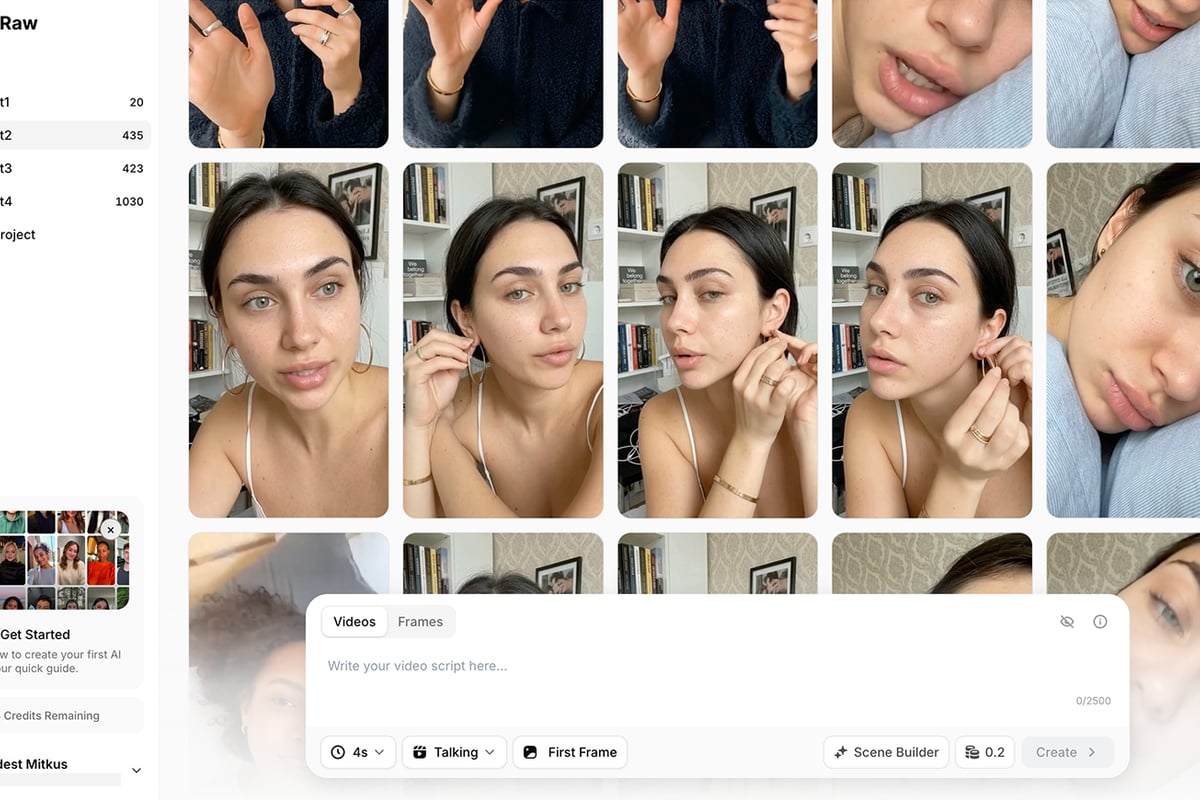
For brands looking to create product videos that showcase items held naturally by AI actors, AI Product in Hand generates both static images and dynamic video clips where realistic actors hold and recommend your products.
Creating Platform-Specific Content
Instagram Reels demand different pacing than TikTok. Facebook users engage differently than YouTube Shorts viewers. An ai ugc video generator should accommodate these platform variations without requiring separate production cycles.
Optimizing for Different Platforms
| Platform | Ideal Length | Style Characteristics | Hook Timing |
|---|---|---|---|
| TikTok | 15-30 seconds | Fast-paced, trend-aware | First 2 seconds |
| Instagram Reels | 15-45 seconds | Polished but authentic | First 3 seconds |
| 30-60 seconds | Story-driven, informative | First 3-5 seconds | |
| YouTube Shorts | 30-60 seconds | Educational or entertaining | First 3 seconds |
The same core message needs different packaging for each platform. AI generation makes creating these variations practical rather than prohibitively expensive.
Aspect ratios matter. Vertical video dominates mobile-first platforms, while horizontal still performs better in certain contexts. Generate both formats from the same script to maximize reach without doubling production costs.
Quality Considerations and Authenticity
Here's the question everyone asks: Can audiences tell the difference between AI-generated and human-created UGC? The answer is nuanced and evolving rapidly.
In 2026, the quality gap has narrowed significantly. The most realistic AI UGC video generators produce content that most viewers can't distinguish from creator-shot footage, especially in the context of fast-scrolling social feeds.
What to Watch For
Even excellent AI-generated content can show tells if you're not careful:
- Unnatural hand movements when holding products
- Lip sync issues if audio and video generation aren't perfectly aligned
- Background consistency across cuts or scene changes
- Lighting transitions that don't match real-world physics
Quality platforms address these issues through continuous model improvements. The technology advances monthly, making yesterday's limitations today's solved problems.
Authenticity isn't just technical. The script matters as much as the visuals. AI can generate perfect-looking videos, but if your messaging sounds scripted or corporate, viewers disengage. Write conversationally, use real customer language, and prioritize genuine value over sales pitches.
Scaling Creative Production
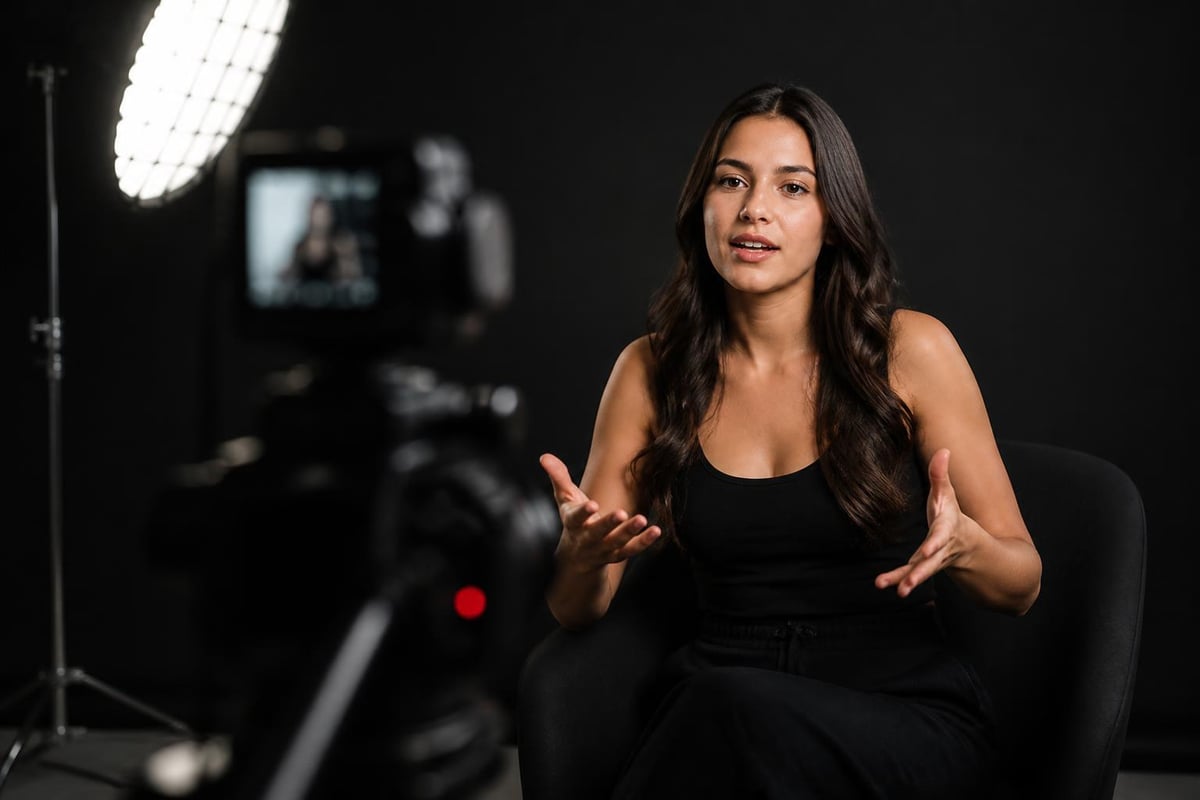
Traditional creative production creates bottlenecks. Your performance depends on how quickly you can generate, test, and iterate on new concepts. An ai ugc video generator removes these constraints entirely.
Think in campaigns, not individual videos. Instead of laboring over a single perfect creative, generate 10 variations exploring different angles. Launch them simultaneously, measure performance, and double down on winners while killing underperformers.
Building a Content Calendar
Monthly creative refreshes become weekly or even daily updates:
- Monday: Analyze weekend performance data
- Tuesday: Generate new variations based on insights
- Wednesday: Launch updated creatives across platforms
- Thursday: Monitor early performance indicators
- Friday: Optimize budgets toward top performers
This cycle compresses what used to take months into a single week. The velocity advantage compounds over time as you accumulate performance insights faster than competitors still waiting on creator deliverables.
Integration with Existing Workflows
AI-generated UGC doesn't replace your entire creative stack. It complements existing assets and workflows, filling gaps and accelerating production where traditional methods create delays.
Mix AI with human content. Some brands find success combining AI-generated product showcases with human-shot lifestyle content. Others use AI for rapid testing, then hire creators to produce premium versions of winning concepts.
Workflow Integration Points
Consider where an ai ugc video generator fits your process:
- Concept testing phase: Generate quick mockups before committing to full production
- Gap filling: Create variations when creator content is delayed
- Seasonal campaigns: Rapidly produce holiday or event-specific content
- Platform expansion: Quickly adapt existing concepts to new platforms
- A/B testing: Generate controlled variations to isolate performance variables
The technology works alongside, not instead of, human creativity. Your strategic thinking, brand understanding, and marketing expertise remain irreplaceable. AI handles execution speed and variation volume.
Copyright and Licensing Clarity
One major advantage of AI-generated content is clarity around usage rights. When you hire creators, contracts govern usage terms, duration, and platform restrictions. Miss a detail and you might face legal issues or unexpected licensing fees.
With AI generation, you typically own the output completely. No residuals, no usage restrictions, no concerns about a creator's likeness rights. This simplicity matters especially for brands running evergreen campaigns or repurposing content across multiple channels over extended periods.
Recent developments like fully licensed AI video generators address concerns about training data and ethical AI development. These platforms ensure both the technology and output respect intellectual property rights, giving brands confidence in their creative assets.
Read the terms. While most platforms grant full commercial rights to generated content, verify specifics around attribution requirements, competitor restrictions, and output modifications. Understanding what you can and cannot do prevents future complications.
Measuring Performance and ROI
The true test of any advertising tool is return on investment. An ai ugc video generator should improve your creative performance metrics while reducing costs.
Key Metrics to Track
Focus on outcomes that directly impact business results:
- Cost per acquisition (CPA): How much you spend to acquire each customer
- Click-through rate (CTR): Percentage of viewers who click your call to action
- Engagement rate: Likes, comments, shares relative to impressions
- View completion rate: How many viewers watch to the end
- Creative fatigue timeline: How long before performance degrades
Compare these metrics between AI-generated and traditional creator content. Most brands discover AI videos perform comparably or better at a fraction of the cost, especially during the testing phase.
Attribution gets complex. Modern customer journeys touch multiple ads across platforms before converting. Isolate the impact of your AI-generated content through controlled tests, holdout groups, or incrementality studies rather than relying solely on last-click attribution.
Common Mistakes to Avoid
Even the best technology produces poor results when misused. Watch for these pitfalls that trip up first-time users of AI UGC video generators.
Pitfall One: Overproduction
Just because you can generate 100 variations doesn't mean you should. Focus beats volume. Test systematically around specific hypotheses rather than creating random variations and hoping something works.
Pitfall Two: Ignoring Brand Voice
AI actors can say anything you script, but they should say things that sound like your brand. Maintain consistent messaging, tone, and value propositions across all generated content. Authenticity comes from genuine brand representation, not just realistic visuals.
Pitfall Three: Static Testing
What works today might not work next month. Consumer preferences shift, platform algorithms evolve, and ad fatigue sets in. Continuously generate fresh content rather than riding winning creatives until performance crashes.
Pitfall Four: Neglecting Audio Quality
Viewers might forgive slightly imperfect visuals, but poor audio quality destroys credibility instantly. Ensure voiceovers sound natural, background noise is appropriate, and audio levels are consistent.
The Future of AI UGC Video Generation
The technology continues evolving rapidly. What we consider cutting-edge in early 2026 will seem primitive by year-end as models improve and new capabilities emerge.
Expect better personalization. Future systems will generate videos tailored to individual viewer preferences, showing different actors, settings, or messaging based on demographic data and browsing history. Dynamic creative optimization will happen at the individual level rather than segment level.
Interactive elements are coming. Imagine UGC-style videos where viewers can click products to see different colors, ask questions that the AI actor answers in real-time, or branch to different content based on their interests.
Research into high visual quality video datasets from UGC platforms helps train next-generation models that better capture the authentic aesthetic that makes user-generated content effective. As training data improves, so does output quality.
For businesses serious about scaling their video ad production, exploring options on AdsRaw reveals how AI-generated UGC fits into comprehensive creative strategies. The platform demonstrates practical applications beyond theoretical capabilities.
Building Your AI UGC Strategy
Implementation succeeds when you approach it strategically rather than treating AI generation as a magic solution. Build a framework that leverages the technology's strengths while compensating for its limitations.
Start with a pilot program. Choose one product or campaign as your testing ground. Generate 5-10 variations exploring different hooks, actors, and presentations. Measure performance against existing creative benchmarks.
Phase One: Testing and Learning
Your first month should focus on understanding capabilities and building processes:
- Generate diverse content variations to explore creative possibilities
- Document what works and what doesn't for your specific audience
- Establish quality standards and approval workflows
- Train team members on platform features and best practices
Phase Two: Scaling Production
Once you've validated the approach, expand systematically:
- Increase video volume across more products or campaigns
- Develop templates for common video types to streamline production
- Integrate AI generation into regular content calendars
- Build a library of high-performing actors, hooks, and formats
Phase Three: Optimization and Innovation
Mature usage focuses on continuous improvement:
- Analyze performance patterns across hundreds of videos
- Develop predictive models for what content will likely succeed
- Experiment with emerging platform features and capabilities
- Share learnings across teams to compound insights
This phased approach prevents overwhelm while building organizational capability over time. Teams develop intuition for what works, processes become efficient, and results compound as you accumulate more data.
Budget Allocation Strategies
How should an ai ugc video generator fit into your overall advertising budget? The answer depends on your current spending, testing velocity, and growth objectives.
Consider the testing multiplier. If you currently test three creative concepts per month at $1,500 each ($4,500 total), AI generation could let you test 30 concepts at $50 each ($1,500 total). You're spending less while testing 10x more variations.
Many successful brands allocate budgets on a 70/20/10 model:
- 70% to proven winners: Fund what's already working at scale
- 20% to AI-generated testing: Rapid experimentation to find new winners
- 10% to premium production: High-budget content for brand building
This balance maintains current performance while systematically searching for improvements and protecting long-term brand equity.
The advertising landscape has shifted permanently toward rapid testing, authentic content, and cost-effective production. An ai ugc video generator addresses all three imperatives simultaneously, giving brands the ability to create scroll-stopping video ads without the traditional constraints of creator partnerships. When you're ready to scale your video ad production and start finding winning creatives faster, AdsRaw lets you generate realistic UGC-style video ads in minutes, helping you test more concepts, reduce costs, and discover what actually drives conversions for your specific audience.