
AI Talking Video: Create Realistic Spokespersons in 2026

Modest Mitkus
May 11, 2026
The digital landscape is shifting beneath our feet. Every scroll, every swipe brings a new wave of content competing for attention. But what if you could create a spokesperson who never gets tired, never asks for a reshoot, and delivers your message perfectly every single time? That's the promise of ai talking video technology in 2026. This isn't science fiction anymore. Brands are deploying realistic digital avatars that speak directly to their audiences, converting curious scrollers into paying customers. Whether you're a startup testing your first ad creative or an established brand scaling content production, understanding how AI talking video works can transform your marketing strategy and slash production costs by up to 90%.
What Makes AI Talking Video Different in 2026
AI talking video isn't just about moving lips on a static image anymore. The technology has evolved dramatically over the past few years, and the results are genuinely impressive.
Today's systems create digital spokespersons that feel real. They blink naturally, express emotions through subtle facial movements, and synchronize speech with body language that matches the tone of your message.
The breakthrough came from advances in neural networks that understand not just what words mean, but how humans naturally communicate those words. Research from OmniTalker's real-time framework demonstrates how end-to-end systems now generate synchronized speech and facial expressions in real time, creating talking heads that pass the "scroll test" on social media.
The Technology Behind Realistic Digital Avatars
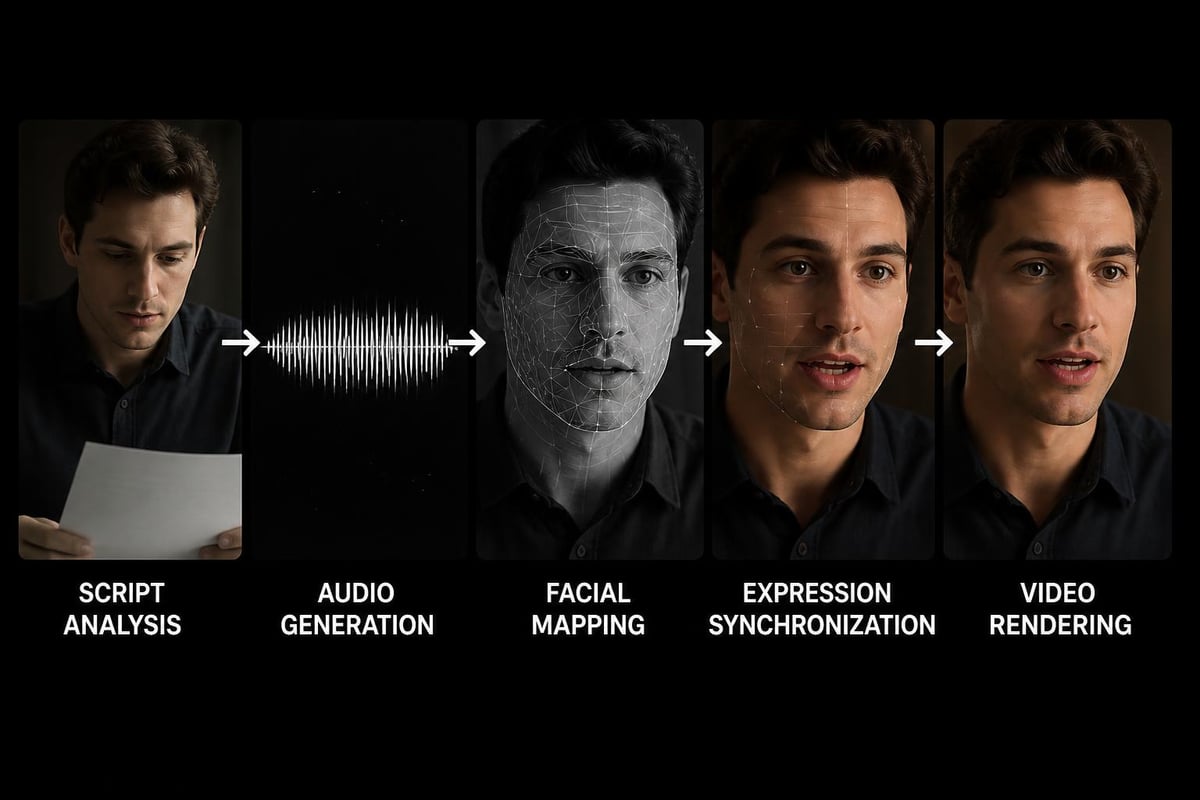
Several key components work together to create convincing ai talking video content:
- Audio synthesis engines that generate natural-sounding speech from text
- Facial animation models that map audio to realistic lip movements and expressions
- Emotion recognition systems that adjust facial expressions to match message tone
- Body language generators that add natural gestures and head movements
The magic happens when these systems work in harmony. You input your script, select your avatar, and the AI handles everything from pronunciation to the slight eyebrow raise that makes a point land harder.
Nvidia's Audio2Face technology going open source marks another milestone, potentially democratizing access to professional-grade facial animation tools that were once exclusive to major studios.
Why Brands Are Switching to AI Talking Video Ads
The economics make perfect sense. Traditional video production involves location scouting, talent booking, equipment rental, editing, and countless revisions. Each change costs time and money.
With ai talking video, you're working in a completely different paradigm. Need to test five different hooks? Generate five variations in an hour. Want to personalize messages for different audience segments? Create custom avatars speaking directly to each demographic.
Performance marketers have been early adopters because the testing velocity is unmatched. When you can create 20 variations of an ad in the time it takes to shoot one traditional video, you find winning creatives faster and cheaper.
| Traditional Video Production | AI Talking Video |
|---|---|
| 2-4 weeks timeline | Minutes to hours |
| $3,000-$10,000 per video | $50-$500 per video |
| 1-3 variations typical | Unlimited variations |
| Revisions require reshoots | Instant script changes |
| Geography dependent | Create from anywhere |
Real Performance Data from Early Adopters
E-commerce brands testing ai talking video ads report surprising results. The synthetic nature doesn't hurt performance when the content is engaging and the message resonates.
One skincare brand generated 40 different UGC-style talking head videos, each testing different hooks and pain points. Three of those videos outperformed their traditional influencer content by 35% on Facebook and Instagram. The reason? They could test faster, iterate based on data, and scale winners immediately.
The key is authenticity in messaging, not necessarily in the actor. When your ai talking video delivers genuine value, answers real questions, or solves actual problems, audiences engage regardless of whether they know it's AI-generated.
Creating High-Converting AI Talking Video Content
Not all ai talking video performs equally. The technology enables creation, but strategy drives results.
Start with your hook. The first three seconds determine whether someone scrolls past or stops to watch. Your AI spokesperson needs to deliver that hook with energy, clarity, and relevance to your target audience.
Script Elements That Drive Engagement
Your script makes or breaks the performance. AI can deliver any script you write, but it can't fix boring copy.
Pattern interrupts work exceptionally well. Start with a surprising statistic, a bold claim, or a provocative question. Your AI avatar should deliver this with the appropriate tone, whether that's excitement, urgency, or conversational warmth.
Benefit-focused messaging consistently outperforms feature dumps. Instead of "Our product has 12 active ingredients," try "Imagine waking up with clearer skin in just two weeks." The AI spokesperson can emphasize the emotional payoff that resonates with viewers.
Social proof integration adds credibility. Having your avatar mention "Join 50,000 customers who've already transformed their routine" leverages psychological triggers that drive conversions.
Consider testing these script frameworks:
- Problem-Agitate-Solve: Identify the pain point, amplify the frustration, present your solution
- Before-After-Bridge: Show current state, paint the desired future, explain how to get there
- Question-Answer-CTA: Ask a compelling question, provide the answer, prompt action
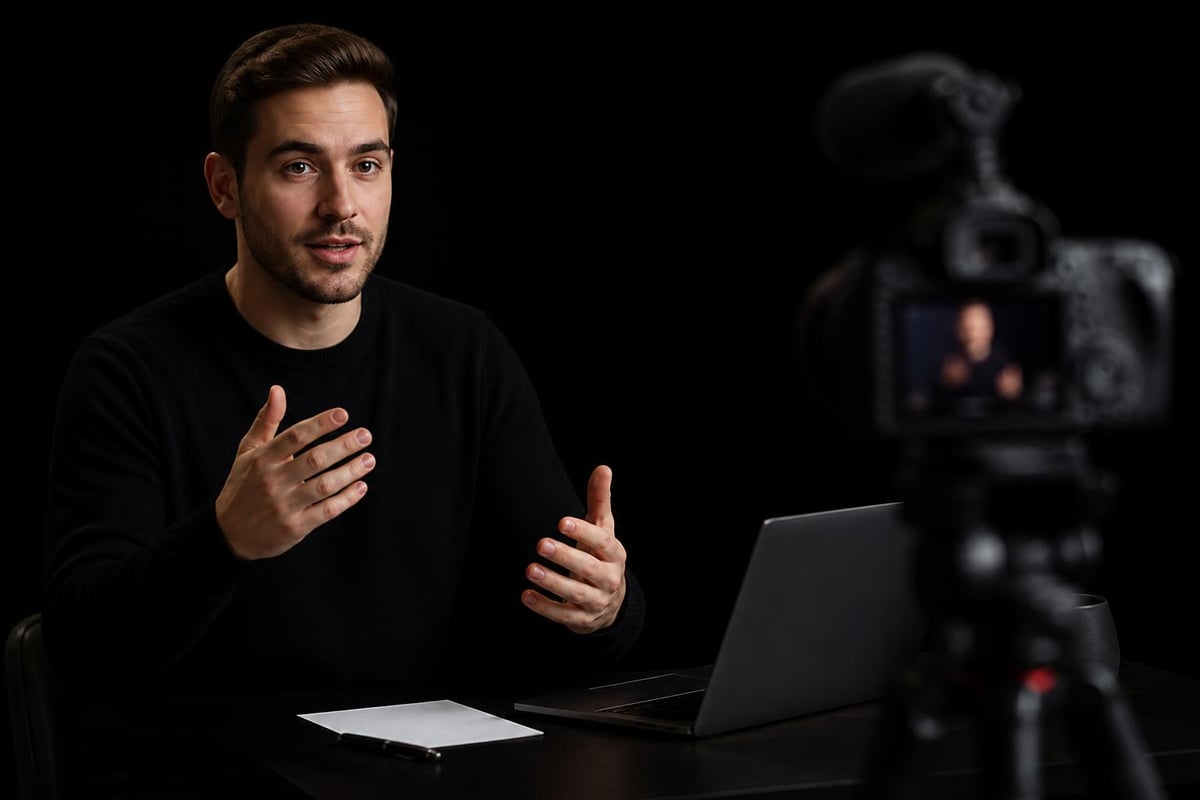
Platform-Specific Strategies for AI Talking Video
Each platform has its own culture and expectations. Your ai talking video needs to match where it's being shown.
Facebook and Instagram favor authenticity and relatability. AI avatars that look and sound like real people sharing genuine experiences perform best. The UGC aesthetic crushes overly polished corporate videos.
TikTok demands energy and entertainment. Your AI spokesperson needs to match the platform's fast-paced, trend-driven environment. OpenAI's Sora 2 capabilities show how AI video generation is evolving to meet platform-specific content styles.
LinkedIn requires professionalism without stuffiness. AI avatars delivering educational content, industry insights, or thought leadership resonate with B2B audiences when they strike the right balance between informative and approachable.
Optimizing for Mobile-First Viewing
Most viewers watch on their phones, which changes everything about how you should create ai talking video content.
Frame your avatar from chest up, not full body. Facial expressions and eye contact matter more on small screens. Ensure your spokesperson looks directly at the camera, creating a sense of personal connection.
Use captions always. Real-time AI-generated captions enhance accessibility and keep viewers engaged even when they're scrolling with sound off, which happens more than 80% of the time on social platforms.
Keep videos short. The sweet spot is 15-45 seconds for paid social. Your AI avatar should deliver value quickly, respect the viewer's time, and leave them wanting more rather than checking out halfway through.
Technical Quality Markers That Matter
The difference between ai talking video that converts and content that gets scrolled past often comes down to subtle quality markers.
Lip sync accuracy is non-negotiable. Even slight delays between audio and mouth movements trigger uncanny valley responses. Modern systems like those detailed in controllable talking head research address these challenges with high-fidelity generation that maintains perfect synchronization.
Natural eye movement separates amateur from professional results. Your AI spokesperson should blink regularly, shift gaze naturally, and maintain appropriate eye contact. Static, unblinking avatars feel robotic and untrustworthy.
Appropriate facial expressions match the emotional tone of your message. Excitement should show in widened eyes and smile. Empathy comes through softer expressions and gentle head nods. The AI needs to understand context, not just phonemes.
Audio Quality Makes or Breaks Credibility
Visual realism means nothing if your audio sounds like a robot from 2010. Modern ai talking video platforms generate natural speech with appropriate pacing, emphasis, and emotional inflection.
Pay attention to:
- Pronunciation accuracy for product names, technical terms, and brand-specific language
- Pacing variation that mimics natural speech patterns with pauses for emphasis
- Tonal range that goes beyond monotone delivery to express genuine emotion
- Background audio that adds subtle environmental realism without distracting
The Ditto diffusion framework demonstrates how controllable synthesis improves both visual quality and audio synchronization, creating more believable results across different use cases.
Scaling Creative Production with AI Avatars
Here's where ai talking video becomes a genuine competitive advantage. The ability to produce variations at scale changes how you approach creative testing entirely.
Traditional marketing wisdom says test one variable at a time. That makes sense when each variation costs thousands. But when you can generate dozens of variations quickly, you can test multiple variables simultaneously and find winning combinations faster.
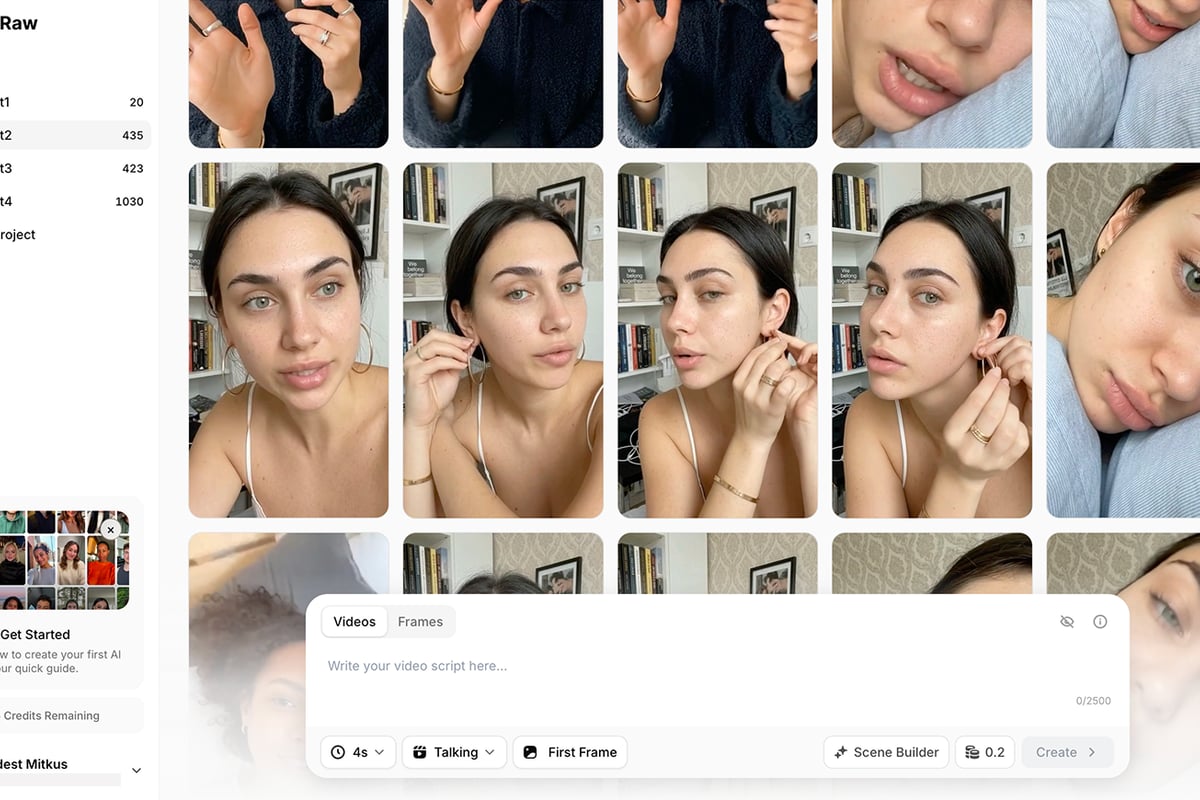
AdsRaw creates UGC-style videos with AI actors that look and sound like real people, enabling brands to generate as many variations as needed-different hooks, angles, and approaches-to discover what actually converts. This level of testing velocity helps performance marketers and agencies scale ad creative production without the typical bottlenecks of traditional video shoots.
The Creative Matrix Approach
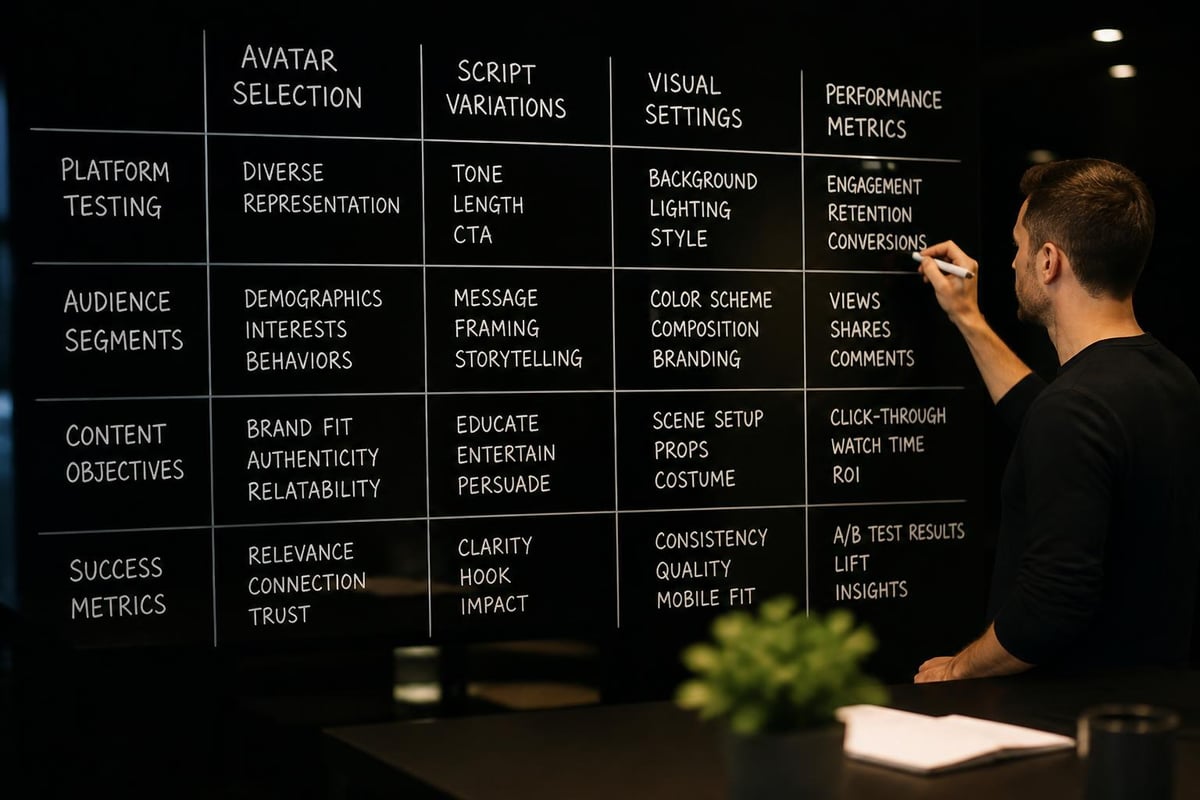
Think of your ai talking video content as a matrix of variables you can mix and match:
Avatar variables: Different ages, ethnicities, genders, and styles to match various audience segments
Script variables: Multiple hooks, different pain points, various CTAs to test messaging effectiveness
Visual variables: Background settings, lighting moods, framing styles to optimize attention and trust
Audio variables: Voice tones, speaking speeds, emphasis patterns to match brand personality
Create a spreadsheet with these variables and systematically generate combinations. You're not guessing anymore-you're running scientific experiments to discover what resonates.
One DTC brand used this approach to create 60 unique ai talking video ads in a single afternoon. They ran all 60 as part of a broad testing campaign. The winning combination (young female avatar, problem-focused hook, home setting) outperformed their previous best ad by 43% on cost per acquisition.
Ethical Considerations and Transparency
The realism of modern ai talking video raises important questions. Should you disclose that your spokesperson is AI-generated? How do you use the technology responsibly?
ByteDance's realistic AI video tools have sparked conversations about deepfakes and content authenticity. While concerns are valid, the solution isn't avoiding the technology-it's using it ethically.
Best Practices for Responsible Use
Be transparent when it matters. If you're creating testimonials or expert endorsements, disclosure is essential. If you're creating educational content or product demonstrations with clearly synthetic avatars, transparency is less critical but still recommended.
Avoid impersonation of real people without explicit permission. Creating ai talking video that mimics specific individuals without consent crosses ethical and often legal boundaries.
Focus on value delivery rather than deception. The goal isn't to trick people into thinking your avatar is a real person. It's to deliver your message efficiently and effectively.
Respect platform policies that govern AI-generated content. Major advertising platforms are developing guidelines for disclosure and acceptable use. Stay current and compliant.
The AdsRaw blog regularly covers emerging best practices and platform policy updates to help brands navigate this evolving landscape responsibly.
Advanced Techniques for 2026
As the technology matures, sophisticated users are discovering advanced techniques that push results even further.
Personalization at scale uses dynamic content to customize ai talking video for different viewers. Imagine your avatar greeting viewers by name or referencing their specific location or interests. The technology exists-implementation just requires smart integration with your marketing stack.
Multi-language expansion without hiring translators or voice actors. Modern ai talking video platforms can generate the same avatar speaking fluently in dozens of languages, maintaining the same personality and mannerisms across all versions.
Interactive video experiences combine ai talking video with branching narratives. Viewers choose their path, and your avatar responds accordingly, creating personalized journeys that drive deeper engagement.
Integrating with Existing Marketing Workflows
The real power comes from weaving ai talking video into your broader marketing ecosystem. These videos aren't isolated assets-they're part of your conversion funnel.
Use AI spokespersons in:
- Landing page hero sections to increase time on site and explain value propositions
- Email marketing campaigns to boost open rates and click-through rates
- Retargeting sequences to re-engage warm audiences with personalized messages
- Product page demonstrations to answer questions and overcome objections
Track performance metrics just like any other creative asset. Monitor view duration, engagement rate, click-through rate, and ultimately conversion rate. The controllable synthesis research on audio-driven talking face generation shows how personalized elements improve both technical quality and viewer engagement.
Choosing the Right AI Talking Video Platform
Not all ai talking video tools deliver equal results. What should you look for when evaluating platforms?
Avatar quality and variety matter significantly. You need options that match your brand and audience. Can you customize avatars or are you stuck with limited presets?
Voice naturalness separates good from great. Listen to samples. Do they sound human or obviously synthetic? Can you adjust pacing, tone, and emphasis?
Generation speed impacts your workflow. If it takes 30 minutes to render a 30-second video, you won't iterate quickly enough to find winners.
Export options need to match your distribution channels. Different platforms require different specs, aspect ratios, and file formats.
| Feature | Why It Matters | Questions to Ask |
|---|---|---|
| Avatar realism | Credibility and trust | How natural do facial movements look? |
| Voice quality | Professional polish | Can you hear robotic artifacts? |
| Customization depth | Brand alignment | Can you adjust appearance, tone, style? |
| Iteration speed | Testing velocity | How fast can you generate variations? |
| Cost structure | Budget efficiency | Pay per video or subscription? |
Check out options at AdsRaw to compare capabilities and pricing models that fit different business needs and scales.
Future Developments on the Horizon
The ai talking video space moves fast. What's coming next?
Real-time interactive avatars will enable live conversations where AI spokespersons respond dynamically to viewer questions or comments. The OmniTalker platform already demonstrates text-driven real-time generation with audio-visual style replication.
Emotion-responsive content will adapt your avatar's delivery based on viewer engagement signals. If the system detects confusion, it slows down and elaborates. If it detects interest, it accelerates toward the call to action.
Seamless human-AI collaboration will let you record yourself, then have AI avatars extend your content with perfect style matching. Record one video, generate dozens of related topics with your digital twin.
Platform-native AI avatars will appear directly in social feeds and messaging apps, creating conversational experiences that feel native to each environment rather than imported video content.
The trajectory is clear: ai talking video will become more realistic, more personalized, and more deeply integrated into digital experiences. Early adopters who master the technology now will have significant advantages as it becomes standard practice.
Measuring ROI on AI Talking Video Campaigns
How do you know if your investment in ai talking video actually pays off? Track the metrics that matter for your business goals.
Direct response metrics include click-through rate, conversion rate, cost per acquisition, and return on ad spend. Compare these against your traditional video content to measure relative performance.
Engagement indicators like view duration, social shares, comments, and saves show how audiences respond to your ai talking video content emotionally and socially.
Production efficiency gains calculate time and cost savings. If you previously spent $5,000 and three weeks per video, and now spend $500 and one day, that's a 90% cost reduction and 95% time savings.
Testing velocity improvements measure how many variations you can test in a given timeframe. If you've increased from testing 3 variants per month to 30, you're finding winners 10x faster.
Attribution and Multi-Touch Analysis
AI talking video often appears at multiple funnel stages. Someone might see a talking head ad on Instagram, revisit your site where another avatar explains your product, then receive a follow-up email with a personalized video message.
Track how ai talking video contributes across the journey:
- Awareness stage: How many new prospects does your video introduce to your brand?
- Consideration stage: Does your AI spokesperson help move prospects toward decision?
- Conversion stage: What percentage of converters engaged with video content?
- Retention stage: Do video messages improve customer lifetime value?
Use UTM parameters, pixel tracking, and conversion path analysis to understand where ai talking video delivers maximum impact for your specific business model.
Industry-Specific Applications
Different industries unlock unique value from ai talking video technology.
E-commerce brands use AI avatars for product demonstrations, unboxing experiences, and user testimonials at scale. Instead of waiting for influencer content, they generate realistic UGC-style videos that show products in action.
SaaS companies deploy talking heads to explain complex features, guide onboarding, and reduce support tickets. An AI spokesperson can walk users through setup steps more effectively than static documentation.
Financial services leverage professional avatars to explain products, build trust, and humanize typically dry content about rates, terms, and compliance topics.
Healthcare providers create patient education content with empathetic AI spokespersons that explain procedures, medications, and wellness topics in accessible language.
Education platforms generate instructor avatars that teach courses, provide feedback, and maintain engagement across diverse subject matter without burning out human instructors.
The versatility of ai talking video means almost any industry can find creative applications that solve real business problems while improving customer experience.
AI talking video isn't just another marketing trend-it's a fundamental shift in how brands communicate at scale. The technology has matured past the uncanny valley into genuinely useful territory where realistic digital spokespersons drive real business results. If you're ready to test faster, scale creative production, and find winning ads without the traditional video production bottlenecks, AdsRaw helps you create scroll-stopping UGC-style video ads with realistic AI actors in minutes, not weeks.