
AI Product Video Generator: Create Scroll-Stopping Ads

Modest Mitkus
May 10, 2026
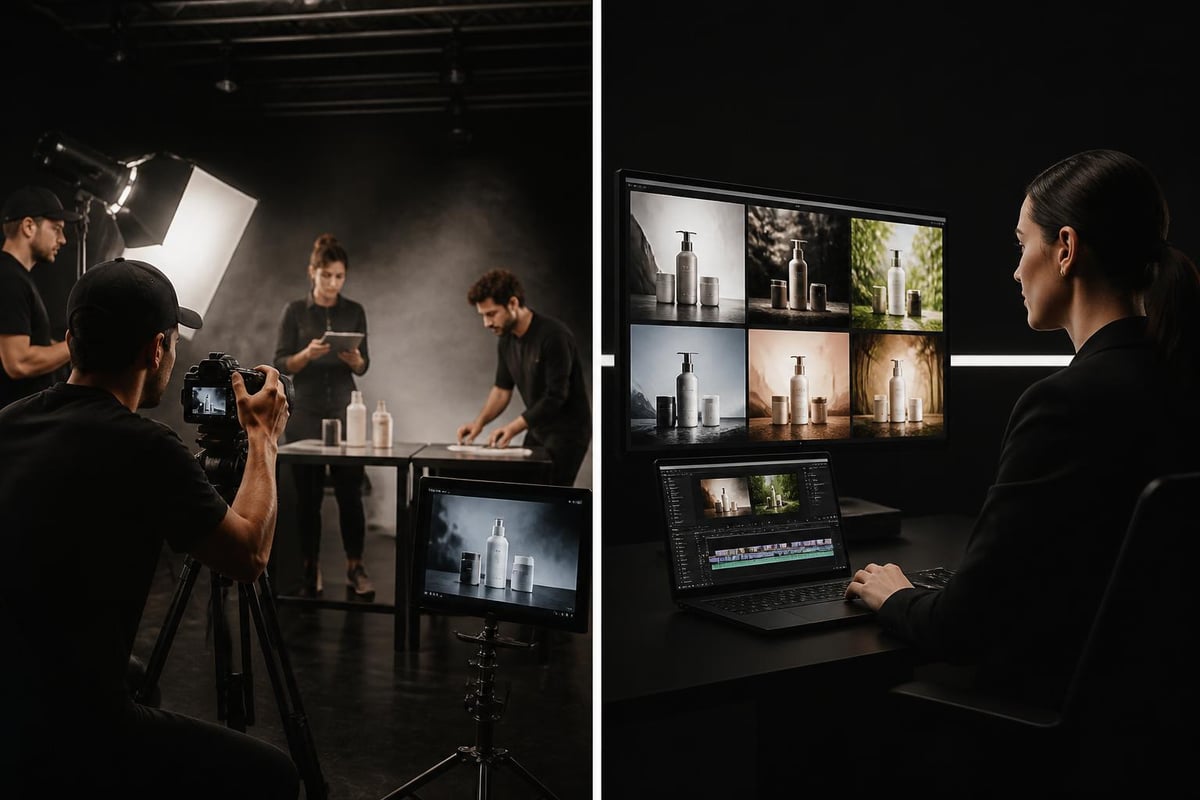
Remember when creating product videos meant hiring a videographer, renting a studio, coordinating talent schedules, and waiting weeks for final edits? Those days are becoming relics of the past. An ai product video generator is transforming how brands create advertising content, making it possible to produce professional-quality product videos in minutes instead of months. Whether you're a dropshipper testing new products, a DTC brand scaling ad creative, or an agency managing multiple clients, AI-powered video generation offers a game-changing solution to one of marketing's most persistent bottlenecks: creating enough video content to keep up with demand.
Why Product Videos Matter More Than Ever
Video content dominates social media feeds. Instagram Reels, TikTok, Facebook Video, and YouTube Shorts have trained audiences to expect dynamic, engaging video content rather than static images.
The numbers tell a compelling story. Product videos can increase conversion rates by up to 80% on landing pages. They generate 1200% more shares than text and images combined. Yet despite this overwhelming evidence, most brands struggle to produce enough video content.
The traditional production bottleneck includes:
- High production costs ($500-5000 per video)
- Long turnaround times (2-4 weeks minimum)
- Coordination challenges with creators and studios
- Limited ability to test variations
- Expensive reshoot costs when something needs tweaking
This is precisely where an ai product video generator becomes invaluable. Instead of treating video as a scarce, expensive resource, you can generate variations on demand.
How AI Product Video Generators Actually Work
The technology behind these tools combines several AI disciplines. Computer vision analyzes your product images to understand form, texture, and details. Generative AI models create realistic motion and context around your product. Natural language processing interprets your creative direction.
The Generation Process
Most platforms follow a similar workflow that makes video creation surprisingly straightforward.
| Step | Traditional Method | AI Product Video Generator |
|---|---|---|
| Upload Assets | Coordinate physical product shipping | Upload product images digitally |
| Creative Direction | Long email chains and calls | Simple text prompts or templates |
| Production Time | 2-4 weeks | 5-15 minutes |
| Revisions | $200-500 per reshoot | Regenerate instantly |
| Output Volume | 1-3 variations | Unlimited variations |
You start by uploading product images. The AI analyzes these visuals to understand your product's characteristics. Next, you provide creative direction through text prompts, templates, or style selections. The system then generates video footage showing your product in various contexts.
Research from leading AI labs demonstrates that modern video generation models can produce high-aesthetic content that rivals traditional production quality. The key difference? Speed and cost.
Types of Product Videos You Can Generate
Not all product videos serve the same purpose. An ai product video generator should offer flexibility across different formats and use cases.
UGC-Style Creator Content
User-generated content aesthetic performs exceptionally well in paid advertising. These videos feel authentic, relatable, and less like traditional ads. AI can generate footage that mimics this style without hiring actual creators.
Features include:
- Realistic hand movements and product interactions
- Natural lighting and casual environments
- Multiple actor variations for different demographics
- Authentic-feeling testimonials and demonstrations
Product Showcases and 360° Views
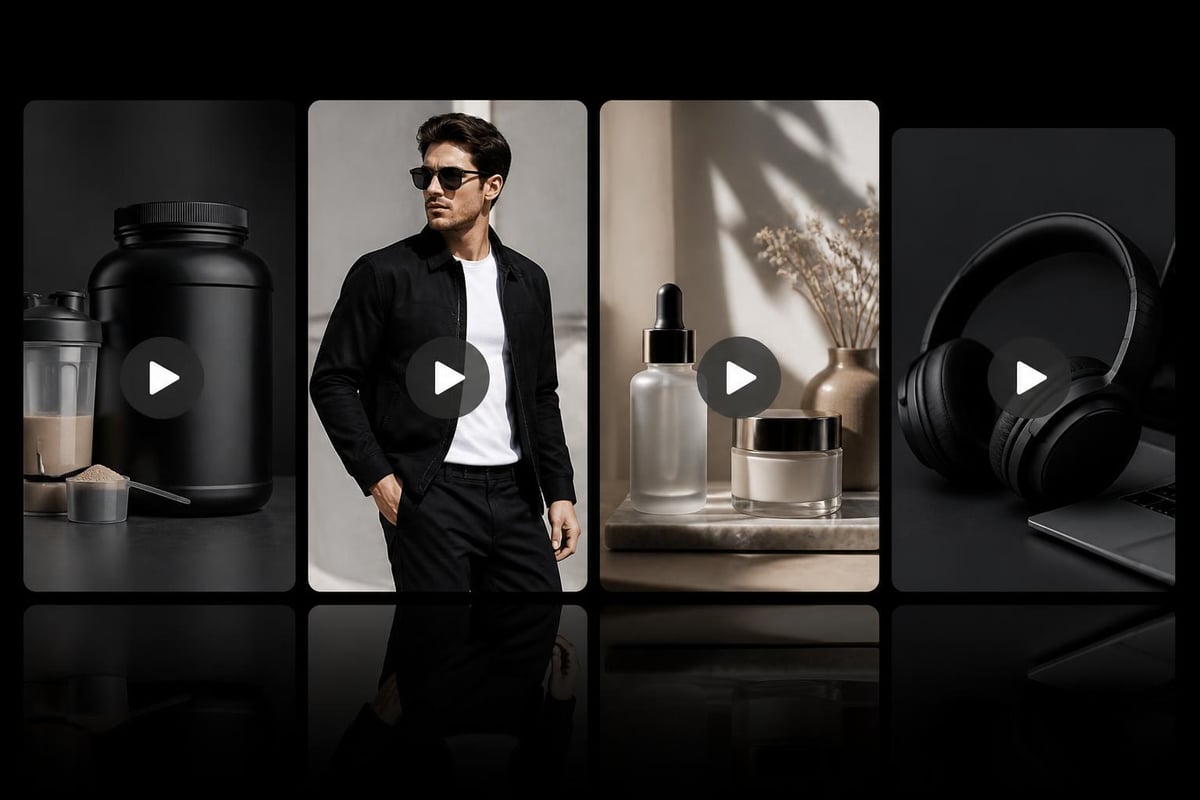
Sometimes you need clean, professional product showcases that highlight features and details. AI generators can create rotating views, zoom sequences, and feature callouts automatically.
Lifestyle and Context Videos
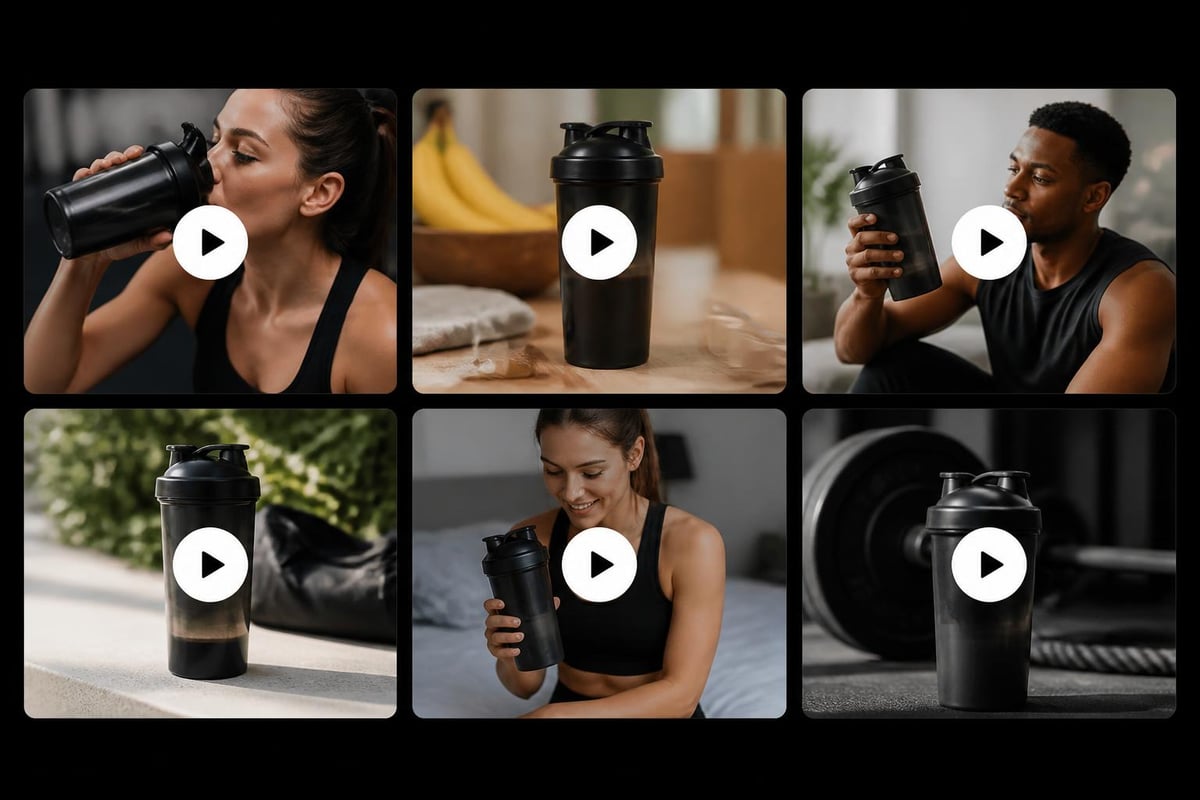
Showing products in real-world contexts helps customers envision ownership. An ai product video generator can place your product in relevant environments, from kitchen counters for supplements to gym settings for fitness products.
Context options typically include:
- Indoor home environments (kitchen, bedroom, office)
- Outdoor settings (parks, beaches, urban areas)
- Activity-based contexts (working out, commuting, relaxing)
- Seasonal and cultural variations
Finding the Right AI Product Video Generator
The market offers numerous options, each with distinct capabilities and limitations. Choosing the right tool depends on your specific needs and workflow.
Key Evaluation Criteria
Output quality sits at the top of the list. Generated videos should look realistic enough that viewers engage naturally without feeling uncanny valley effects. Check sample outputs carefully before committing.
Generation speed matters for teams running rapid testing cycles. Some platforms produce videos in under 5 minutes, while others require 30+ minutes per generation.
Customization options determine how much creative control you maintain. Can you specify actors, backgrounds, camera angles, and product positioning? More control means better alignment with brand guidelines.
Integration capabilities become crucial for agencies and larger teams. Does the tool connect with your existing workflow, asset management systems, and advertising platforms?
Common Platform Features
| Feature | Why It Matters | Questions to Ask |
|---|---|---|
| Multiple aspect ratios | Different platforms require different formats | Does it export 16:9, 9:16, 1:1, 4:5? |
| Batch generation | Create many variations efficiently | Can you queue multiple generations? |
| Brand consistency | Maintain visual identity across videos | Can you save brand presets? |
| Editing capabilities | Fine-tune generated content | Can you trim, add text, adjust pacing? |
Tools like Adobe's Firefly video editor are integrating AI generation with traditional editing workflows, giving creators hybrid approaches that combine both methods.
Practical Applications for Different Industries
An ai product video generator serves diverse business models and product categories differently. Understanding how your industry can leverage this technology helps maximize ROI.
E-commerce and Dropshipping
Speed matters most in dropshipping. When testing new products, you need video creative fast to validate demand before committing inventory dollars.
Generate product showcase videos immediately after identifying promising items. Create multiple ad angles (problem-solution, feature highlight, social proof) and test them simultaneously. Winning combinations get scaled; losers get eliminated quickly.
DTC Brands and Supplements
Supplement brands face unique challenges. Products often lack visual appeal, and demonstrating benefits requires storytelling. AI-generated videos can show products in context with actors explaining usage, benefits, and results.
Create educational content showing when and how to use products. Generate testimonial-style videos with different demographic representations. Test various hooks and angles to find messaging that resonates.
Fashion and Apparel
Clothing needs to be seen on bodies. Traditional model shoots are expensive and time-consuming. An ai product video generator can show apparel on different body types and in various settings without booking models or locations.
The comparison between OpenAI's Sora and Google's Veo 3 shows how rapidly AI video generation capabilities are advancing, with both platforms pushing boundaries in realistic human representation.
Beauty and Skincare
Beauty products benefit tremendously from demonstration videos. Showing application techniques, before-after sequences, and texture close-ups helps customers understand products better.
Generate videos showing proper application methods. Create content featuring different skin tones and types. Test various environments (bathroom vanity, natural lighting, glamorous settings) to see what drives engagement.
Creative Strategy for AI-Generated Product Videos
Having access to an ai product video generator changes your creative strategy fundamentally. When video production no longer bottlenecks creativity, you can test ideas that would have been too expensive to validate traditionally.
The Volume Testing Approach
Generate 20-30 video variations exploring different angles, hooks, and presentations. Run them all as low-budget ads to identify early winners. This approach only becomes feasible when video creation costs approach zero.
Testing dimensions include:
- Opening hooks (problem-focused vs. benefit-focused)
- Actor demographics (age, gender, ethnicity)
- Environment settings (home vs. outdoor vs. studio)
- Product positioning (close-up vs. lifestyle vs. demonstration)
- Pacing and length (quick cuts vs. slower, detailed)
The Iteration Method
Start with your best hypothesis. Generate the video. Run it as an ad. Analyze performance data. Make specific adjustments based on learnings. Regenerate and retest.
This rapid iteration cycle lets you refine messaging, visuals, and presentation until you find combinations that truly resonate with your audience.
The Hybrid Content Strategy
Don't think AI replaces all traditional content. Smart brands use an ai product video generator to supplement creator partnerships, not eliminate them entirely.
Use AI-generated videos for initial testing and high-volume variation needs. When you identify winning angles and messaging, invest in higher-budget creator content that brings premium polish to proven concepts. Mix AI and creator content in your ad accounts to maintain authenticity while scaling volume.
Technical Considerations and Best Practices
Getting optimal results from an ai product video generator requires understanding both the technology's capabilities and limitations.
Input Quality Matters
Your source materials directly impact output quality. High-resolution product photos with good lighting generate better videos than low-quality images. Clean backgrounds simplify the AI's job and produce more reliable results.
Prepare multiple angles of your product. Front, side, back, and detail shots give the AI more information to work with. Include scale references so the generator understands product dimensions accurately.
Prompt Engineering for Video
The instructions you provide guide the generation process. Specific, detailed prompts produce better results than vague directions.
Compare these examples:
- Vague: "Show the product being used"
- Specific: "30-year-old woman in a bright kitchen holding the supplement bottle, reading the label with a smile, morning sunlight from window"
The specific version gives the AI clear direction about setting, actor characteristics, action, and mood.
Review and Quality Control
Not every generation will be perfect. Establish a quality review process before content goes live.
Check for:
- Product accuracy (colors, labels, proportions)
- Natural movement and physics
- Appropriate context and setting
- Brand guideline compliance
- Platform-specific technical requirements
Measuring ROI and Performance
An ai product video generator represents an investment in your marketing infrastructure. Tracking the right metrics helps you understand the return and optimize your approach.
Cost Comparison Metrics
Calculate your cost per video creation under traditional methods versus AI generation. Include hard costs (creator fees, studio rental) and soft costs (coordination time, revision cycles).
Most brands find AI generation reduces per-video costs by 85-95%. A $500 creator video becomes a $25-50 AI generation. This dramatic cost reduction enables volume testing that drives better overall performance.
Ad Performance Metrics
Track how AI-generated videos perform compared to traditional content across key advertising metrics.
| Metric | Why It Matters | Typical Improvements |
|---|---|---|
| Click-through rate | Measures initial engagement | 15-40% increase |
| Cost per click | Efficiency of spend | 20-50% decrease |
| Conversion rate | Ultimate effectiveness | 10-30% increase |
| Cost per acquisition | Bottom-line ROI | 25-60% improvement |
The best-performing teams don't just compare AI versus traditional content. They use AI generation to test significantly more variations, find winners faster, and achieve better results overall.
Time Efficiency Gains
Beyond direct cost savings, measure time saved in your creative production process. Hours previously spent coordinating shoots, reviewing edits, and managing revisions now redirect toward strategy, analysis, and optimization.
Many marketing teams report that adopting an ai product video generator frees up 10-15 hours per week per team member, time they reinvest in higher-value activities.
Overcoming Common Challenges
Every technology comes with learning curves and limitations. Understanding common challenges helps you navigate them successfully.
The Authenticity Question
Some marketers worry that AI-generated content feels less authentic than creator-made videos. OpenAI's Sora release included measures to prevent misuse while maintaining realistic output, highlighting this industry-wide concern.
The reality? Audiences care about value, not production method. A helpful, engaging video performs well regardless of how it was created. Focus on delivering genuine value and clear communication.
Platform Policy Compliance
Social media platforms have varying policies regarding AI-generated content. Stay informed about disclosure requirements and content guidelines for your advertising channels.
Most platforms allow AI-generated commercial content but may require labeling in certain contexts. Build disclosure practices into your workflow from the start.
Brand Voice Consistency
Maintaining consistent brand voice across AI-generated videos requires intentional effort. Create detailed style guides, save successful prompts as templates, and establish review processes that catch off-brand content before it goes live.
Advanced Techniques and Future Capabilities
As you master basic AI product video generation, advanced techniques unlock even greater value.
Sequential Storytelling
Rather than standalone videos, create sequences that tell coherent stories across multiple touchpoints. Generate opening videos that spark curiosity, middle videos that educate, and closing videos that drive conversions.
This approach leverages AI's volume capabilities to build sophisticated, multi-video funnels that guide prospects through complete customer journeys.
Dynamic Personalization
Emerging capabilities allow generating personalized video variations for different audience segments. Imagine videos that automatically adapt actors, settings, and messaging based on demographic or psychographic targeting.
Research on advanced video generation models points toward increasingly sophisticated personalization capabilities becoming mainstream in the coming years.
Integration with Existing Creative
Smart brands are discovering that an ai product video generator works best alongside existing creative assets. AdsRaw generates raw video footage of your product, the kind of clips you'd usually wait weeks for from a creator. Use them as-is, mix with your own footage, or edit into bigger ad cuts. Generate dozens of variations quickly and affordably, instead of paying $400+ per reshoot when something's not quite right.
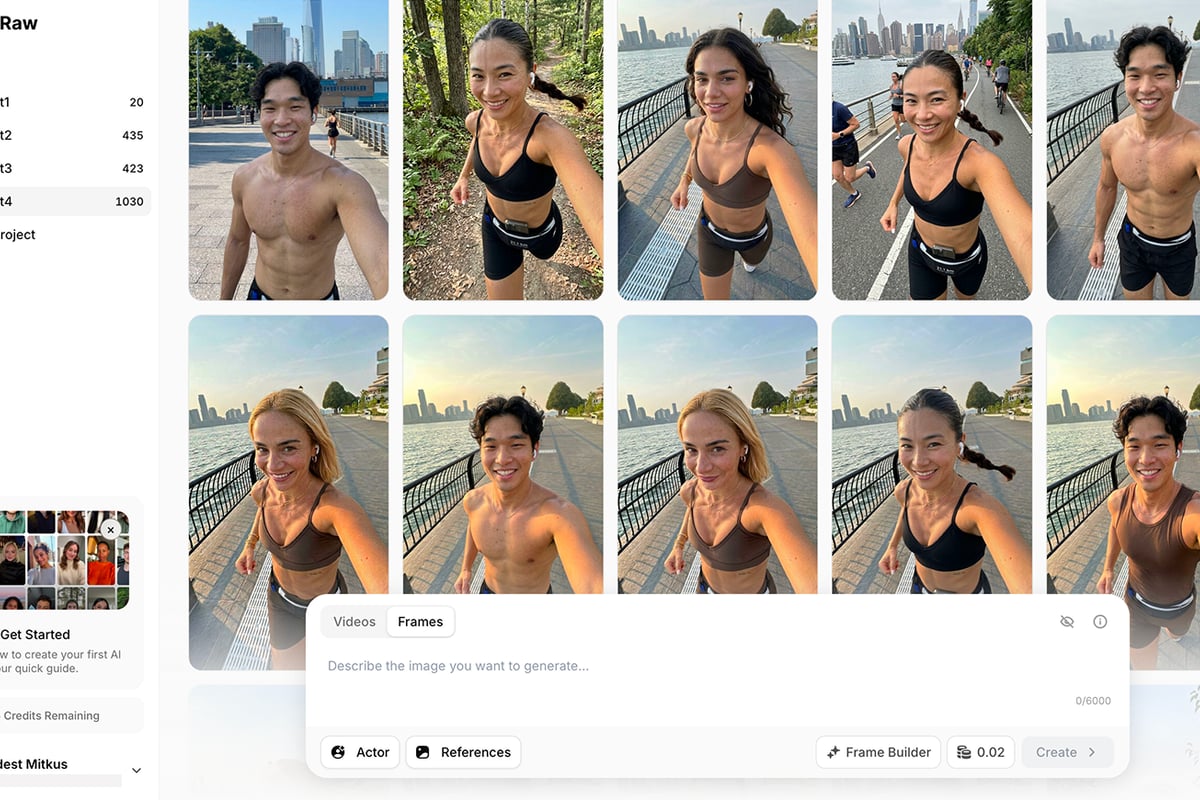
This hybrid approach combines the speed and volume of AI generation with the strategic direction and brand expertise only humans provide.
Building Your AI Video Workflow
Successful implementation requires more than just accessing technology. Build systematic workflows that make AI video generation a sustainable, repeatable process.
The Production Calendar
Create a regular generation schedule rather than reactive, last-minute video creation. Many teams dedicate specific time blocks to batch-generating video variations for upcoming campaigns.
Sample weekly workflow:
- Monday: Review previous week's ad performance, identify needed variations
- Tuesday: Generate new video concepts based on insights
- Wednesday: Quality review and selection
- Thursday: Deploy to ad platforms and schedule
- Friday: Analysis and planning for next week
Team Roles and Responsibilities
Define who handles what in your AI video workflow. Clear ownership prevents gaps and overlaps.
Someone owns creative strategy (what angles to test). Someone manages generation operations (creating and reviewing videos). Someone handles deployment (uploading to ad platforms and tracking performance). Someone analyzes results (identifying winners and insights).
Asset Organization
As you generate hundreds of video variations, organization becomes critical. Develop a clear naming convention and folder structure.
Include relevant metadata in file names: product name, variation type, date generated, performance status. This makes finding, analyzing, and reusing successful videos dramatically easier.
Comparing Leading AI Video Generation Platforms
The competitive landscape evolves rapidly. Platforms like Runway's Gen-3 Alpha and others push capabilities forward constantly.
When evaluating options, consider your specific use case. Are you a solo entrepreneur needing occasional product videos? Or an agency generating hundreds of variations weekly for multiple clients?
Decision factors include:
- Pricing structure (per-video vs. subscription vs. credits)
- Generation limits and capacity
- Output quality and realism
- Customization depth
- Learning curve and ease of use
- Customer support and resources
- Platform stability and reliability
Visit AdsRaw's blog for updated comparisons and platform reviews as the market evolves.
Scaling AI Video Production
Once your ai product video generator workflow proves effective, scaling becomes the next challenge and opportunity.
Multi-Product Catalogs
Brands with extensive product lines can systematically generate video assets for entire catalogs. Create a production pipeline that processes products in batches, generating standard variation sets for each item.
This approach works especially well for e-commerce stores adding new products regularly. As soon as a product goes live, video assets exist to support it.
Agency and Client Management
Agencies serving multiple clients need robust systems for managing separate brands, products, and creative strategies. Look for platforms offering team collaboration features, client workspaces, and white-label capabilities.
Establish templated workflows that maintain consistency while allowing customization for each client's unique needs and brand guidelines.
International and Localized Content
AI video generation excels at creating localized variations. Generate videos with actors representing different markets, environments matching regional contexts, and messaging adapted for cultural nuances.
This capability lets brands test international expansion affordably before committing significant resources to new markets.
The Future of Product Video Creation
The trajectory is clear. AI video generation capabilities improve monthly. What seems impressive today will look primitive compared to 2027's tools.
Detection technologies are advancing too, as researchers develop methods to identify AI-generated content. This evolution ensures accountability and transparency in digital content ecosystems.
Expect these developments:
- Higher resolution outputs (4K and beyond)
- Longer video durations (60+ seconds)
- More sophisticated motion and physics
- Better integration with editing tools
- Real-time generation capabilities
- Voice and audio synchronization
- Interactive and personalized variations
The brands that master ai product video generator technology today position themselves to leverage these advancing capabilities as they emerge.
Getting started doesn't require perfection. Begin with simple product showcases. Test a few variations. Learn what works for your audience. Gradually expand your sophistication as comfort and results grow.
The competitive advantage belongs to teams that embrace these tools early, develop expertise, and build sustainable workflows. Video content continues dominating digital marketing, and AI generation democratizes creation at a scale previously impossible.
The transformation from expensive, time-consuming video production to instant, affordable generation represents a fundamental shift in marketing capabilities. Smart brands are already leveraging ai product video generators to test more concepts, find winning creative faster, and scale what works without proportional cost increases. AdsRaw makes this accessible by generating realistic UGC-style video ads in minutes, helping you test variations rapidly and discover high-performing creative without the traditional bottlenecks of hiring creators and coordinating production. Whether you're launching new products, scaling existing winners, or simply keeping your ad creative fresh, the ability to generate professional product videos on demand changes what's possible in modern marketing.