
AI Fashion Model Generator: Create Virtual Models in 2026

Modest Mitkus
May 16, 2026
The fashion industry is experiencing a seismic shift as artificial intelligence transforms how brands create visual content. An ai fashion model generator has emerged as a game-changing technology that allows companies to produce professional model photography and video content without traditional photoshoots. Whether you're a Shopify store owner, a DTC brand, or a performance marketer managing multiple campaigns, these AI tools are revolutionizing the speed, cost, and flexibility of fashion content creation.
What Makes AI Fashion Model Generators Revolutionary
Traditional fashion photography requires coordinating multiple elements: booking models, securing studio space, hiring photographers and stylists, and managing post-production. A single photoshoot can cost thousands of dollars and take weeks to organize. The ai fashion model generator eliminates these barriers entirely.
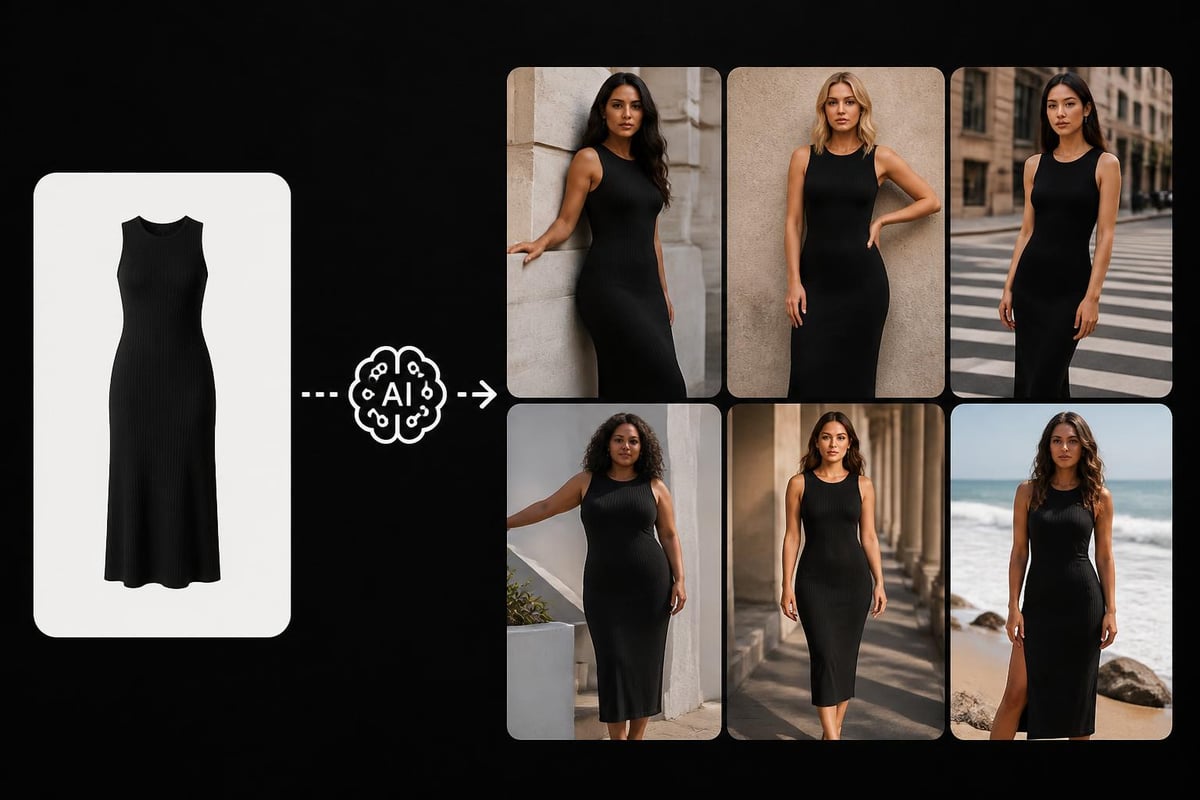
These platforms use advanced machine learning algorithms to create photorealistic images and videos of virtual models wearing your products. You upload product photos, select model characteristics, and within minutes, you have professional-grade content ready for your website, social media, or advertising campaigns.
The technology offers several distinct advantages:
- Generate unlimited variations without additional costs
- Test products on different body types and demographics instantly
- Create seasonal content without weather dependencies
- Produce localized content for global markets quickly
- Eliminate scheduling conflicts and availability issues
Recent developments in generative AI have pushed the quality of these virtual models to unprecedented levels. Research on high-fidelity multi-modal image generation demonstrates how two-stage frameworks can now create fashion imagery that rivals professional photography.
How AI Fashion Model Generators Actually Work
The underlying technology combines several AI disciplines to create realistic fashion content. At the core, these systems use generative adversarial networks (GANs) and diffusion models trained on millions of fashion images.
The Generation Process Explained
When you use an ai fashion model generator, here's what happens behind the scenes:
- Product Input: You upload images of your clothing, accessories, or footwear
- Model Selection: Choose body type, ethnicity, age range, and styling preferences
- Pose and Scene Configuration: Select from preset poses or describe custom scenarios
- AI Processing: The system maps your product onto the virtual model while maintaining realistic fabric physics
- Rendering: Final images or videos are generated with proper lighting, shadows, and textures
- Output Delivery: Download ready-to-use content in various formats and resolutions
The most sophisticated platforms can handle complex garments like flowing dresses, textured fabrics, and layered outfits. They understand how different materials drape, fold, and interact with light.
Key technical capabilities include:
- Fabric physics simulation for realistic movement
- Shadow and lighting consistency across variations
- Size and fit adaptation to different body types
- Skin tone and texture rendering
- Hair and makeup styling options
Studies on generating custom outfit visualizations show how AI can now create high-resolution images of models in specific poses while maintaining garment accuracy and realism.
Commercial Applications Transforming Fashion Marketing
Fashion brands and e-commerce businesses are discovering creative ways to leverage an ai fashion model generator beyond basic product photography. The technology opens entirely new approaches to content creation and customer engagement.
E-commerce Product Pages
Online retailers use AI-generated models to showcase products from multiple angles and on diverse body types. This addresses a critical customer concern: how will this item look on someone with my body type?
| Use Case | Traditional Approach | AI Generator Approach |
|---|---|---|
| Model diversity | Hire 5-10 different models | Generate unlimited body types |
| Time to market | 2-4 weeks | Minutes to hours |
| Cost per variation | $500-2000 | $5-50 |
| Seasonal updates | New photoshoot required | Regenerate with new settings |
| A/B testing | Limited by budget | Unlimited variations |
Social Media and Advertising
Performance marketers are using AI fashion model generators to rapidly test creative hypotheses. Instead of committing thousands to a single campaign direction, you can generate dozens of variations exploring different models, settings, and presentation styles.
The ability to quickly iterate on creative is particularly valuable for paid social advertising, where freshness directly impacts performance. Brands can now produce new creative daily without the logistical nightmares of constant photoshoots.
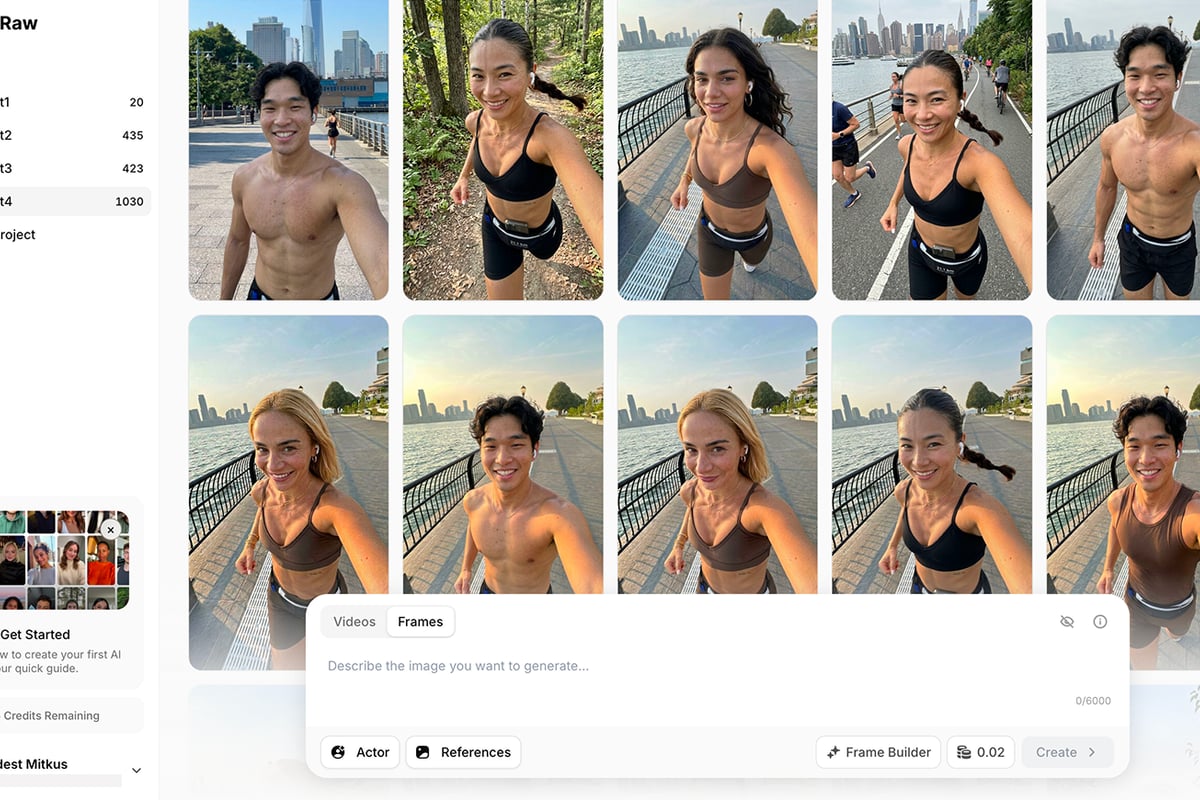
Fashion brands looking to create authentic, scroll-stopping content can leverage these AI capabilities to generate UGC-style videos and images. AI Virtual Try On Clothes puts your apparel on AI models so you've got lookbook material whenever you need it, generating both images and videos of the same item on different body types and styles.
Lookbooks and Seasonal Collections
Traditionally, fashion lookbooks require planning months in advance. An ai fashion model generator lets brands create complete lookbooks in days, not months. You can visualize your entire spring collection before manufacturing begins, helping with pre-sales and market testing.
Choosing the Right AI Fashion Model Generator Platform
Not all AI fashion model generators are created equal. The market has exploded with options in 2026, each offering different capabilities, quality levels, and pricing structures.
Essential Features to Evaluate
Image and Video Quality: The most critical factor is output resolution and realism. Look for platforms that generate at least 2K resolution with minimal artifacts. Request samples before committing.
Model Diversity: A comprehensive ai fashion model generator should offer extensive options for ethnicity, age, body type, and styling. Your virtual models should reflect your target audience demographics.
Garment Accuracy: The AI must accurately represent your product's colors, textures, and fit. Poor garment rendering undermines customer trust and increases return rates.
Customization Options: Beyond basic generation, look for platforms offering pose libraries, background customization, lighting adjustments, and styling options.
- Speed and Volume: How many variations can you generate per hour?
- Integration Capabilities: Does it connect with your e-commerce platform or DAM system?
- Rights and Licensing: Who owns the generated content? Are there usage restrictions?
- Export Formats: Can you get both still images and video formats?
Recent research on AI-driven fashion creativity explores how different prompting techniques and model architectures affect output quality, which is worth understanding when evaluating platforms.
Overcoming Common Challenges and Limitations
While ai fashion model generator technology has advanced dramatically, it's not without challenges. Understanding these limitations helps set realistic expectations and guides effective implementation.
Quality Consistency Issues
AI-generated fashion content can sometimes produce inconsistent results, particularly with complex patterns, sheer fabrics, or intricate details. The technology excels at solid colors and simple patterns but may struggle with fine prints or textures.
Strategies for better consistency:
- Use high-quality product photos as inputs (minimum 2000px width)
- Test multiple AI platforms to find which handles your product category best
- Create style guides that specify preferred poses and settings
- Build a library of successful generations to establish quality benchmarks
The Uncanny Valley Effect
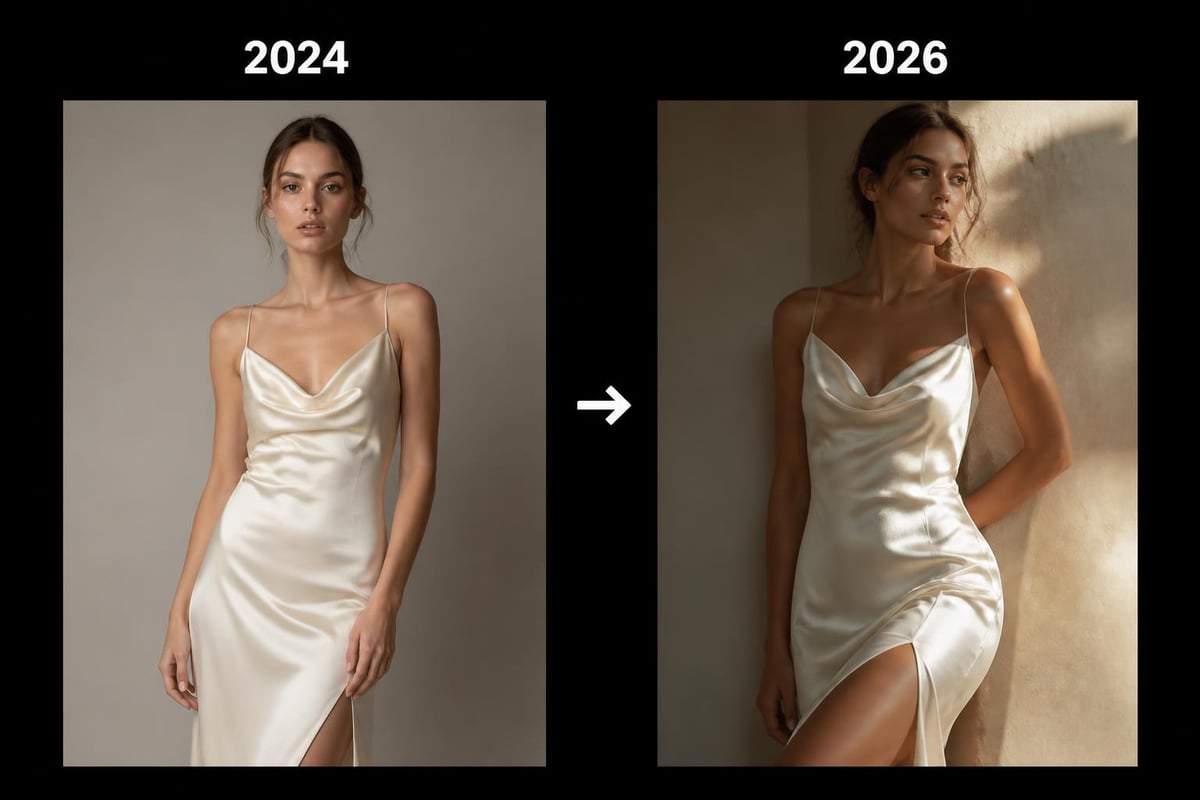
Some AI-generated models can appear slightly "off" to discerning viewers, creating what's known as the uncanny valley effect. This is particularly noticeable in close-up facial shots or detailed hand positions.
Modern platforms are addressing this through improved training data and post-processing algorithms. The controversy around AI-generated models in fashion advertising highlights both the technology's advancement and the ongoing ethical considerations brands must navigate.
Ethical Considerations and Transparency
The rise of ai fashion model generators raises important questions about labor displacement, representation, and transparency. Many human models rely on fashion photography for income, and AI could significantly impact this profession.
Responsible implementation practices:
- Be transparent with customers about using AI-generated imagery
- Ensure diverse representation in your virtual model selections
- Use AI to supplement, not entirely replace, human creators
- Consider hybrid approaches that combine AI efficiency with human authenticity
- Stay informed about evolving regulations around AI-generated content
Integration Strategies for Maximum Impact
Successfully implementing an ai fashion model generator requires more than just technical setup. The most effective brands develop comprehensive content strategies that leverage AI's strengths while maintaining brand authenticity.
Building a Hybrid Content Ecosystem
Rather than viewing AI as a complete replacement for traditional photography, consider it an additional tool in your content arsenal. Use AI-generated models for high-volume needs like product page variations and testing, while reserving traditional photography for hero images and brand campaigns.
This hybrid approach provides several benefits:
- Maintain brand authenticity through select human-created content
- Achieve cost efficiency through AI-generated variations
- Test creative concepts cheaply before investing in professional shoots
- Scale content production to match inventory velocity
Workflow Integration Best Practices
Incorporating AI fashion model generation into your existing workflows requires thoughtful planning. Most successful implementations follow this pattern:
| Workflow Stage | Action | Tools/Platforms |
|---|---|---|
| Product Photography | Capture high-quality product images | Professional camera or smartphone |
| Asset Management | Upload and organize product images | DAM system or cloud storage |
| AI Generation | Create model variations | AI fashion model generator |
| Quality Review | Evaluate outputs and select winners | Team review process |
| Distribution | Deploy to website, ads, social | E-commerce platform, ad managers |
| Performance Tracking | Monitor engagement and conversion | Analytics tools |
For brands focused on rapid testing and iteration, explore more resources on the AdsRaw blog about scaling creative production with AI.
Advanced Use Cases Beyond Product Photography
As ai fashion model generator technology matures, innovative brands are discovering applications beyond standard product shots. These advanced use cases demonstrate the technology's versatility and future potential.
Virtual Fashion Shows and Presentations
Fashion brands can now create entire virtual fashion shows featuring AI-generated models walking digital runways. This approach dramatically reduces costs associated with physical events while enabling global audiences to participate.
The technology allows for impossible-in-reality presentations: models that transform mid-runway, gravity-defying clothing physics, or fantastical environments that would be prohibitively expensive to create physically.
Personalized Shopping Experiences
Some forward-thinking retailers are experimenting with personalized AI model generation that allows customers to see products on virtual models matching their own body measurements and characteristics. This creates a customized shopping experience that increases confidence and reduces returns.
Automatically generated fashion datasets tailored to various occasions, styles, and body types are making these personalized experiences increasingly accurate and accessible.
Size and Fit Visualization
One of e-commerce fashion's persistent challenges is helping customers understand how garments will fit. AI fashion model generators can show the same product across a spectrum of body types, providing valuable context that sizing charts alone cannot convey.
- Size 2 model: Shows fit on petite frame
- Size 8 model: Demonstrates fit on average build
- Size 16 model: Illustrates fit on plus-size body type
- Custom measurements: Generate model matching customer's exact dimensions
Future Developments Reshaping Fashion AI
The ai fashion model generator landscape continues evolving rapidly. Several emerging trends and technologies promise to expand capabilities even further in the coming years.
Real-Time Generation and Interactivity
Current platforms typically process requests in minutes, but next-generation systems are moving toward real-time generation. This enables interactive shopping experiences where customers adjust model characteristics, poses, and settings instantly.
Autodesk's AI-powered 3D model generation demonstrates how AI can create editable 3D models from text prompts, pointing toward a future where fashion visualization becomes fully dimensional and interactive.
Video and Animation Capabilities
While static images dominate current applications, video generation represents the next frontier. AI fashion model generators are beginning to create short video clips showing models walking, turning, and moving naturally in garments.
This capability is particularly valuable for social media platforms like TikTok and Instagram Reels, where video content drives engagement. Brands can generate UGC-style videos featuring virtual models discussing products, demonstrating features, or participating in trends.
AI-Powered Styling and Trend Forecasting
Beyond just generating model images, emerging platforms combine an ai fashion model generator with styling AI that suggests complementary items, creates complete outfits, and even predicts trending combinations based on current fashion data.
Future capabilities on the horizon:
- Seasonal trend integration that automatically updates model styling
- Cultural and regional customization for global markets
- Dynamic pricing optimization based on visual appeal testing
- Automated A/B testing with performance-based creative selection
Measuring ROI and Performance Impact
Implementing an ai fashion model generator represents an investment, and savvy businesses need to track returns. Several key metrics help quantify the technology's impact on your bottom line.
Cost Savings Metrics
Calculate your traditional photoshoot costs including models, photographers, studio rental, styling, and post-production. Compare this against your ai fashion model generator subscription and per-image costs. Most brands see 70-90% cost reduction for similar output volumes.
Speed to Market Improvements
Track how quickly you can launch new products or seasonal collections with AI assistance. Reducing time-to-market from weeks to days creates competitive advantages and enables faster inventory turnover.
| Metric | Before AI | With AI | Improvement |
|---|---|---|---|
| New product imagery | 14 days | 2 hours | 98% faster |
| Seasonal lookbook | 8 weeks | 3 days | 95% faster |
| Ad creative variations | 10 per month | 100+ per month | 10x increase |
| Cost per image | $350 | $25 | 93% reduction |
Conversion and Engagement Impact
Monitor how AI-generated content performs compared to traditional photography. Key metrics include:
- Product page conversion rates
- Ad click-through rates
- Social media engagement
- Time on page
- Return rates (better visualization should reduce returns)
Some brands report that showing products on diverse body types created with an ai fashion model generator actually increases conversion rates by helping more customers visualize themselves in the garments.
Implementation Roadmap for Fashion Brands
Ready to integrate AI fashion model generation into your content workflow? Follow this phased approach to ensure successful adoption and minimize disruption.
Phase 1: Pilot Testing (Weeks 1-4)
Start small with a limited product category or collection. Select 10-20 products and generate multiple variations using different AI platforms. This testing phase helps you:
- Evaluate output quality across different platforms
- Understand technical requirements and workflows
- Identify which product categories work best with AI generation
- Train your team on the technology
- Establish quality standards and review processes
Phase 2: Workflow Integration (Weeks 5-8)
Once you've selected your preferred ai fashion model generator, integrate it into your existing content production workflow. Create standard operating procedures for:
- Product photography preparation and upload
- AI generation parameters and settings
- Quality review and approval processes
- Asset management and organization
- Distribution to various channels
Phase 3: Scale and Optimize (Weeks 9-12)
Expand AI generation across your full product catalog. Use performance data to optimize model selections, poses, and settings that drive the best results for your specific audience.
Phase 4: Advanced Applications (Ongoing)
Explore advanced use cases like video generation, personalized experiences, and automated A/B testing. Continuously evaluate new features and capabilities as the technology evolves.
For brands creating video ads, check out AdsRaw's pricing options to understand how AI-powered content creation can fit your budget and scale with your needs.
Platform Selection Criteria and Vendor Evaluation
Choosing the right ai fashion model generator platform requires evaluating multiple factors beyond just image quality. Here's a comprehensive framework for making this critical decision.
Technical Capabilities Assessment
Resolution and Quality: Request sample outputs at your required resolution. Test how the platform handles your specific product types, especially challenging items like patterned fabrics, accessories, or transparent materials.
Processing Speed: Determine generation times for single images, batch processing, and video content. Speed impacts your ability to iterate quickly and meet tight deadlines.
Format Flexibility: Verify the platform exports in formats compatible with your e-commerce platform, ad managers, and design tools. Common formats include JPG, PNG, MP4, and increasingly, WebP for web optimization.
Business Considerations
- Pricing Structure: Understand whether pricing is per-image, subscription-based, or tiered by volume
- Commercial Rights: Clarify usage rights, exclusivity, and any restrictions on generated content
- Data Security: Ensure your product images and generated content remain confidential
- Support and Training: Evaluate documentation quality, onboarding support, and ongoing assistance
- Roadmap Alignment: Consider the vendor's development roadmap and feature pipeline
Integration and Scalability
Your chosen platform should integrate smoothly with existing tools. Look for APIs, plugins for major e-commerce platforms, and webhook capabilities for automated workflows. Scalability matters too-can the platform handle your growth trajectory?
The ai fashion model generator represents a fundamental shift in how fashion brands create visual content, offering unprecedented speed, cost-efficiency, and creative flexibility. As you navigate this transformation, remember that AI works best as a complement to human creativity, not a replacement. Whether you're testing new products, scaling your content production, or exploring personalized customer experiences, these tools open new possibilities for fashion marketing. If you're ready to bring this efficiency to your video advertising, AdsRaw lets you create realistic UGC-style video ads with AI actors in minutes, helping you test and find winning creative without the traditional costs and timelines of creator partnerships.